



Antique Storage Footstool
An antique storage footstool combines a seat with a hidden compartment, offering a practical piece for traditional and period interiors.
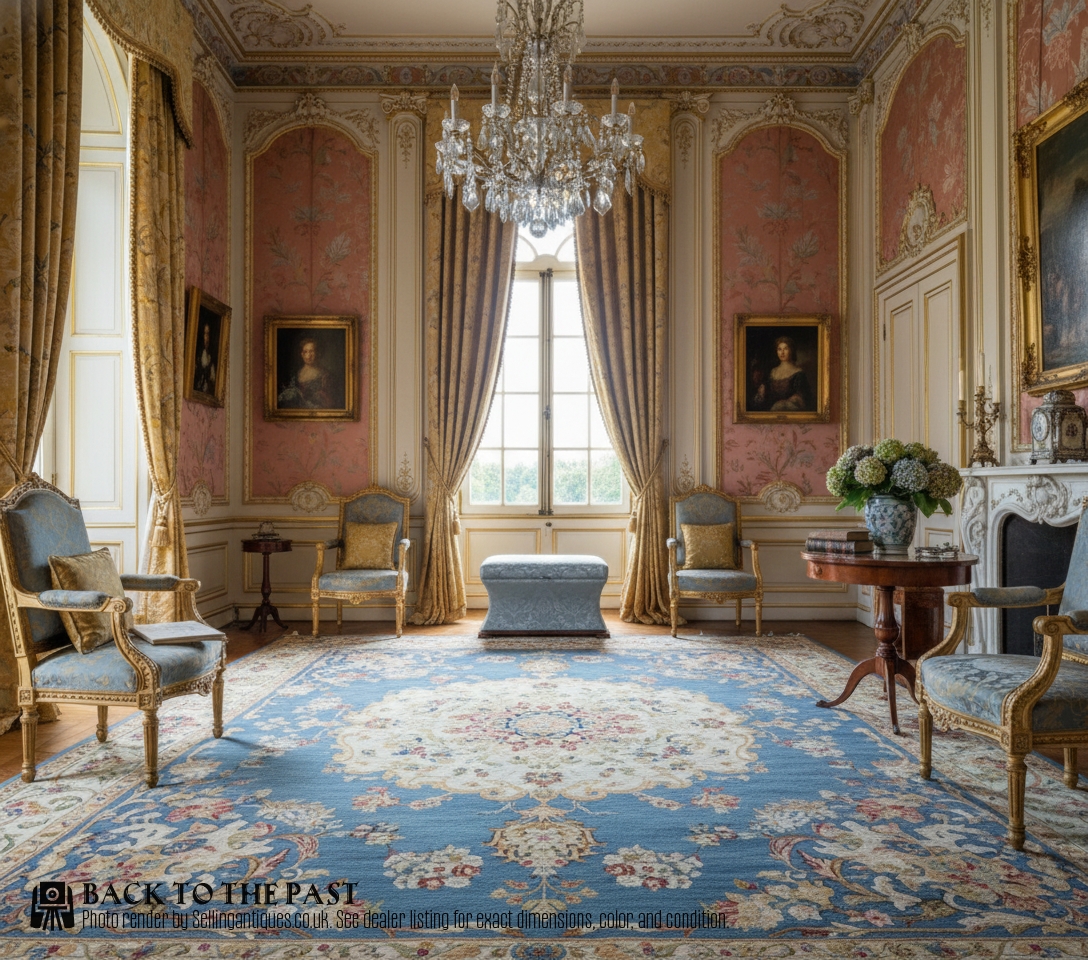
Antique Storage Footstool
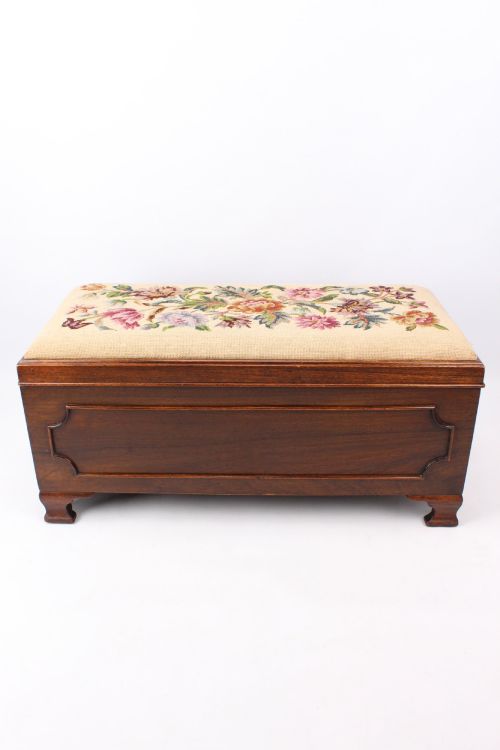
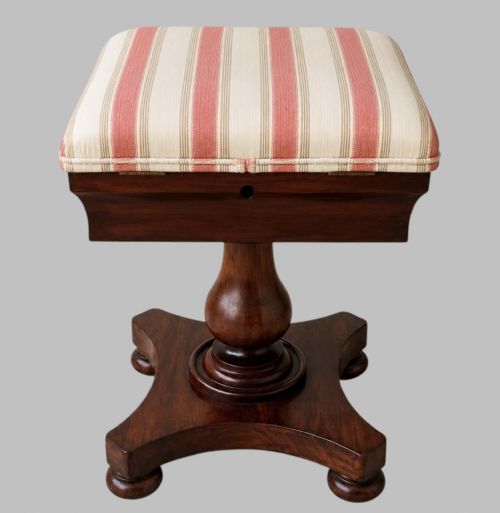
An antique storage footstool is a dual-purpose piece designed for seating or resting feet while providing internal space for blankets, needlework, or small possessions. When you search for an antique storage footstool, you encounter forms that range from compact piano stools and sewing boxes to large country house ottomans.
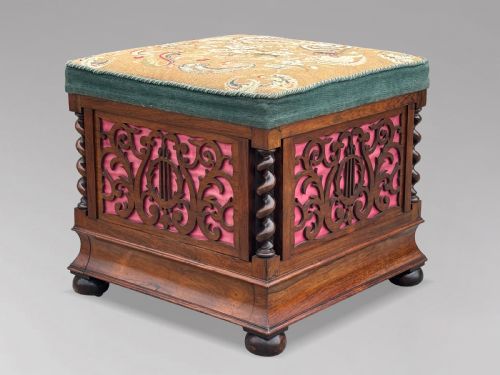
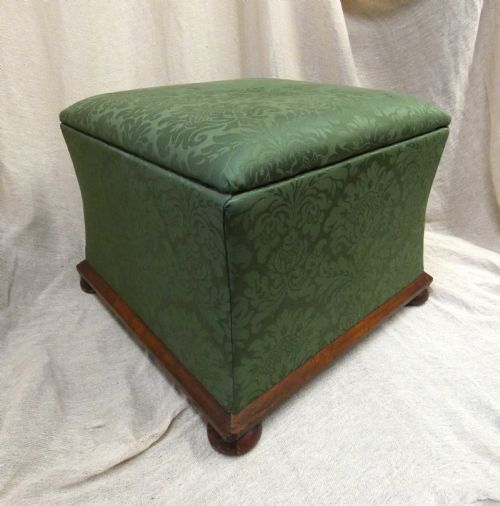
The pieces appearing on this page span several distinct eras, notably the Regency, Victorian, and Edwardian periods, alongside early twentieth-century examples. Materials include timbers such as mahogany, rosewood, walnut, and oak, paired with varied upholstery including leather, velvet, tapestry, and Liberty fabric.
Most examples function as ottomans, blanket boxes, or work tables with hinged or lifting seats. Their origins trace across traditional English workshops, incorporating styles from classical revival to rustic country aesthetics.
Determinants of Quality
Quality rests significantly in the choice of timber and the precision of the cabinetwork framing the storage compartment. Finer examples display superior grain selection in woods like rosewood and mahogany, alongside robust, smoothly operating hinges for the seat.
The standard of the upholstery and needlework separates standard utility pieces from exceptional ones. Original hand-dyed leather, well-preserved gros-point tapestry, or branded maker attribution elevates the standing of a footstool.
Several footstools double as sewing boxes, proving that nineteenth-century artisans believed even your darning needed a hiding place.
Hallett & Sons
The Antique Storage Footstool Glossary
- Ottoman
- A low, upholstered seat or footstool lacking a back or arms, typically featuring a hinged top that opens to reveal storage space inside.
- Gros-point
- A type of counted-thread embroidery using a coarse yarn, frequently found on Victorian footstool and chair seats.
- Regency
- A British design period spanning the early nineteenth century, characterised by classical motifs, elegant proportions, and influences from ancient Greece and Rome.
- Canterbury
- A low wooden stand originally designed for sheet music or books, occasionally adapted with a compartment or stool form.
- Needlework
- Decorative sewing executed by hand on a canvas or fabric ground, often covering the entire top of nineteenth-century footstools.
Antique Storage Footstool: Frequently Asked Questions
What is an antique storage footstool used for?
These pieces served multiple functions in nineteenth-century and early twentieth-century interiors, acting as seats, footrests, and hidden receptacles for sewing equipment, sheet music, or household textiles.
Today, they function well in living spaces and bedrooms to provide discreet storage while maintaining a period aesthetic.
How do I date an antique storage footstool?
Dating relies on examining the primary timber, construction methods, and stylistic cues present in the frame and feet. Regency pieces often showcase classical lines and rosewood, whereas Victorian examples lean towards heavy mahogany, walnut, and elaborate needlework.
Secondary indicators include the type of hinges, screws, and upholstery webbing used inside the storage compartment.
Are storage footstools comfortable to sit on?
Many examples were built with padded, sprung, or stuffed tops designed for comfortable seating or resting feet during long periods. The level of comfort depends on the original upholstery design and whether the internal padding has been maintained or restored.
Sturdier forms like piano duet stools and large country house ottomans offer ample surface area for sitting.
What woods were commonly used?
Mahogany and rosewood appear frequently in nineteenth-century pieces, prized for their rich colour and capacity for fine polishing. Walnut and oak also feature, particularly in later Victorian, Gothic Revival, and early twentieth-century country styles.
Cabinetmakers selected these hardwoods for their structural stability in supporting the hinged box frames.