
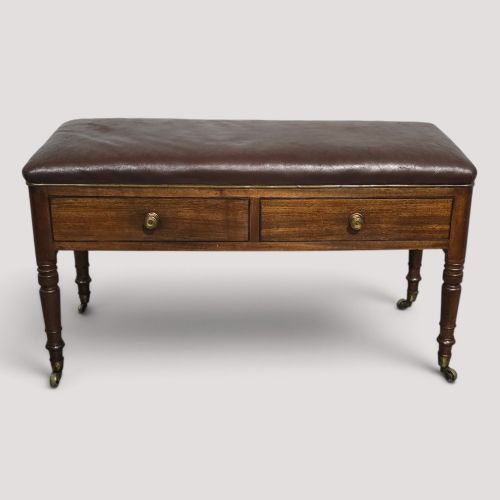
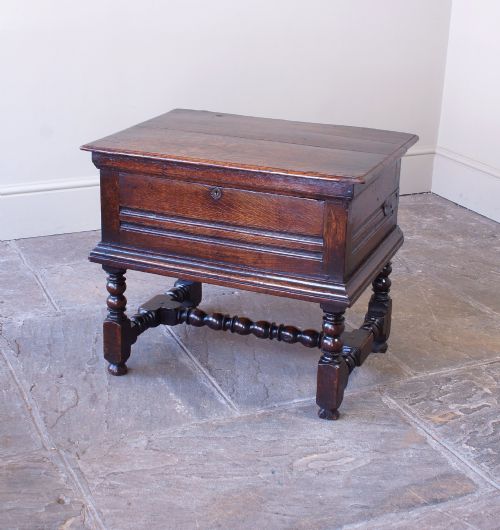


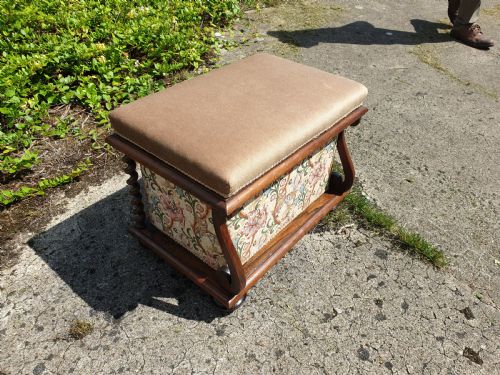


Brown Storage Stool
These brown storage stool examples combine hidden compartments with period timber, offering a practical seat that doubles as concealed storage for the room.
Brown Storage Stool
When you search for a brown storage stool, you encounter a practical seating form that conceals an interior compartment beneath a lid, seat, or hinged top. These pieces serve multiple domestic functions, functioning as piano stools, ottomans, footstools, box stools, and commodes.
The versions you are most likely to meet on this page span several centuries and styles, ranging from heavy seventeenth-century oak pieces to nineteenth-century mahogany and walnut designs, alongside Edwardian and Art Deco iterations.
Makers historically designed these stools to house sheet music, books, needlework, or personal items, keeping domestic spaces tidy while providing accessible seating in parlours, bedrooms, and libraries.
How they were made
Cabinetmakers constructed these brown storage stool pieces using sturdy timbers like oak, mahogany, walnut, and rosewood, often selecting these dense woods for both structural durability and rich natural grain.
Surface decoration frequently involved boxwood inlay, needlepoint upholstery, and turned or carved supports, while interior storage compartments utilised hinged lids, fall fronts, or lift-off seats to secure the contents.
A close stool gives a polite Victorian sitting room a very practical secret.
What varies in quality
The distinction between standard and superior pieces rests in the selection of timber, the crispness of the boxwood inlay, and the structural integrity of the internal storage mechanism. Well-executed joints and substantial timber thickness elevate a piece.
Upholstered versions differ according to the quality of the underlying frame and the preservation of original needlepoint or fabric, while simpler utility boxes rely entirely on the quality of the solid oak and clean joinery.
The Brown Storage Stool Glossary
- Close stool
- A portable indoor commode disguised as a box stool, featuring a lidded seat concealing a chamber pot space.
- Canterbury stool
- A low furniture piece combining compartments for sheet music or papers with an upholstered seat on top.
- Boxwood inlay
- Contrasting pale wood inserted into dark timber surfaces to create decorative geometric or floral patterns.
- Fall front
- A hinged vertical panel that drops forward to provide access to the interior storage compartment of a stool.
- Needlepoint
- Hand-stitched canvas work used historically to cover the padded seats of Victorian footstools and ottomans.
Brown Storage Stool: Frequently Asked Questions
What is a brown storage stool used for?
These pieces provide a dual function as both a seat and a concealed container for household items.
Historically, they held sheet music near pianos, needlework supplies in sitting rooms, or personal items in bedrooms.
How do I identify the period of a stool?
Dating relies on observing the primary timber used, the style of the legs, and the construction methods employed in the frame.
Heavy seventeenth-century oak differs significantly from refined Regency mahogany or the lighter satinwood-inlaid Edwardian piano stools.
Are piano stools the same as ottomans?
While both offer storage, piano stools typically feature specialised internal compartments designed specifically for holding sheet music collections.
Ottomans and footstools are generally broader and upholstered, intended primarily for resting feet or casual seating rather than musical storage.
How do I care for wooden storage stools?
Maintain the timber surfaces by applying appropriate wax polish periodically to preserve the natural grain and prevent the wood from drying out.
Keep upholstered sections clean and protect the antique fabric from direct sunlight to avoid fading over time.