
Antique Storage Bench
An antique storage bench offers robust domestic utility and deep historical character, combining a sturdy seat with a concealed compartment.

What They Are
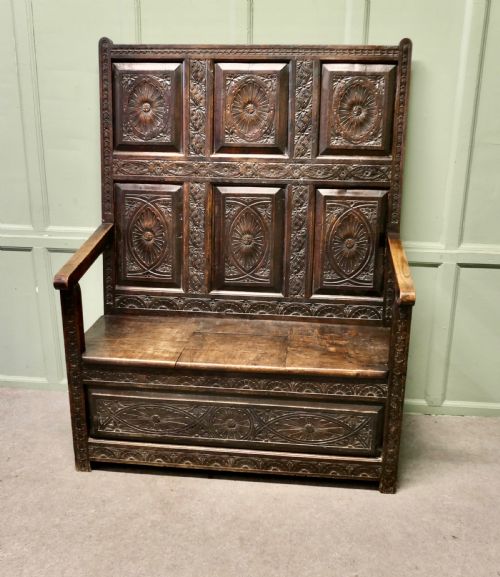
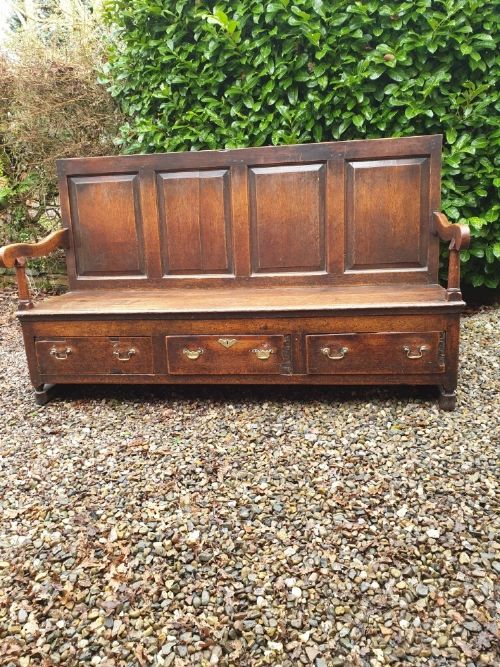
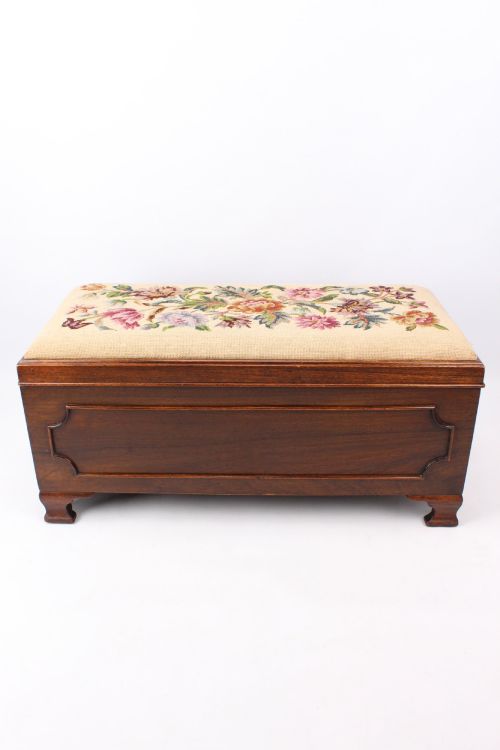
An antique storage bench is primarily encountered as a box settle, hall bench, or farmhouse bench designed to provide both seating and enclosed volume for household goods. These pieces bridge the gap between heavy timber furniture and practical daily utility across several centuries of domestic life.
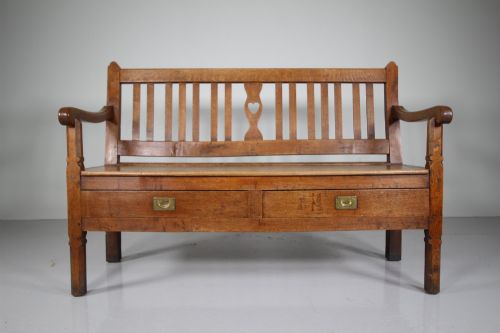
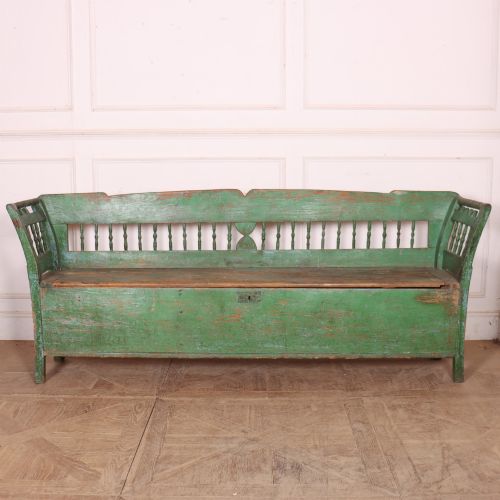
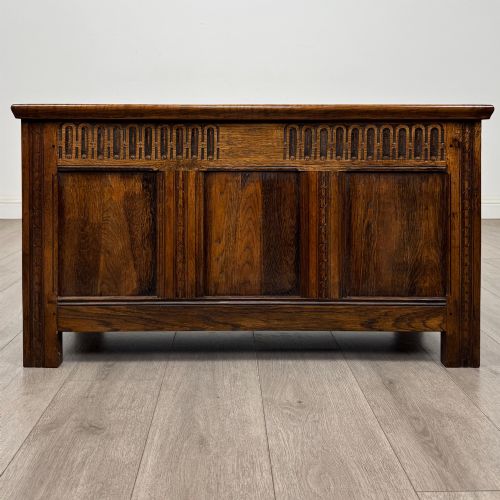
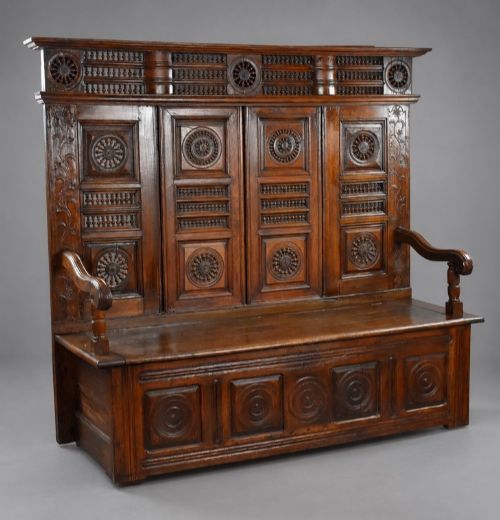
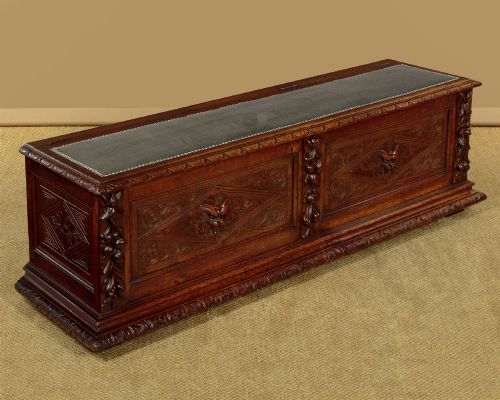
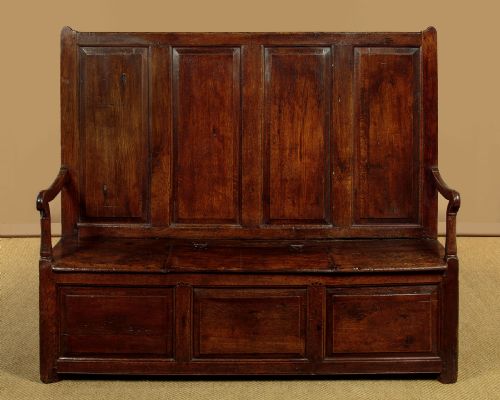
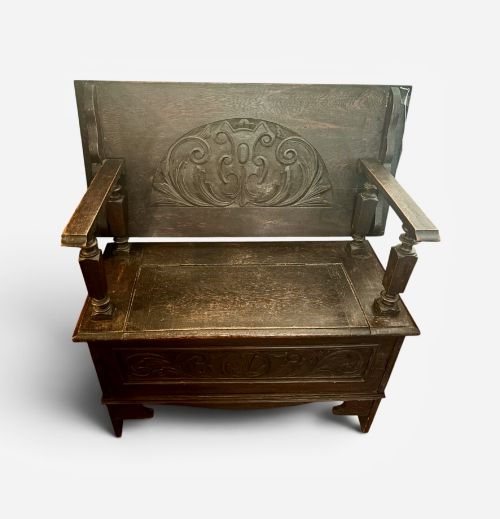
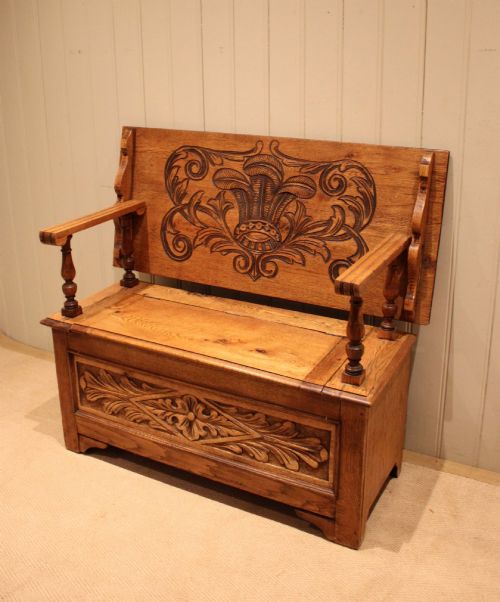
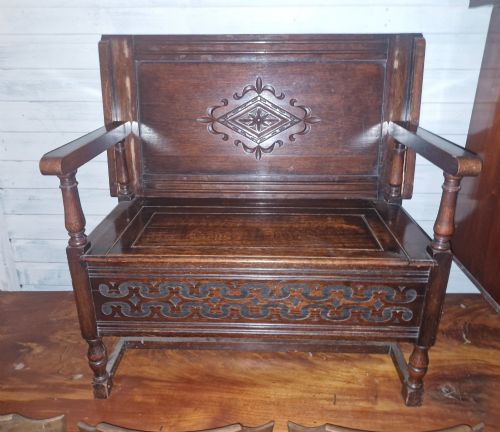
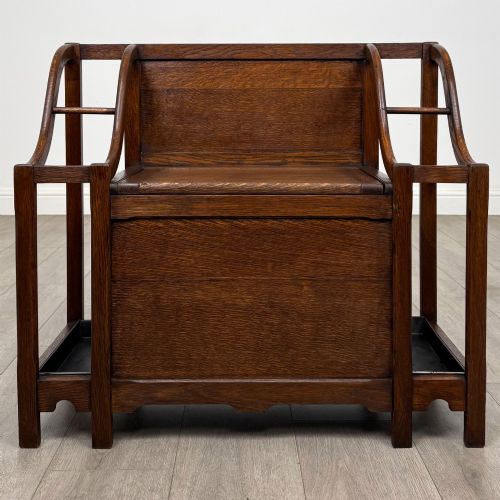
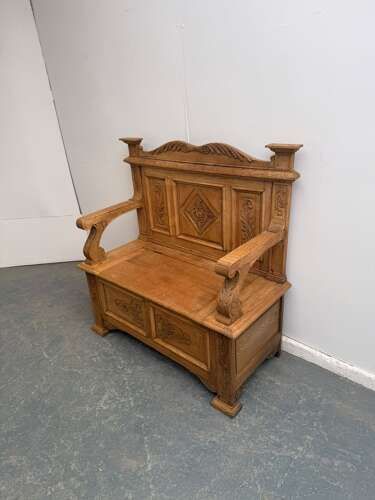
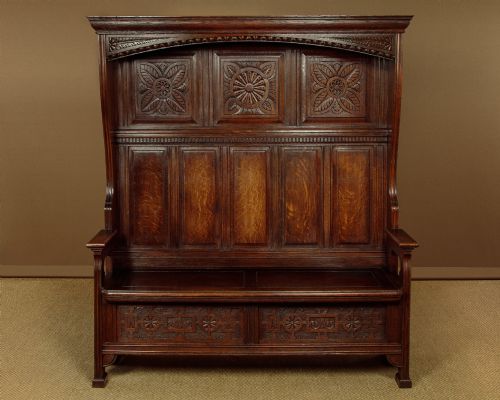
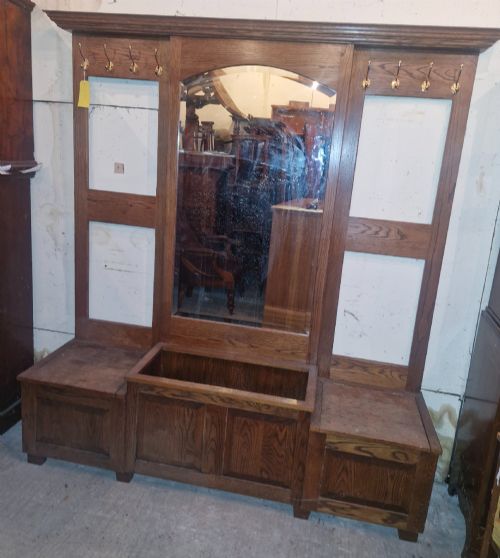
The varieties present on this page range from grand country house settles to painted Scandinavian pine seating and carved Victorian examples. Buyers seeking an antique storage bench will find distinct regional forms originating from English country workshops and continental traditions alike.
Earlier iterations favour high panelled backs and heavy plank construction, whereas later nineteenth-century examples often incorporate decorative carving or simpler pine formats suited to hallways and kitchens. Each piece reflects the functional demands of its period, prioritising durability and internal space.
How They Were Made
Cabinet makers and joiners constructed these benches using solid native timbers such as oak, elm, and pine, frequently joined with traditional pegged mortise and tenon joints to withstand heavy daily use. Panels were typically fielded or flat, fitted into grooved frames to accommodate seasonal wood movement without splitting.
Surface decoration ranges from plain scrubbed pine and historic painted finishes to intricate carved relief work, boxwood inlay, and brass hardware fittings. Timber selection dictated the structural strength of the seat and the depth of storage beneath, with denser hardwoods reserved for large country house settles.
Retail Price Guide 2026
Typical UK retail prices for storage bench, calculated from the Sellingantiques database of over a million retail prices indexed since 2003. This retail price guide relies exclusively on Sellingantiques data; no external sources or auction records are used, so the figures do not describe the wider market.
Listings feature oak, pine, mahogany, and elm across periods from the seventeenth century to nineteen hundred, encompassing English and Scandinavian origins.
What Varies in Quality
The calibre of an antique storage bench rests on the integrity of its timber selection, the proportion of original woodwork, and the refinement of its joinery. Superior examples maintain uncompromised structural frames and original internal floorboards within the storage compartment.
Proportion and decorative restraint set the more distinguished pieces apart from utilitarian workshop output. Finer craftsmanship shows in the balanced execution of panels, arm supports, and any applied carving or inlay.
James Shoolbred & Co.
The Antique Storage Bench Glossary
- Settle
- A wooden bench with a high back, solid arms, and a box compartment beneath the seat. This form protected sitters from draughts in large halls.
- Box Settle
- A heavy wooden seat featuring a hinged lid or front access panel leading to a large internal storage well. It served multiple domestic functions in early households.
- Mortise and Tenon
- A traditional woodworking joint where a projecting tongue fits snugly into a matching cavity to lock timbers together firmly. This method underpins durable antique construction.
- Fielded Panel
- A wooden panel with bevelled edges designed to fit within a recessed frame. This technique allows timber to expand and contract naturally without damaging the structure.
Frequently Asked Questions
What is an antique storage bench?
An antique storage bench is a traditional seat featuring a hollow compartment beneath the squab or lid for keeping blankets, provisions, or household items.
These pieces evolved across centuries to serve as multifunctional furniture in hallways, kitchens, and principal living rooms.
How were settle benches used historically?
Settles were placed near hearths to shield occupants from cold draughts while offering secure storage within the integrated box base.
In larger houses and farmhouses, they acted as primary seating and practical organizational units before fitted cupboards became common.
How do I date an antique storage bench?
Dating relies on assessing timber species, tool marks, joinery methods, and stylistic cues such as panel design and carving motifs.
Earlier pieces from the seventeenth and eighteenth centuries typically exhibit heavy pegged oak construction, whereas nineteenth-century variants often utilise pine or feature machine-sawn elements.
Where should I place a storage bench?
These benches suit hallways, boot rooms, and large kitchens where their dual capacity for seating and concealed storage remains practical.
Their substantial timber presence requires adequate wall space and clearance for opening the seat lid or doors.