
Antique Stoneware Pottery
Antique stoneware pottery brings together dense, durable vessels and decorative pieces shaped across centuries.
Antique Stoneware Pottery
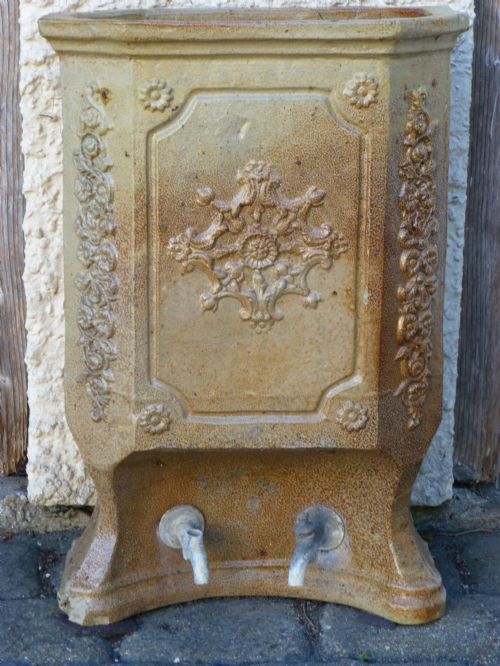
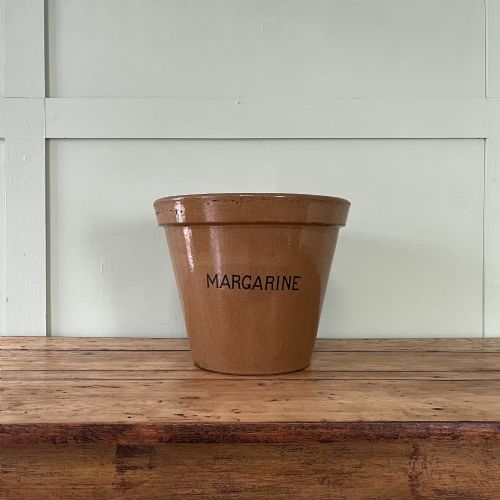
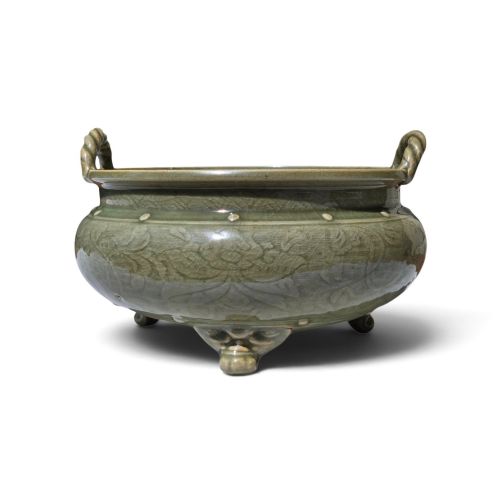
When you search for antique stoneware pottery, you encounter heavy-bodied ceramic pieces designed for both utility and display. The selection ranges from functional vessels such as jugs, flasks, and water filtration fountains to highly ornamental vases, jardinieres, and sculptural figures.
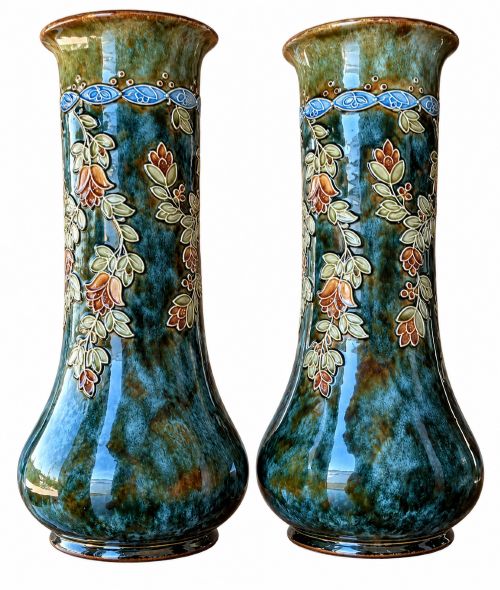
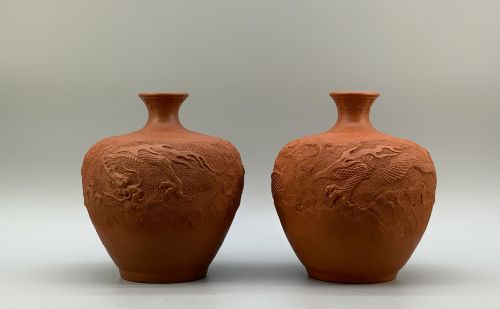
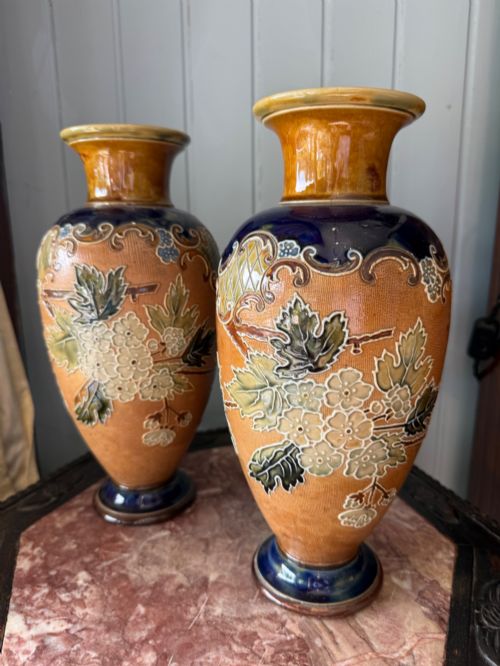
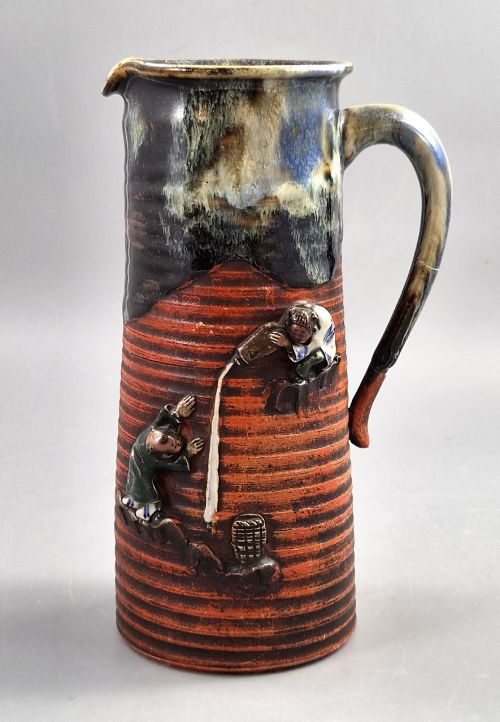
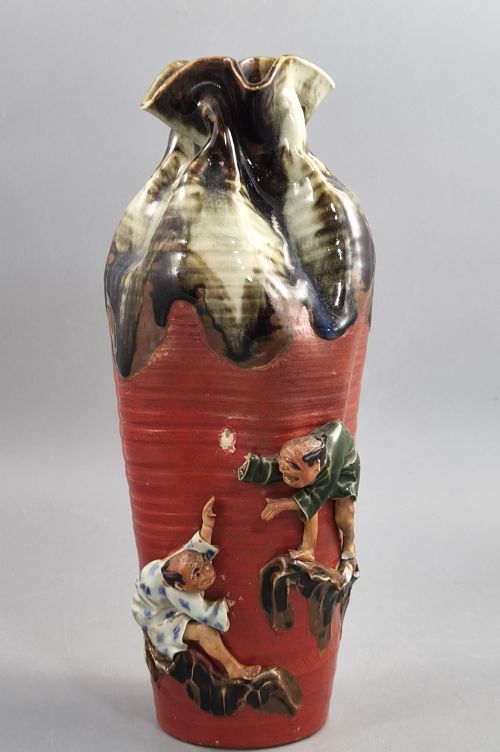
The most common examples on this page date from the Victorian and Edwardian eras, particularly featuring British studio and factory production alongside continental European salt-glazed vessels. Makers such as Royal Doulton dominate the later periods, while German Westerwald and Japanese Sumida Gawa pieces represent earlier or distinct regional traditions.
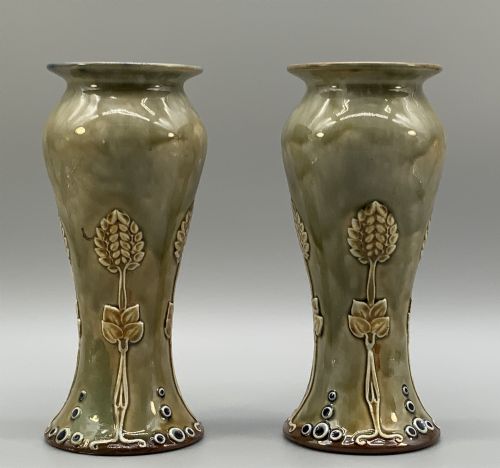
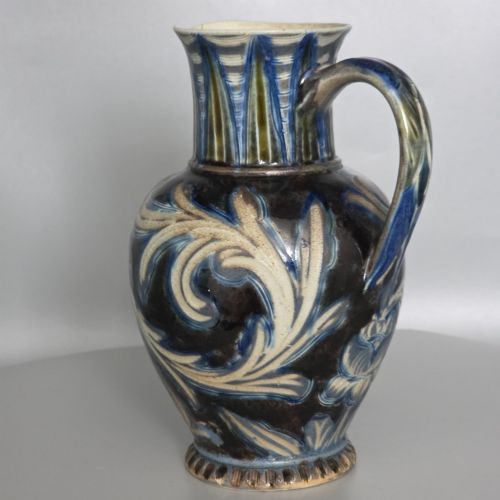
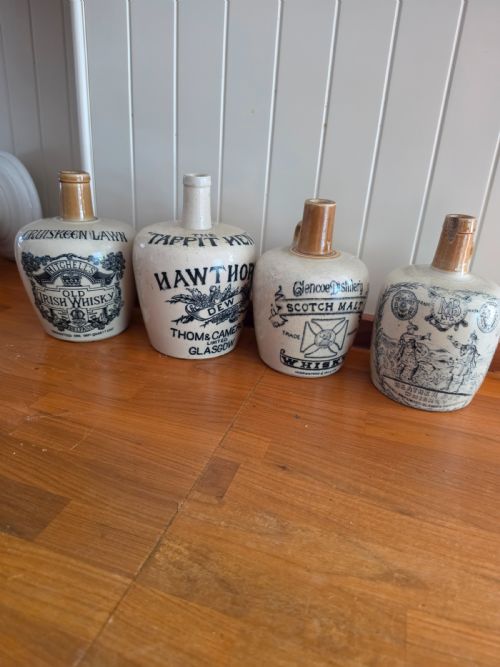
Forms vary from domestic utilitarian bowls and whisky flasks to elaborate Art Nouveau and Arts and Crafts baluster vases. These items reflect a heavy reliance on vitreous, non-porous clay bodies that held liquids securely long before modern industrial containers.
Materials and construction methods
Potters utilised dense, high-firing clays that vitrified in the kiln, making the finished walls impermeable to water without requiring internal glazing. Salt glaze application involved throwing common salt into the hot kiln, creating a characteristic orange-peel texture across the surface.
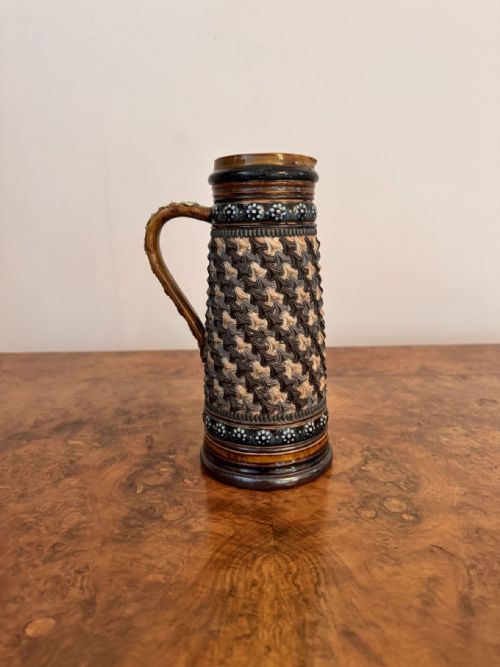
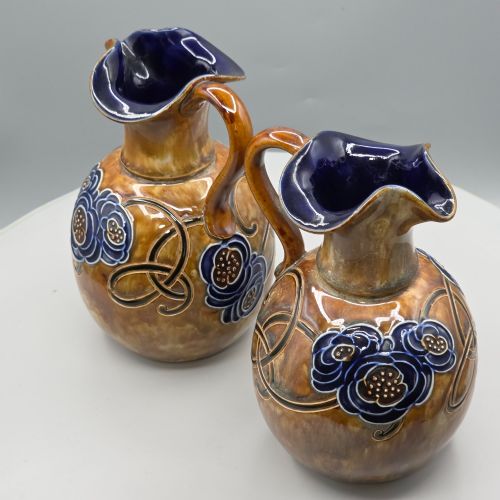
Decoration relied on relief moulding, slip trailing, and hand-modelled sculptural additions applied directly to the leather-hard body before firing. Many pieces combined natural clay tones with cobalt blue or autumnal enamel pigments painted beneath or over the salt glaze.
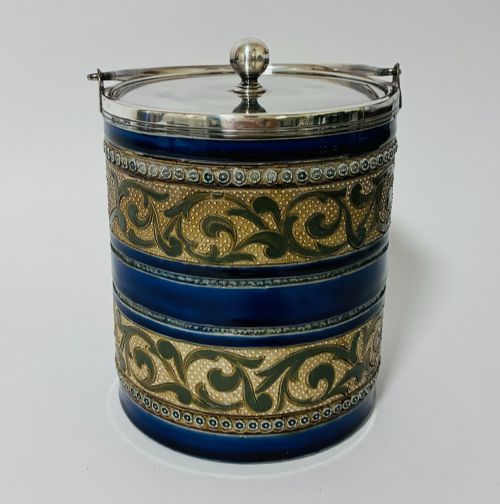
The documented object forms include jardinieres, biscuit barrels, tea sets, and water filtration fountains.
Distinctions in quality
Quality rests upon the crispness of the moulded or incised relief work and the control demonstrated during the high-temperature firing process. Pieces bearing the signatures or monogram initials of recognised artists and assistants show superior hand-finishing compared to standard factory output.
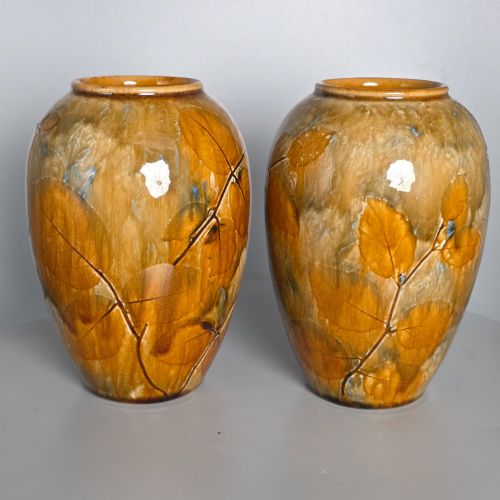
The complexity of the glaze application also dictates standing, with multi-toned flambé finishes or detailed slip painting requiring greater technical skill. Weight distribution, symmetry in thrown forms, and the preservation of sharp surface details without kiln distortion mark the finest examples.
Royal Doulton·Inoue Ryosai·T G Green Pottery·Sir Edmund Elton
The Antique Stoneware Pottery Glossary
- Stoneware
- A dense, hard pottery fired at high temperatures until the clay body vitrifies and becomes completely non-porous. It withstands heavy liquids and rigorous daily use without absorbing moisture.
- Salt Glaze
- A glossy, textured finish created by introducing common salt into the kiln during high-heat firing, producing a surface resembling an orange peel. This technique protects the vessel body and provides chemical resistance.
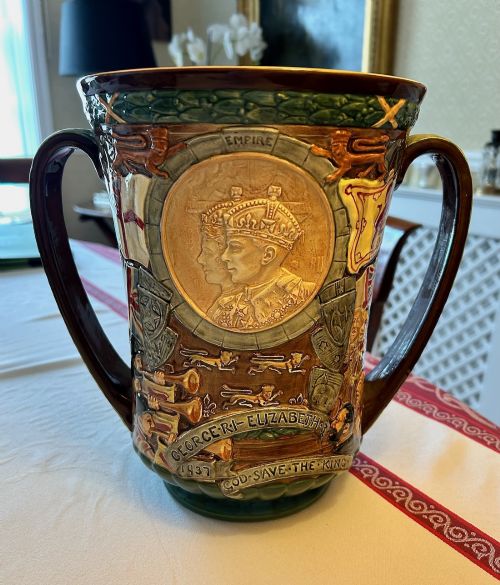
- Tyg
- A large drinking vessel featuring multiple vertical handles designed to be passed around a communal table. They commonly appear in 19th-century revivals of earlier forms.
- Flambé Glaze
- A mottled, streaked ceramic finish achieved through complex metallic oxide reactions in a reducing kiln atmosphere. The resulting colours typically blend deep reds, blues, and purples.
- Bellarmine
- A type of German salt-glazed stoneware jug featuring a bearded mask on the neck and a medallion on the belly. Originating in the 16th and 17th centuries, these containers were frequently used for storing wine or liquids.
Antique Stoneware Pottery: Frequently Asked Questions
What is salt glazed stoneware?
Salt glazed stoneware is pottery fired at extreme temperatures where salt is thrown directly into the kiln chambers. The sodium reacts with the silica in the clay to form a durable, shiny coating with a distinct textured finish.
This chemical reaction creates a hard surface impervious to liquids, which explains why early merchants utilised these jars and jugs for storing oils, wines, and preserves.
How do I date a stoneware jug?
Dating relies on identifying specific stylistic markers, manufacturing techniques, and maker marks stamped into the clay body. Earlier pieces from the seventeenth and eighteenth centuries often feature incised floral motifs, grey bodies, and cobalt blue detailing.
Later Victorian and Edwardian examples incorporate moulded patterns, distinct company ciphers, and artist monograms. Comparing the handle attachment and base profile helps narrow the production window.
Were these pots used daily?
Many of these items served strict utilitarian purposes in domestic and commercial settings long before becoming decorative objects. Heavy bowls, flasks, water filters, and flagons transported and stored provisions safely.
Art pottery vases and sculptural figures, however, were made specifically for interior display during the Arts and Crafts and Art Nouveau movements.
How should I clean antique pottery?
Cleaning antique stoneware requires only warm water and a soft cloth to remove accumulated dust and surface grime. Avoid abrasive scouring pads or harsh chemical cleaners that can strip historic patinas or damage fragile surface glazes.
Careful handling is necessary because unglazed earthenware sections or applied relief decorations remain vulnerable to sharp impacts.