




Antique Stoneware Jardiniere
An antique stoneware jardiniere brings heavy-bodied texture and rich historic character to interiors, offering a sturdy vessel designed to hold plants.
Antique Stoneware Jardiniere
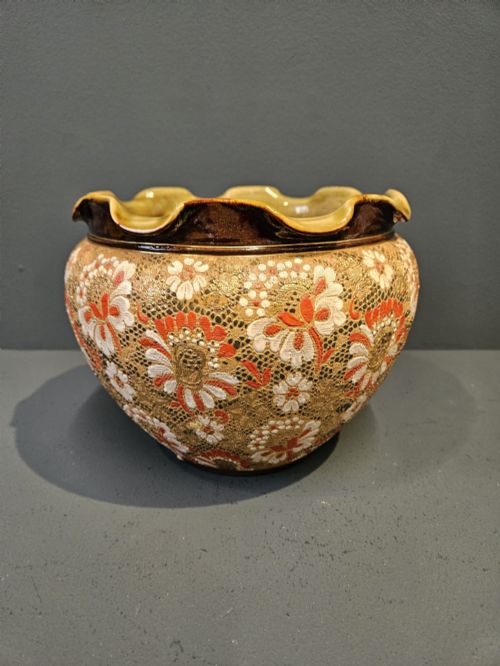
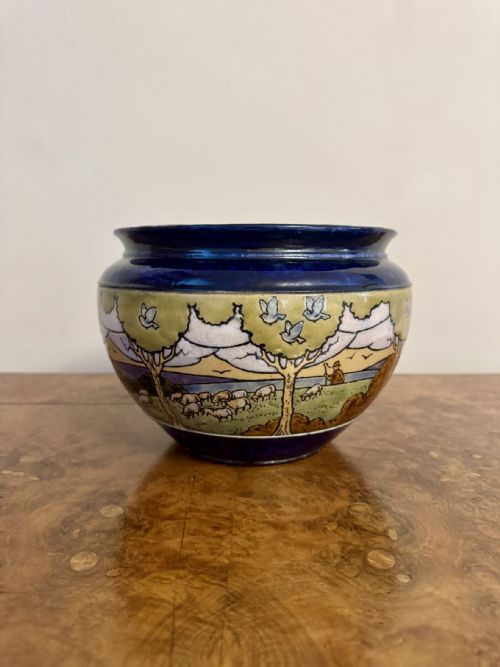
An antique stoneware jardiniere is a heavy, robust plant container designed to hold potted greenery inside the home or within garden spaces. The versions found here span the Victorian era, the Arts and Crafts movement, and the Meiji period.
Most examples hail from the nineteenth and early twentieth centuries, reflecting diverse aesthetics from English salt glaze to Japanese ceramic artistry. Buyers encounter forms ranging from simple cache pots to substantial planters resting on dedicated stands.
Makers utilised durable clay bodies to create vessels capable of withstanding moisture and regular use while displaying intricate surface decoration. These pieces serve equally well today as interior statement objects or practical plant holders.
How they were made
Makers shaped dense clay into thick-walled vessels before applying glazes, salt glazes, or enamel finishes to seal the ceramic body. Many examples incorporate textured surfaces, stamped patterns, or applied reliefs created during the forming process.
Potteries such as Doulton Lambeth utilised specialised kilns to fire stoneware at high temperatures, producing a vitrified material impervious to water. Artisans then hand-finished details or added painted decoration, ensuring each vessel possesses distinct individual characteristics.
Antique Stoneware Jardiniere Retail Price Guide 2026
Typical asking prices for stoneware jardiniere among the pieces listed under this phrase on Sellingantiques today, from the lower quarter to the upper quarter. They describe what is for sale here now, not the wider market.
Listings feature stoneware, earthenware, and jasperware materials across Victorian, Arts and Crafts, and Meiji periods.
What varies in quality
Quality in these vessels depends on the crispness of the moulded or incised decoration and the depth of the glaze application. Pieces featuring hand-painted details by recognised artists display greater artistic ambition than standard factory output.
The weight, stability, and uniformity of the heavy clay body also distinguish superior examples from ordinary production. Condition matters greatly, with intact surfaces and well-preserved glazes elevating the desirability of the piece.
William Adams and Sons·Makuzu Kozan II·Ethel Beard·Enoch Wood and Sons
The Antique Stoneware Jardiniere Glossary
- Stoneware
- A dense, hard pottery fired at high temperatures until the clay body vitrifies and becomes non-porous. This material withstands moisture exceptionally well, making it ideal for holding damp soil and plants.
- Jasperware
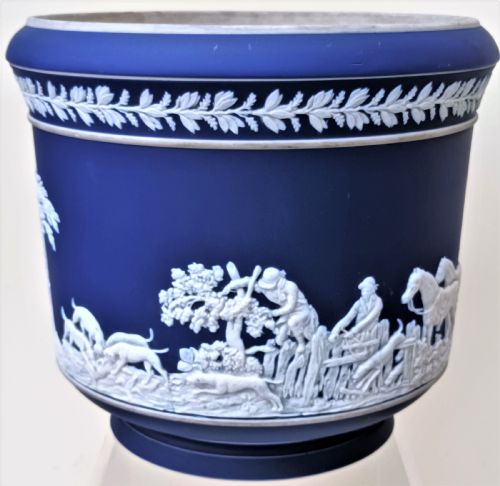
- A type of fine-grained, unglazed stoneware developed with a contrasting coloured background and applied white reliefs. William Adams & Sons famously produced notable examples of this technique.
- Salt glaze
- A glassy, textured finish achieved by throwing common salt into the kiln during high-temperature firing. The vaporised salt reacts with the silica in the clay to form a durable coating.
- Cache pot
- An ornamental flowerpot used to enclose an ordinary plant pot and catch drainage water. These decorative vessels sit on tables or stands without risking water damage to furniture.
- Arts and Crafts
- A design movement valuing handcraftsmanship, natural materials, and traditional production methods over mass manufacturing. Pieces from this tradition often feature organic motifs and textured surfaces.
Antique Stoneware Jardiniere: Frequently Asked Questions
Can I plant directly inside a jardiniere?
Most historic vessels lack drainage holes in the base because they were originally intended as cache pots to hold inner plant pots. Planting directly inside subjects the antique ceramic body to constant moisture and mineral deposits.
Using a plastic or terracotta liner inside the vessel preserves the interior surface and prevents potential damp damage to the antique material.
How do I clean an antique stoneware jardiniere?
Gentle washing with warm water and a soft cloth removes dust and surface grime accumulated over decades. Avoid harsh chemical cleaners or abrasive scrubbers that might scratch the glaze or delicate enamel decorations.
Allow the heavy ceramic body to dry completely after cleaning, particularly if the vessel has unglazed sections or historic hairline fissures.
Where should I display a heavy planter?
Substantial stoneware vessels require sturdy surfaces capable of supporting considerable weight once filled with earth and plants. Floor placement on stable timber, stone, or tile works well for larger jardiniere bases and log bins.
Smaller cache pots suit windowsills, plant stands, or tabletops where their textured surfaces and glazes catch natural light.
How do I date an antique jardiniere?
Maker marks, impressed factory stamps, and glaze characteristics provide the most reliable indicators of age and origin. Victorian and Arts and Crafts examples often feature specific monograms or registry numbers stamped into the unglazed base.
Comparing the stylistic motifs, such as Japanese Meiji aesthetics or British salt-glazed techniques, helps narrow down the period of manufacture.