

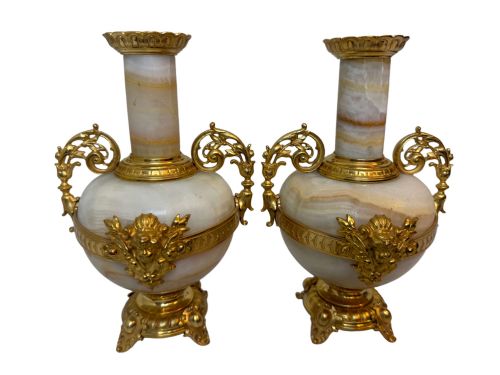


Antique Stone Vase
An antique stone vase brings enduring classical proportion to a room, turning heavy mineral into a vessel of quiet dignity.
Antique Stone Vase
When you search for an antique stone vase, you enter a field populated by carved mineral vessels, heavy garden urns, and decorative desk pieces spanning multiple centuries. The pieces available here draw heavily from nineteenth-century Neoclassical and Grand Tour traditions, where classical antiquity inspired the modern interior.
You are most likely to meet campana-shaped vessels carved from Italian or Swedish marble, alabaster, and serpentine. These range from diminutive desk-bound souvenirs brought back from European travels to substantial garden ornaments resting on stone pedestals.
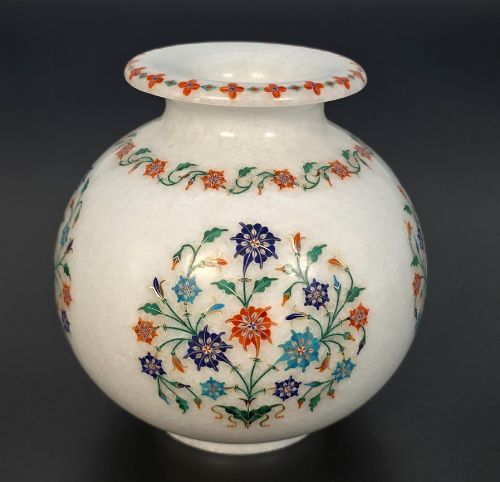
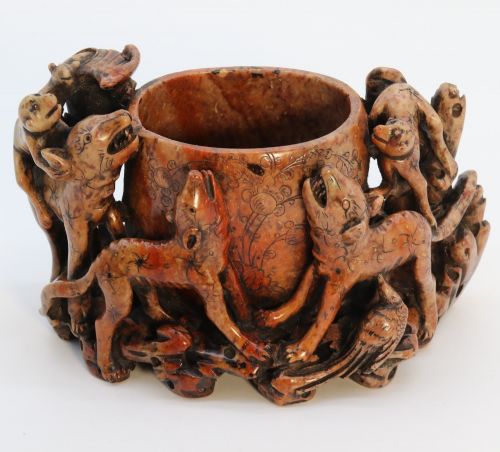
Forms shift between severe architectural utility and ornate decorative sculpture, incorporating materials such as white onyx, gilt bronze mounts, and intricate pietra dura inlay. Whether functioning as a decorative urn or a carved brush pot, each object displays the geological variety of its source material.
Materials and carving techniques
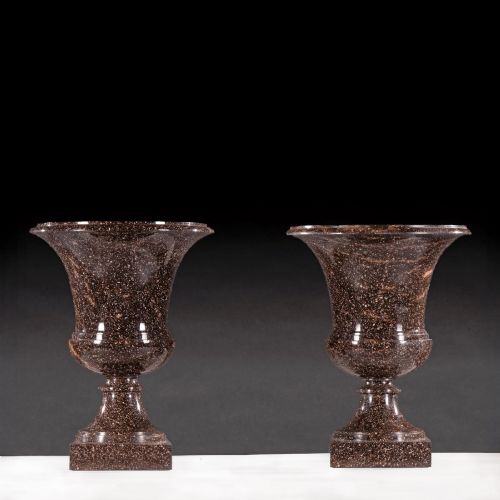
Makers utilised dense natural minerals, turning blocks of marble, alabaster, serpentine, and Blyberg porphyry on heavy lathes or shaping them by hand with chisels. The geological makeup of the stone dictates the grain, from the translucent softness of alabaster to the crystalline bite of porphyry.
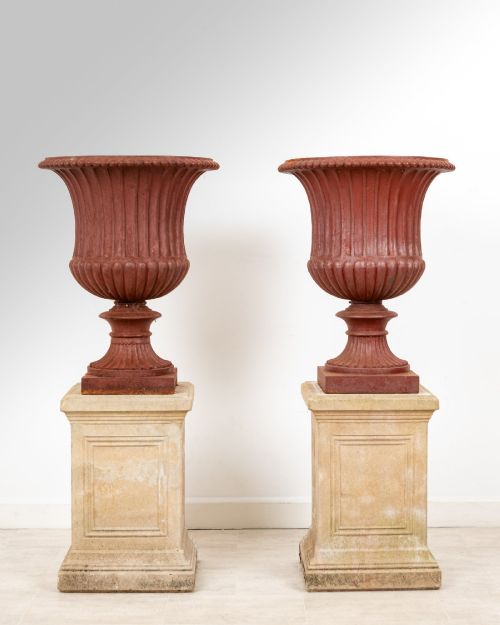
Many nineteenth-century examples combine carved stone bodies with cast iron bases or gilt bronze mounts, uniting cold mineral surfaces with warm metallic detail. Inlaid variations, such as pietra dura work, demonstrate meticulous assembly where coloured stones are fitted flush into a marble ground.
Travellers packed heavy alabaster urns into nineteenth-century stagecoaches, risking broken axles just to display Italian souvenirs at home.
What separates the finest examples
Quality rests upon the purity of the stone's figure and the ambition of the carving. Uniform veining and a lack of disruptive natural fissures elevate a mineral block, while crisp acanthus leaves and deeply undercut handles show the hand of a confident artisan rather than a hurried workshop.
The integration of secondary materials also alters the character of a piece. Finer works use well-cast bronze mounts that fit the contours of the stone precisely, whereas lesser items rely on simpler mass-produced turnings with basic surface finishes.
Selim Bright·Royal Doulton·George Jones·Mason's
The Antique Stone Vase Glossary
- Campana urn
- A bell-shaped vessel with a flared lip and foot, commonly associated with classical garden and table ornaments. This form dominates nineteenth-century Neoclassical design.
- Grand Tour
- A traditional trip through Europe undertaken by upper-class young men in the eighteenth and nineteenth centuries. Souvenirs from these journeys included small alabaster and marble vases.
- Pietra dura
- An artistic technique of inlaying cut and fitted polished coloured stones to create geometric or pictorial designs. It appears frequently on inlaid marble desk vases.
- Serpentine
- A dark green silicate mineral often polished to a glossy finish for decorative urns. Its mottled surface resembles the skin of a serpent.
- Blyberg porphyry
- A hard Swedish stone characterised by pale feldspar crystals embedded in a dark reddish-brown ground. It was utilised for monumental campana urns.
Antique Stone Vase: Frequently Asked Questions
What is a campana vase?
A campana vase takes its name from the Latin word for bell, describing a vessel that flares outward toward the rim. These pieces often feature handles that sweep up from the lower body.
They were modelled directly on ancient metal and terracotta vessels discovered during excavations in Italy. Victorians placed them on pedestals and tabletops to evoke classical antiquity.
How heavy are stone vases?
These vessels are exceptionally heavy because they are fashioned from solid minerals like marble, alabaster, and cast iron. Even modest desk-sized examples require two hands to move safely.
This weight demands sturdy furniture for display. Garden versions rely on their mass to remain stable outdoors without permanent fixings.
Where were Grand Tour vases made?
Grand Tour souvenirs were carved primarily in Italian workshops operating in cities such as Rome and Florence during the nineteenth century. Local artisans utilised regional marbles and alabaster to satisfy foreign travellers.
These objects were designed to be packed into trunks for the long journey northward. They brought the aesthetic of ancient ruins directly into nineteenth-century drawing rooms.
Can alabaster vases get wet?
Alabaster is a relatively soft and porous mineral that absorbs moisture readily. Direct contact with water can dissolve the surface and dull the polished finish over time.
For this reason, nineteenth-century alabaster vessels served as dry decorative objects rather than functional flower holders. Dusting them with a dry cloth keeps the mineral stable.