


Antique Sterling Teaspoons
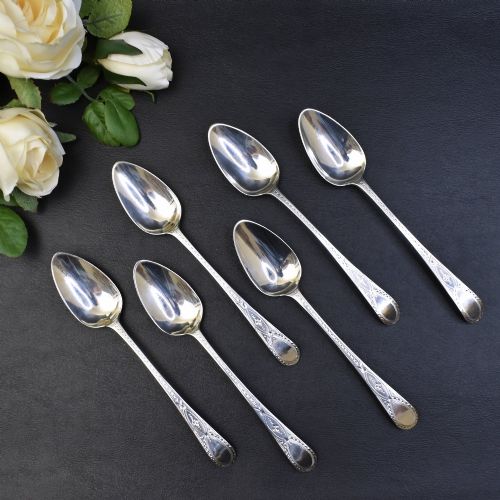
These antique sterling teaspoons span Georgian bright-cut sets to Art Deco enamel designs, offering both practical utility and fine silver craft for daily use or display.
Antique Sterling Teaspoons
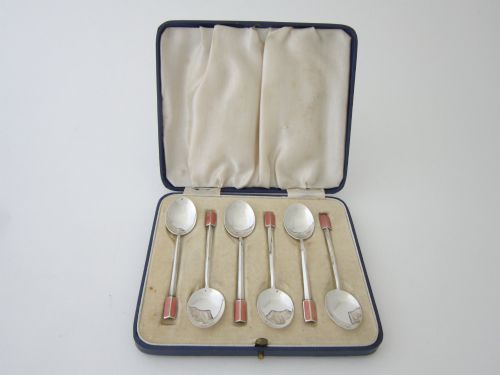
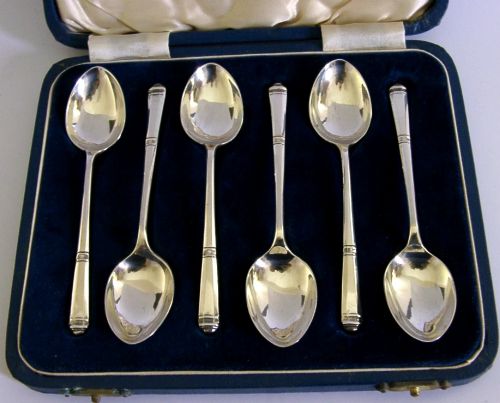
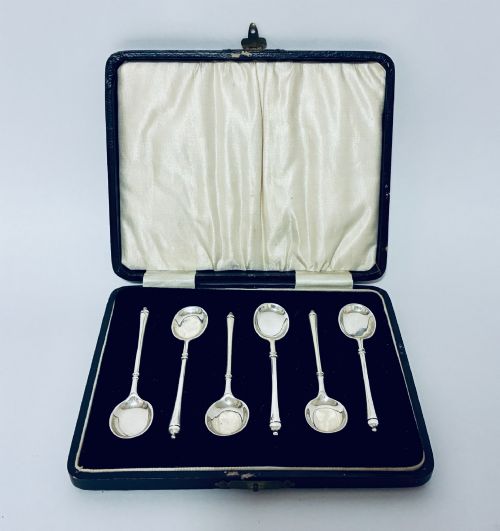
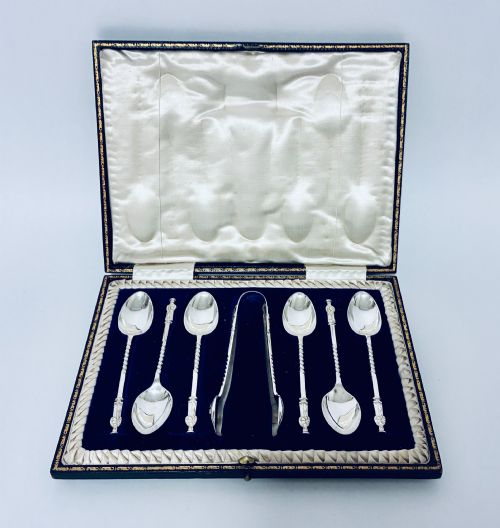
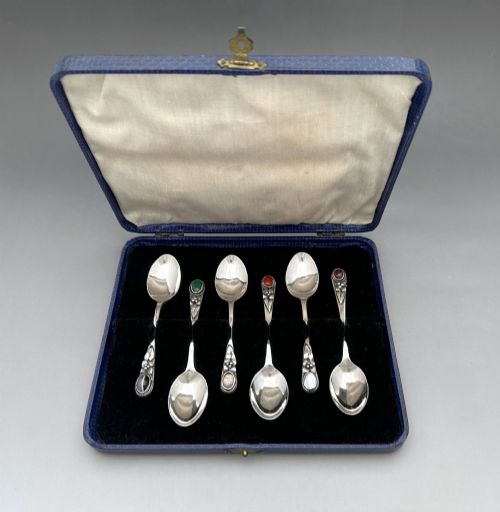
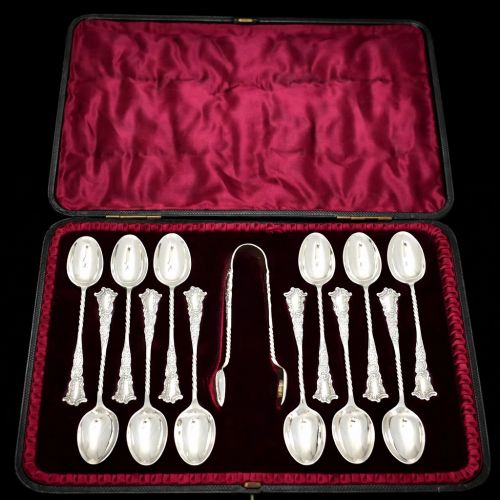
When searching for antique sterling teaspoons, buyers encounter a diverse array of flatware ranging from single Victorian items to complete cased sets intended for tea or coffee service. These spoons appear in various forms, including Apostle patterns, palm motifs, and golf-themed designs, often accompanied by matching sugar tongs.
The selection on this page relies heavily on boxed sets lined with materials like velvet, silk, leatherette, and satin, which preserve the silver and any delicate surface work. Origins span London, Sheffield, Birmingham, Chester, Exeter, Glasgow, and international workshops, touching periods from the Georgian era through the Victorian years, Edwardian times, Art Nouveau, Arts and Crafts, and Art Deco movements.
How they were made
Silversmiths shaped these items using solid sterling silver, occasionally applying a silver-gilt finish to create a rich, gold-coloured surface on the metal. Many examples incorporate vitreous enamel in bright hues or feature semi-precious stones set into the handles.
Production techniques involved traditional hand-forging during the Georgian period, shifting towards specialised manufacturing methods in the Victorian and later twentieth-century eras. Fitted presentation cases utilise wood or card structures covered in leatherette and lined with satin, silk, or velvet to securely hold the spoons and tongs.
Several sets feature sporting themes, including dedicated golf teaspoons designed for enthusiasts of the links.
What varies in quality
Quality rests upon the crispness of the original chasing, bright-cut engraving, or the intact condition of the applied enamel and gilding. Pieces featuring specific provincial assay offices or recognised design work show distinct variations in artistic merit and desirability.
The integrity of the accompanying fitted presentation case also influences the overall standard, particularly when the original silk or velvet linings remain well preserved alongside the silver elements.
P A W Bateman·Georg Jensen·Evald Nielsen·Walker and Hall·Liberty and Co·Robert Stebbings·Cooper Brothers and Sons
The Antique Sterling Teaspoons Glossary
- Sterling silver
- An alloy consisting of 92.5 percent silver and 7.5 percent other metals, usually copper, chosen for durability in tableware. This standard has been legally regulated and hallmarked in Britain for centuries.
- Bright-cut
- An engraving technique utilising faceted V-shaped cuts that reflect light from various angles. It creates a sparkling, geometric pattern popular on Georgian flatware.
- Silver-gilt
- Sterling silver that has been coated with a thin layer of gold through a chemical or electrochemical process. This treatment gives the object a warm golden appearance while maintaining a silver core.
- Vitreous enamel
- A material made by fusing powdered glass to a metallic substrate through firing at high temperatures. It provides durable, glossy colour on decorative handles.
- Assay office
- An official body charged with testing the purity of precious metals and stamping them with hallmark symbols. Examples include London, Sheffield, Birmingham, Chester, and Exeter.
Antique Sterling Teaspoons: Frequently Asked Questions
How do I clean antique sterling teaspoons?
Use a soft cloth and a gentle, non-abrasive silver cleaner formulated specifically for precious metals. Avoid harsh scrubbing that can wear away hallmarks or delicate enamel.
Store the spoons in their original fitted cases lined with velvet or satin to minimise tarnishing between uses.
Can I use antique sterling teaspoons daily?
Many people enjoy using these silver spoons every day for tea or coffee service. Solid sterling silver handles regular use well.
Take care with enamelled or silver-gilt versions, washing them by hand promptly after use rather than placing them in a dishwasher.
What are sugar tongs used for?
Sugar tongs accompanied many cased spoon sets to pick up sugar lumps during tea service. They match the aesthetic and hallmark period of the teaspoons they accompany.
Collectors prize complete sets that retain both the original spoons and their matching tongs.
How do I date antique teaspoons?
Examine the hallmarks stamped onto the back of the spoon handle or stem, which indicate the assay office, standard, and date letter. Stylistic markers such as Art Deco geometric lines or Georgian bright-cut engraving also point to specific eras.