






Antique Sterling Teapot
An antique sterling teapot brings centuries of silver-working heritage to the table, combining functional design with period craftsmanship.
Antique Sterling Teapot
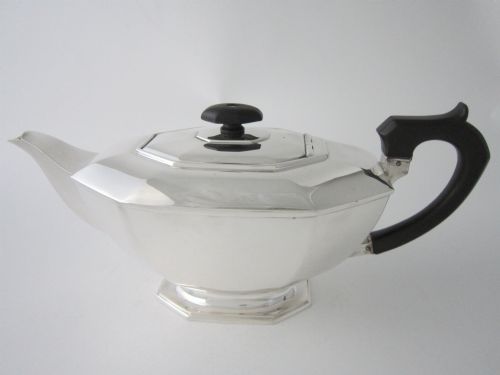
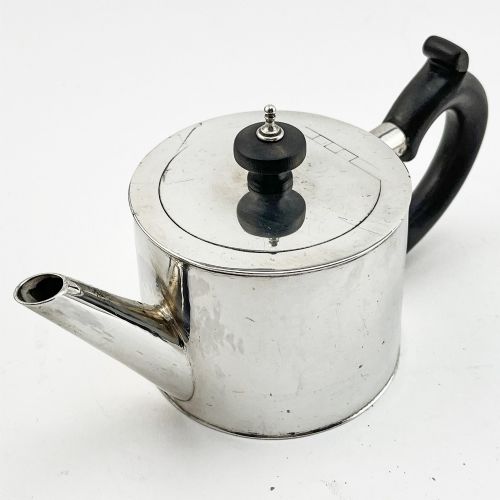
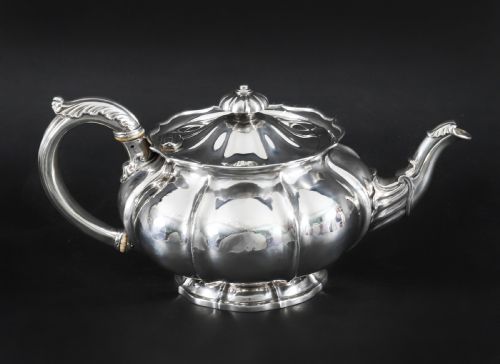
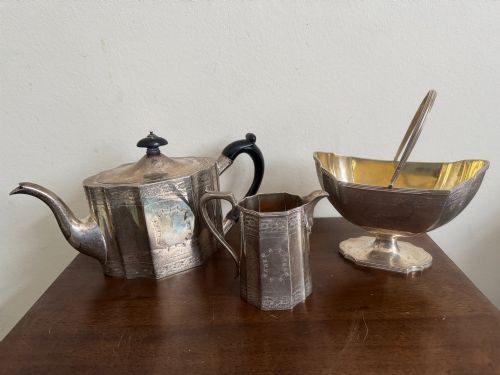
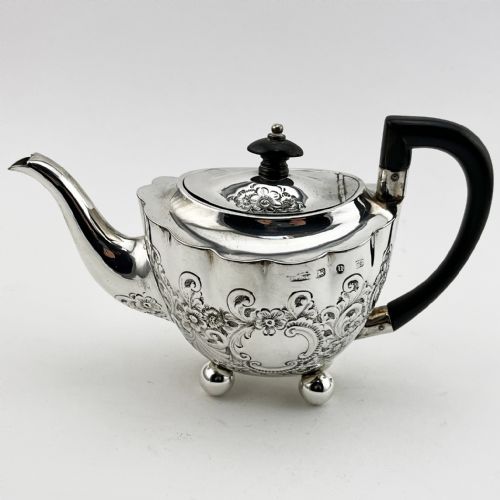
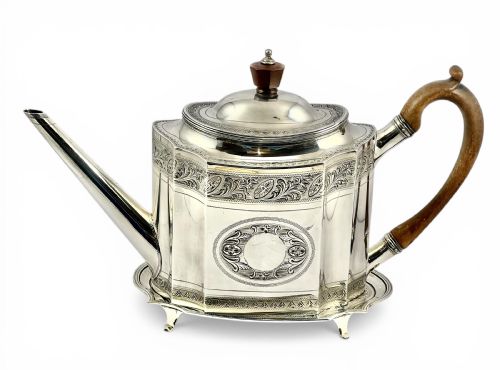
An antique sterling teapot encompasses domestic silver vessels designed for brewing tea, appearing alongside related tea and coffee services, individual bachelor sizes, and matching stands. The examples found here span diverse eras from the Georgian period through the Victorian and Edwardian decades to mid-century designs, reflecting shifting domestic habits.
The most common forms on this page include standard Georgian and Victorian pots, alongside smaller bachelor variations intended for individual use. Alongside these standalone vessels, buyers encounter full tea and coffee services, coffee pots, and dedicated teapot stands paired with the main pieces.
Materials and construction
Makers fashioned these vessels primarily from sterling silver, often incorporating supplementary materials such as wood, ebonised wood, ebony, and bone for insulating handles against heat. Silver-gilt interiors appear alongside glass bodies mounted in silver, velvet linings in presentation cases, and occasionally ceramic elements.
Construction techniques combine traditional smithing with cast ornamentation, evident in decorative elements like grape vine and leaf motifs, animal decoration, and Indianesque designs. Provincial and metropolitan workshops utilised hammering, raising, and soldering to shape the bodies, feet, and spouts.
Some Victorian silversmiths hid animal decoration and curious pin cushion forms inside the traditional tea service format for domestic amusement.
Assessing the work
Quality rests upon the crispness of the chasing and repoussé work, the balance of the spout and handle, and the integrity of the maker's marks. Pieces by prominent silversmiths demonstrate superior execution in cast decorative borders and finely articulated handle insulators.
The weight of the silver and the structural thickness of the body distinguish standard domestic production from masterwork output. Superior vessels maintain precise alignment of the lid and a sturdy hinge mechanism that withstands regular handling.
Paul Storr·Robert Hennell I·Robert Hennell II·Joseph Craddock·Benjamin Smith·George Fox·Harrods Ltd·Birmingham Silversmiths Company
The Antique Sterling Teapot Glossary
- Sterling silver
- A silver alloy containing 92.5 percent pure silver and 7.5 percent other metals, usually copper, chosen for durability in tableware. This standard forms the baseline for British hallmarked silver.
- Bachelor teapot
- A smaller vessel scale designed to brew one or two cups rather than a full household pot. These compact pieces date frequently from the Georgian and Victorian eras.
- Silver-gilt
- Sterling silver coated with a thin layer of gold on the interior surfaces. This treatment protected the silver from tea tannins and added a decorative interior finish.
- Ebonised wood
- Timber treated to resemble ebony, utilised for teapot handles and finials to prevent heat transfer during pouring. It offers a contrasting dark visual element against bright silver.
- Hallmark
- Official stamps struck into precious metals to indicate the standard of purity, the assay office, the date letter, and the maker. These marks allow precise dating of British silver.
Antique Sterling Teapot: Frequently Asked Questions
What is a bachelor teapot?
A bachelor teapot is a reduced-scale vessel intended to serve a single person or a small couple. These compact pots appeared frequently in Georgian and Victorian households for quiet morning or evening tea.
Their smaller dimensions make them distinct from standard family-sized pots while retaining the same decorative styles and silver standards.
How do I date a silver teapot?
Dating relies primarily on the stamped hallmarks found on the body and lid. These official marks record the assay office, the specific year letter, and the maker's mark.
Stylistic cues such as Georgian bullet shapes, Victorian floral chasing, or Art Deco geometric lines also indicate the period of manufacture.
Were wooden handles used originally?
Makers incorporated wood, ebonised wood, ebony, and bone into handles and finials to prevent heat transfer during handling. These organic materials were chosen for thermal insulation rather than pure decoration.
Over generations, these elements may show age-related wear while remaining structurally sound.
What is a teapot stand used for?
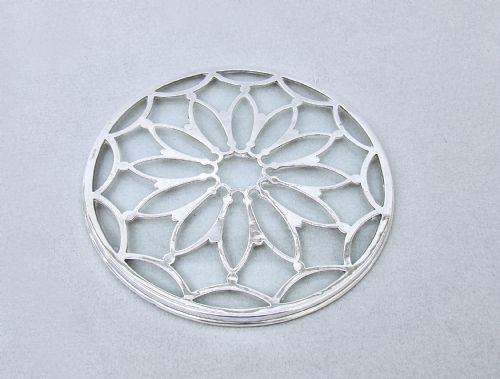
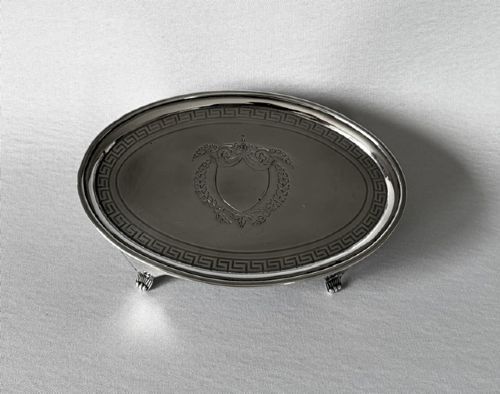
A teapot stand provided a protective resting place for hot silver pots, shielding polished wood tables from heat and moisture marks. These matching stands mirror the style and hallmarks of the main vessel.
Some stands feature silver-mounted glass or raised feet to elevate the base.