


Antique Sterling Candleholders
Antique sterling candleholders bring steady light and bright metal to a room, spanning Victorian, Edwardian, and George V periods.
Antique Sterling Candleholders
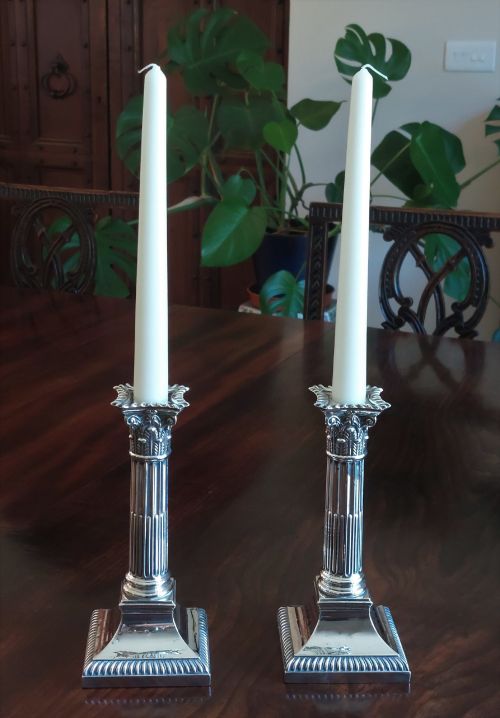
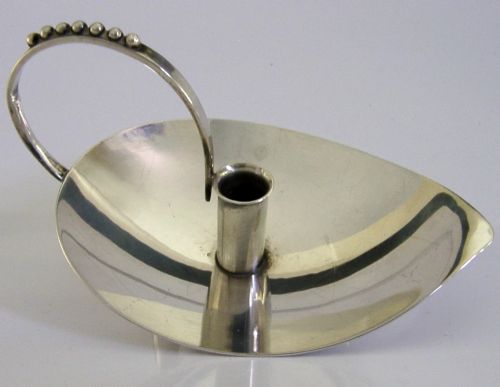
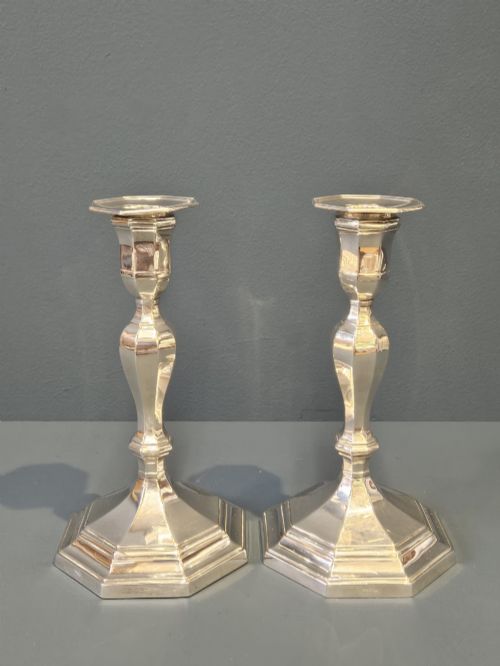
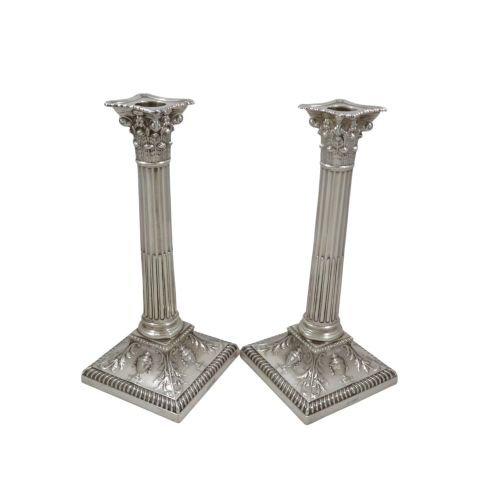
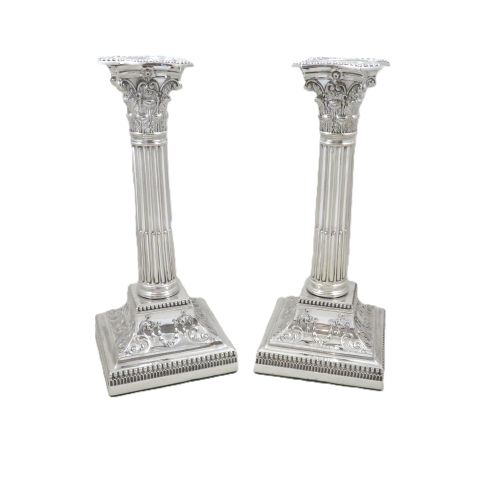
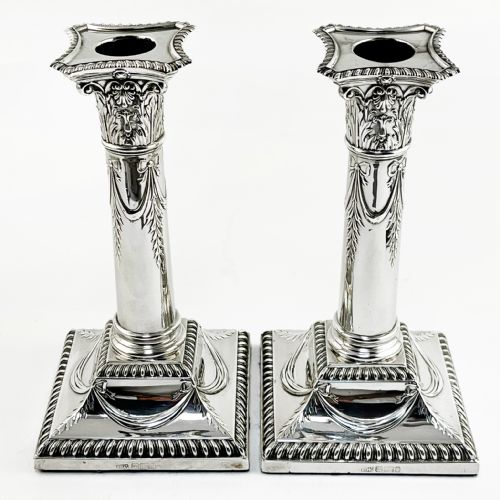
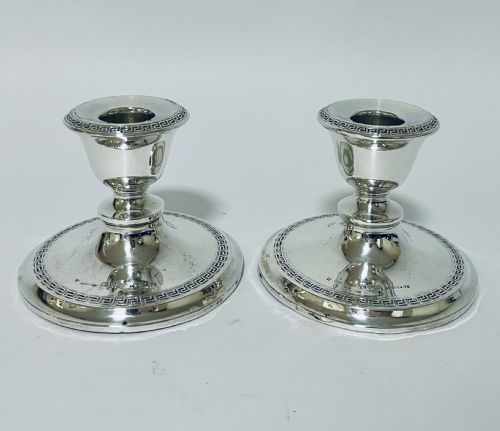
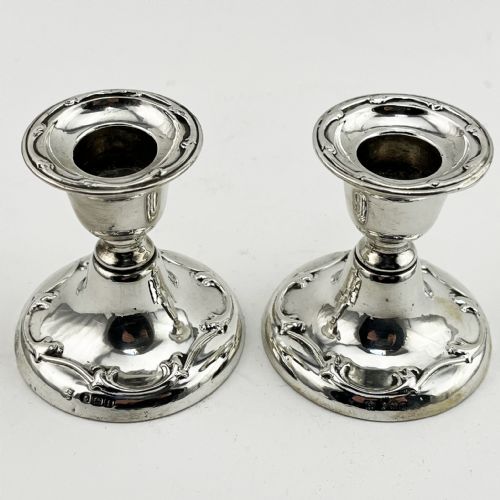
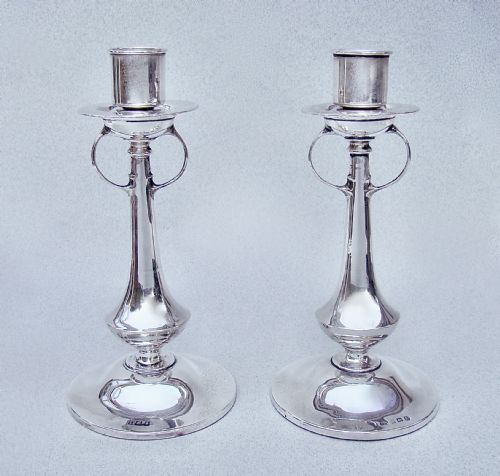
Antique sterling candleholders arrive most often as matched pairs, designed to balance a mantelpiece or a dining table with reflective silver surfaces. The selection ranges from tall column forms to low desk models and chambersticks intended for carrying from room to room.
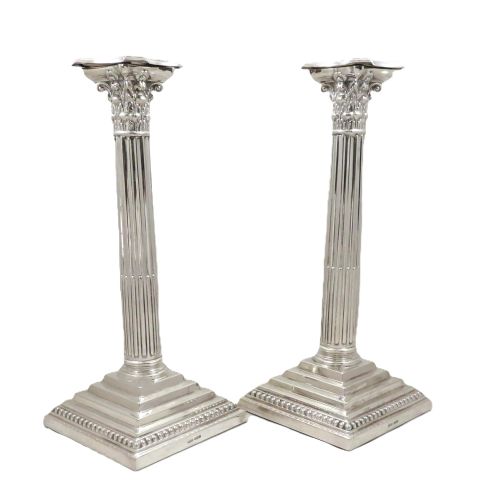
Victorian and Edwardian examples dominate the selection, showing classical column designs alongside plain or panelled shafts. Makers working in London, Birmingham, Sheffield, and Chester produced these items for domestic illumination across the nineteenth and twentieth centuries.
The inventory includes specialised forms such as trefoil candlesticks and multi-light candelabra. These objects demonstrate the changing tastes of households through periods spanning the late nineteenth century into the mid-twentieth century.
How they were made
Silversmiths constructed these candleholders primarily from sterling silver, shaping the metal through spinning, casting, and hand-wrought techniques. Column designs often incorporated detailed capitals, while simpler stems relied on smooth cylindrical or fluted profiles.
Base weights required internal reinforcement using resin or plaster to ensure stability while holding heavy wax candles. Hallmarks stamped directly into the metal record the assay office, maker's mark, and year of production.
Object forms include standard candlesticks, dwarf versions for desks, chambersticks, and multi-light candelabra.
What varies in quality
Quality rests upon the crispness of the cast detailing and the structural integrity of the weighted base. Pieces created by known makers show sharper definition in classical motifs like Corinthian capitals and beadwork borders.
The weight of the silver sheet and the balance of the proportions distinguish standard domestic production from finer workshop creations. Well-preserved hallmarks and minimal distortion to the nozzle indicate careful handling over generations.
Garrard & Co·James Fenton·John Cafe·Thomas Bradbury & Sons Ltd·William Hutton & Sons·Goldsmiths & Silversmiths Co·Robert Edgar Stone
The Antique Sterling Candleholders Glossary
- Sterling silver
- A silver alloy containing 92.5 percent pure silver by mass and 7.5 percent other metals, usually copper. This standard composition provides the durability needed for household objects.
- Chamberstick
- A low candleholder fitted with a shallow pan to catch melting wax and a loop handle for carrying. These items were standard equipment for lighting the way to bed.
- Candelabra
- A branched candleholder designed to support multiple candles from a single base. These larger pieces served as formal table centerpieces.
- Corinthian column
- A classical architectural order featuring an ornate capital decorated with acanthus leaves. Silversmiths frequently adopted this column design for taller candlestick shafts.
- Hallmark
- An official mark stamped on precious metals by an assay office to guarantee the purity of the metal. These stamps identify the city of testing, the maker, and the year of creation.
Antique Sterling Candleholders: Frequently Asked Questions
How do I date antique silver candleholders?
Examine the stamped hallmarks on the base or nozzle to find the specific letter code indicating the year of assay. Comparing the stylistic period, such as Victorian or Edwardian, helps confirm the era of manufacture.
The presence of city marks like the London leopard's head or Sheffield crown provides further clues to the origin and age of the piece.
Were these candleholders used daily?
Many of these pieces served as primary household lighting before the widespread adoption of electricity. Dining tables, desks, and bedrooms relied on these silver holders for illumination.
Heavier pairs remained stationary on mantelpieces, while smaller desk models and chambersticks moved around the home as needed.
What is a chamberstick?
A chamberstick is a short, portable candleholder featuring a wide drip pan and a loop handle. Households used them to light hallways and staircases at night.
Many retain a small matching silver snuffer resting in the pan to extinguish the flame safely.
How do I care for sterling candleholders?
Clean the silver gently with a specialised polish to remove tarnish while preserving the underlying hallmarks and fine details. Avoid abrasive cloths that can wear down raised edges on classical patterns.
Remove old wax by running warm water over the nozzle rather than scraping the metal with sharp tools.