


Hallmarked Sterling Candlesticks
Hallmarked sterling candlesticks bring the solid weight of silver and centuries of design to the table.
Hallmarked Sterling Candlesticks
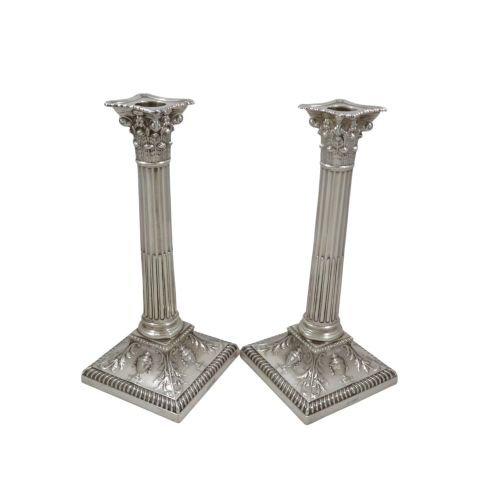
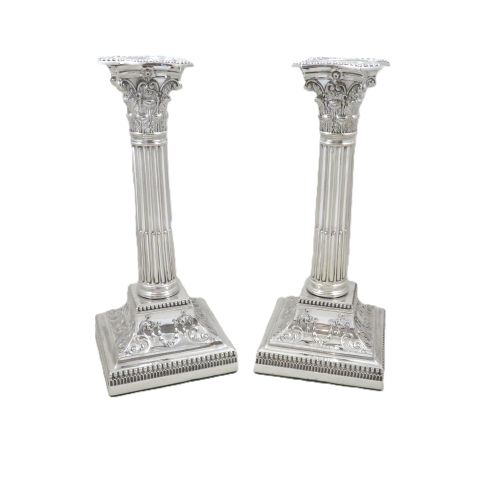
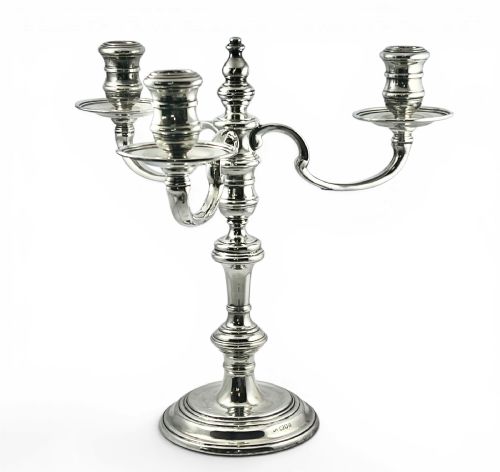
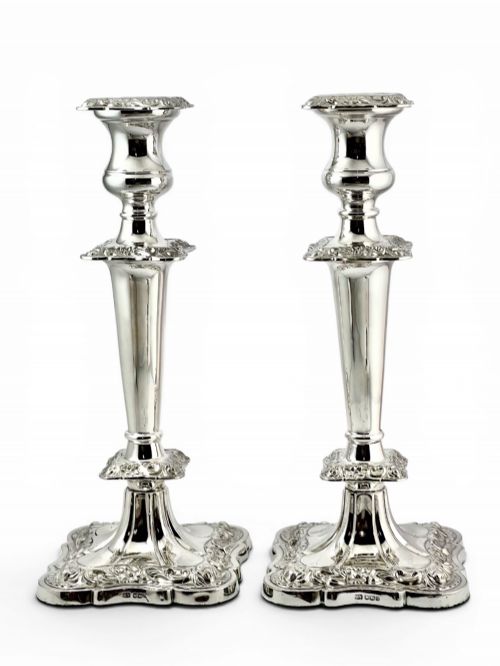
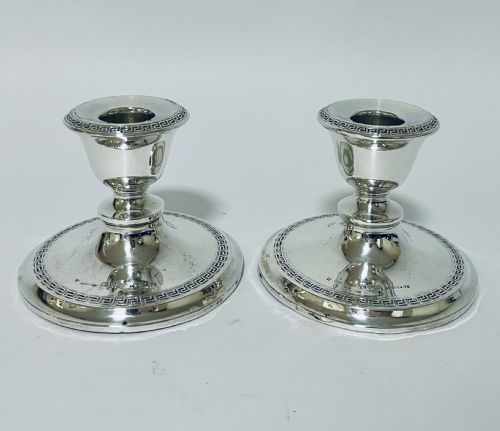
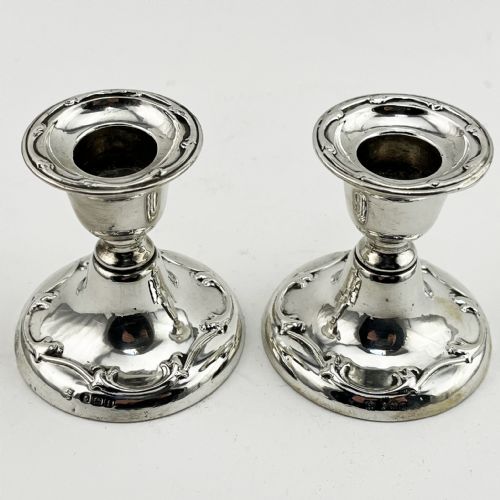
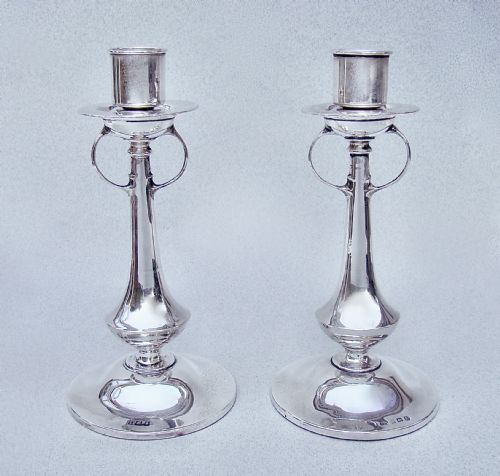
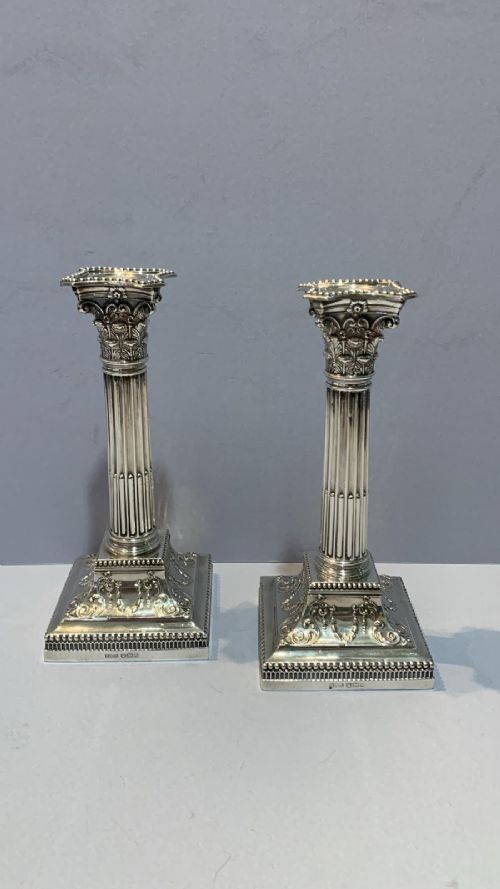
Hallmarked sterling candlesticks span simple domestic lighting to formal candelabra, table lamps and chambersticks produced from the Victorian era through the mid-century. Buyers searching this phrase encounter pairs and sets bearing assay marks from London, Birmingham, Sheffield and Chester across periods such as the Edwardian era, George V and the late nineteenth century. Forms range from dwarf candlesticks and desk accessories to tall Corinthian columns and multi-branch candelabra.
The material standard is predominantly sterling silver, supported by cut glass in related table accessories and weighted interior structures common to the category. Styles draw heavily on historical revivals including Neoclassical, Rococo and George I alongside Art Deco and mid-century modern idioms. Pieces appear singly or in matched pairs, reflecting the functional requirements of dining tables, sideboards and writing desks from the 1880s onward.
Materials and Construction
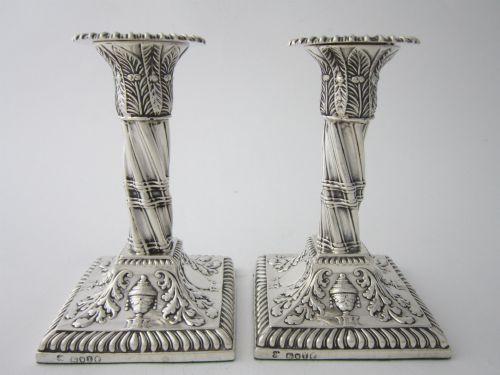
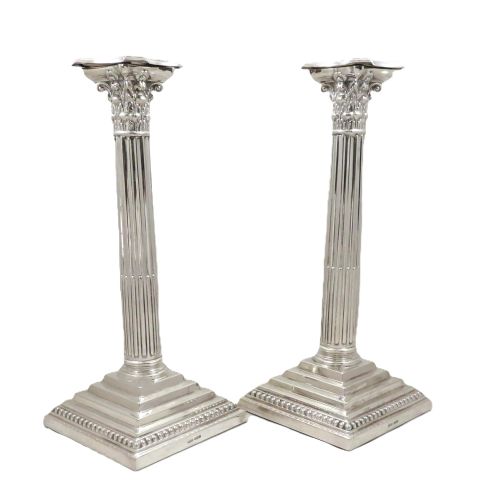
Silversmiths shaped sterling silver through casting, spinning and hand-hammering, often mounting columns and bases over weighted internal cores to ensure stability. Detail work relied on embossing, chasing and applied cast ornament such as ribbon bow garlands or classical Corinthian capitals.
Assay office hallmarks stamped directly into the metal recorded the sterling standard, the city of testing, and the specific year letter, alongside maker marks identifying the silversmith workshop.
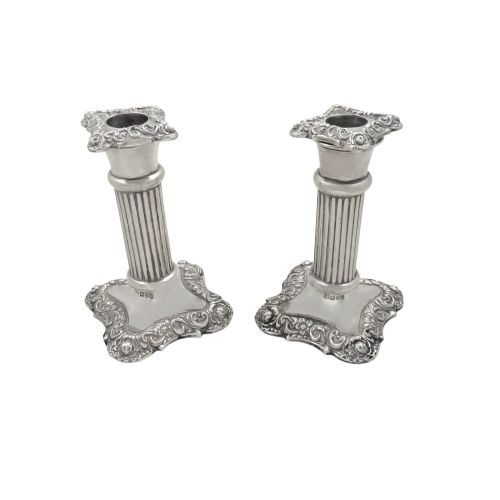
Listings feature sterling silver and cut glass across Edwardian, Victorian, and mid-century periods in forms ranging from chambersticks to Corinthian columns.
Assessing Quality and Craftsmanship
Quality rests in the crispness of the chased detail, the structural integrity of the column joints, and the clarity of the official hallmarks. Superior examples display substantial gauge silver with balanced proportions and carefully finished cast enrichment rather than thin pressings.
Makers known for exceptional output, alongside pieces featuring complex multi-light branches or hand-made elements, command distinction within the range compared to standard commercial production.
James Fenton·Thomas Bradbury & Sons Ltd·William Hutton & Sons·Goldsmiths & Silversmiths Co·Garrard & Co Ltd·Elkington and Company
The Hallmarked Sterling Candlesticks Glossary
- Sterling silver
- A silver alloy containing 92.5 percent pure silver and 7.5 percent other metals, usually copper, chosen for durability.
- Hallmark
- Official stamps applied by an assay office to guarantee the fineness of the precious metal, place of origin and date of manufacture.
- Corinthian column
- A classical architectural column form featuring ornate acanthus leaves on the capital, frequently adapted for tall candlesticks.
- Chamberstick
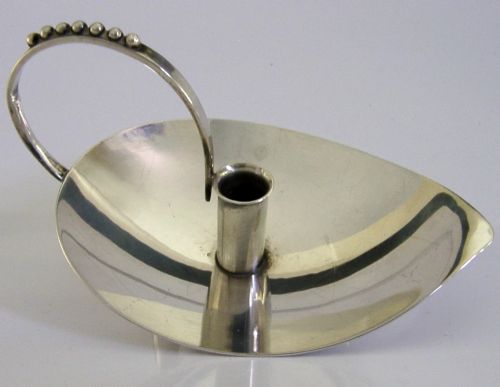
- A low-profile candle holder fitted with a shallow pan to catch wax and a loop handle for carrying through a house.
- Candelabra
- A branched lighting fixture holding multiple candles on a central stem.
Hallmarked Sterling Candlesticks: Frequently Asked Questions
How do I read silver hallmarks?
Hallmarks consist of a series of tiny stamped symbols that reveal the specific assay office, the metal standard, and the year of manufacture. Examining these marks with a magnifying glass helps confirm the age and origin of the piece.
The leopard's head for London or the anchor for Birmingham, alongside the lion passant for sterling, provide a reliable paper trail linking the object to its maker and period.
Why are silver candlesticks weighted?
Solid silver of sufficient gauge to support a tall candlestick would be prohibitively heavy and expensive to produce. Silversmiths therefore filled the interior base with resin, pitch or plaster to provide stability.
This weighted core prevents the tall stem and heavy flame from tipping over during use on a dining table or sideboard.
How should I clean antique silver?
Gentle maintenance using a specialised silver cloth preserves the natural patina accumulated over decades. Avoid harsh chemical dips that strip away the subtle dark oxidation in recessed chased details.
Regular, light dusting and occasional polishing keep the reflective surfaces bright without compromising the softer highlights characteristic of older metal.
What is the difference between a candlestick and a chamberstick?
Candlesticks are designed to stand permanently on furniture such as dining tables, mantels or desks to provide stationary illumination. Chambersticks are portable candle holders featuring a low saucer base and a finger ring.
Households utilised chambersticks for carrying light down darkened hallways or up stairwells before the advent of electric lighting.