

Antique Sterling Candle Holders
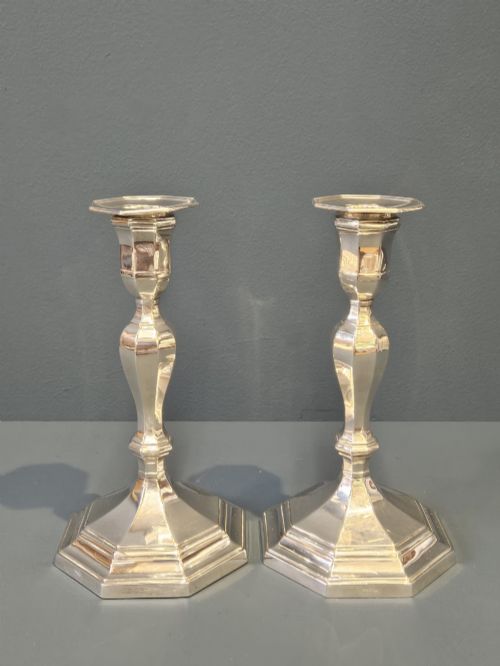
These antique sterling candle holders bring genuine period weight to a dining table, spanning Georgian designs through to twentieth-century forms.
Antique Sterling Candle Holders
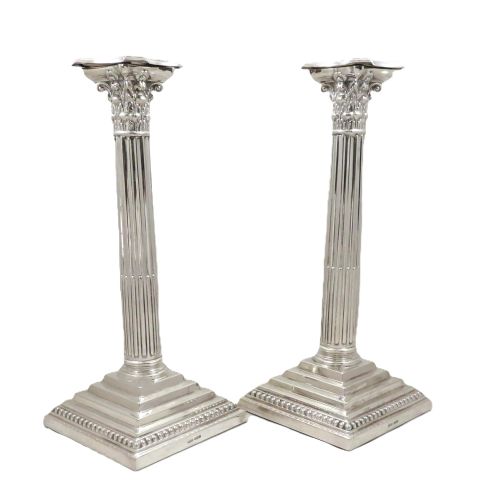
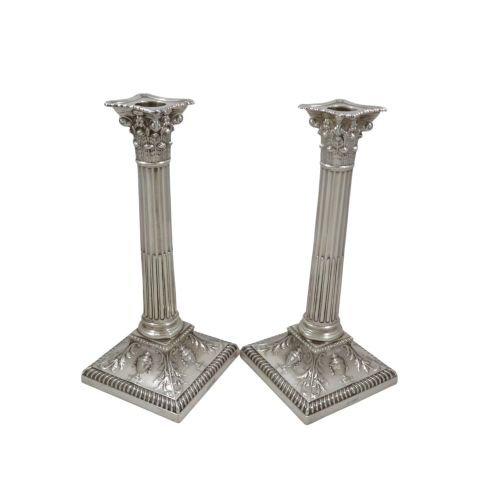
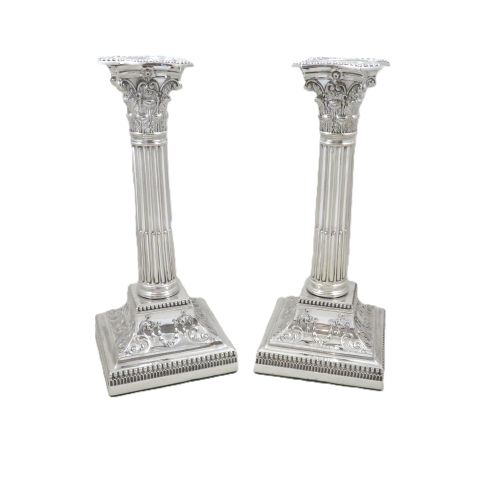
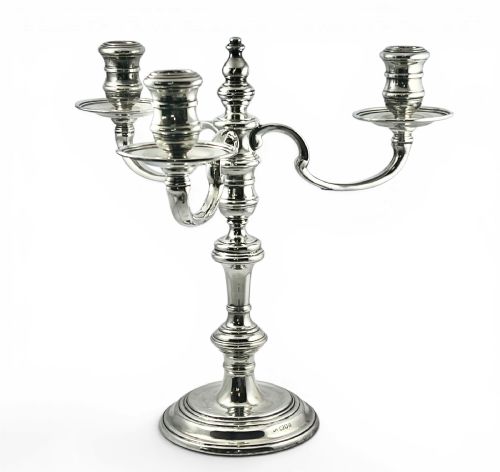
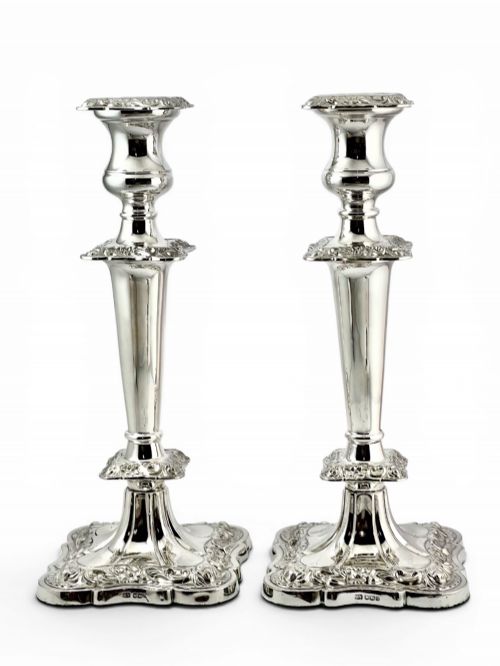
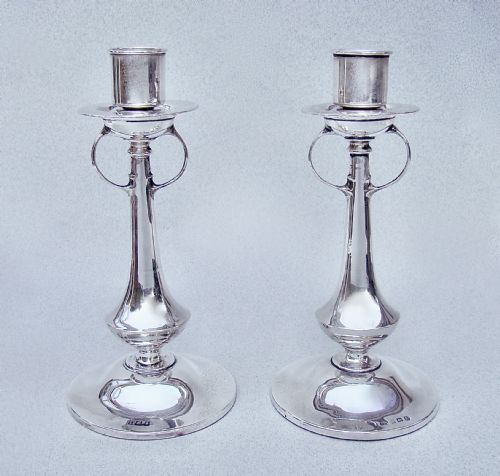
When you search for antique sterling candle holders, you are looking at items designed to support wax lighting safely in domestic rooms. The selection here leans heavily towards pairs of candlesticks, alongside multi-branch candelabra and single chambersticks.
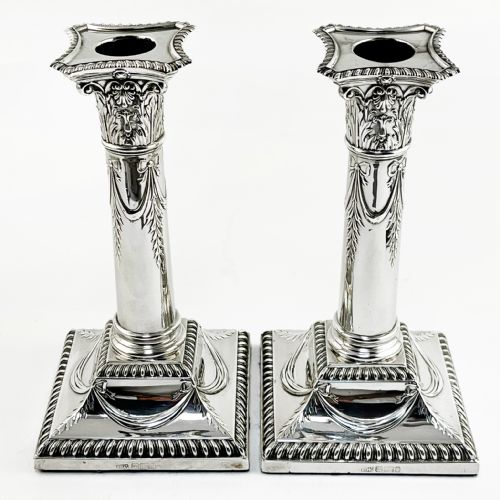
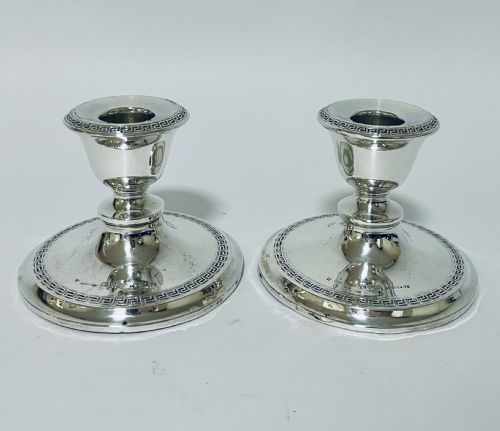
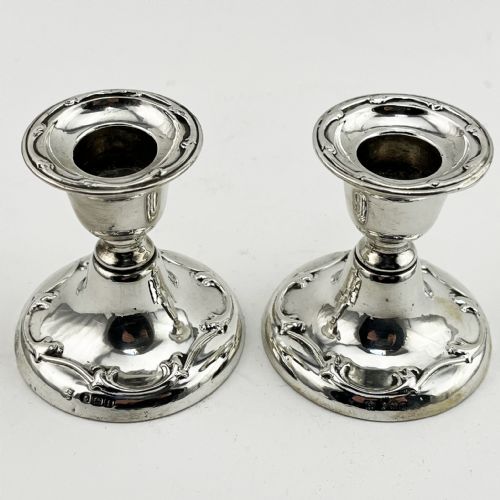
Most examples you will meet date from the Victorian and Edwardian eras, running through George V and Art Deco periods. They take forms ranging from dwarf desk models up to tall column styles and figural pieces.
How they were made
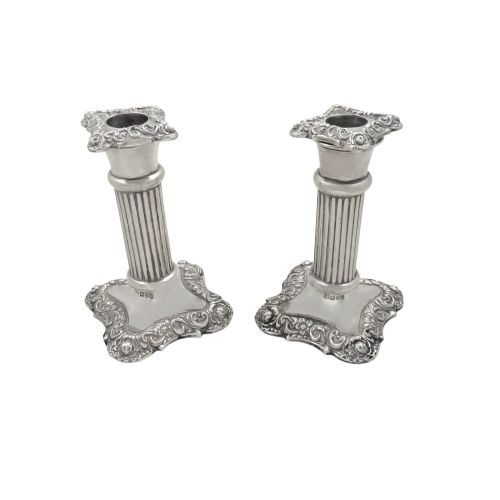
Silversmiths constructed these pieces using sterling silver and silver gilt, often applying weighted bases to provide stability for upright stems. Hallmarks stamped directly into the metal record the assay office, city, and year of creation.
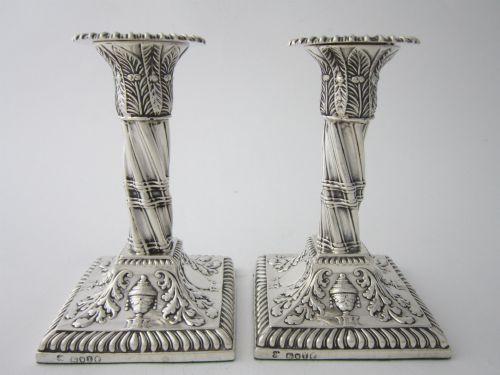
Workshops utilised techniques like casting for columns and figural elements, alongside sheet silver shaping and hand-chasing for decorative borders. Certain items integrate silver-plate or incorporate multiple branches soldered securely to central shafts.
Early chambersticks frequently include a tiny matching silver cone snuffer resting in the tray to put out the flame without smoke.
What varies in quality
The distinction between standard items and superior examples rests on the crispness of the chased ornament and the heft of the metal. Pieces by notable makers command attention for balanced proportions and clean, deep hallmarks.
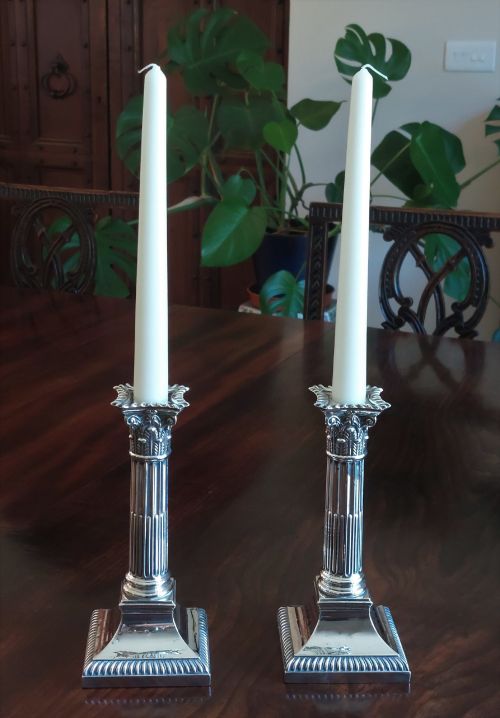
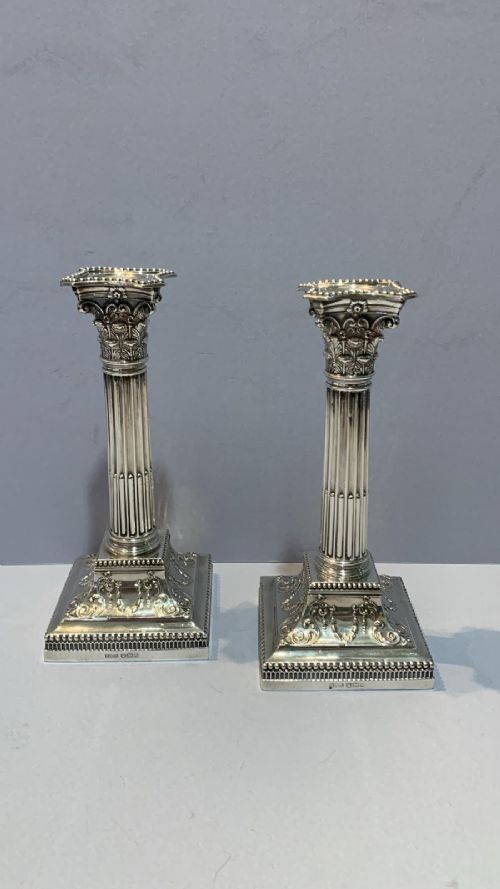
Surface preservation matters greatly, as does the structural integrity of weighted bases and removable drip pans. Finer examples retain sharp architectural details on Corinthian columns or smooth contours on plain shafts without excessive thinning from past polishing.
Garrard & Co·James Fenton·John Cafe·Thomas Bradbury & Sons Ltd·William Hutton & Sons·Goldsmiths & Silversmiths Co
The Antique Sterling Candle Holders Glossary
- Sterling silver
- A silver alloy containing 92.5 percent pure silver by mass, with the remainder composed of copper or other metals. This standard has governed British silver for centuries.
- Hallmark
- An official stamp applied by an assay office to guarantee the fineness of precious metal. These marks typically include a maker's mark, standard mark, and date letter.
- Chamberstick
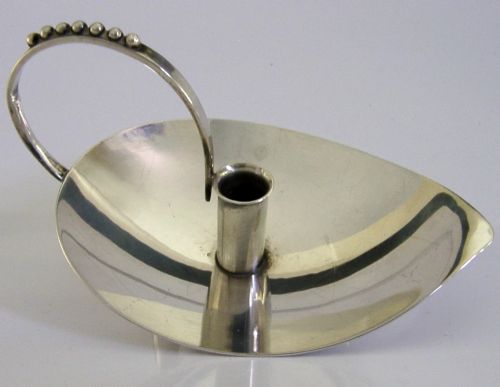
- A low, handheld candle holder fitted with a shallow pan to catch melting wax and a ring handle for carrying. They were commonly used when moving through dark hallways at night.
- Candelabra
- A branched candle holder designed to support multiple candles from a single central stem. Larger examples often feature removable arms that convert them into standard candlesticks.
- Silver gilt
- Silver that has been coated with a thin layer of gold on its surface, often applied to the interior of bowls or decorative accents for contrast.
Antique Sterling Candle Holders: Frequently Asked Questions
How do I read silver hallmarks?
Hallmarks consist of a series of small stamped symbols showing the maker, the silver standard, the assay office town, and a specific date letter.
Matching these individual punches against published assay records reveals precisely where and when a candle holder was made.
Why are silver candlesticks weighted?
Solid silver would make large candlesticks prohibitively expensive and remarkably heavy, so makers filled the internal bases with resin, pitch, or plaster.
This weighting lowers the centre of gravity, ensuring the tall stem and heavy candle remain stable on a dining table.
What is a chamberstick used for?
A chamberstick provided portable illumination for lighting bedrooms or guiding household members along unlit corridors before electric lighting became common.
The wide saucer caught any dripping wax while the attached ring allowed the holder to be carried safely in one hand.
How do I clean antique silver?
Remove accumulated dust and surface dirt using warm water and a mild soap, applied gently with a soft cloth.
Avoid abrasive polishes that can wear away thin silver layers and soften the crisp edges of engraved details or hallmarks.