




English Sterling Silver Pair
An english sterling silver pair brings matched utility and craftsmanship to the table, spanning centuries of silversmithing from domestic tableware to decorative ornaments.
English Sterling Silver Pair
When you search for an english sterling silver pair, you encounter matched sets designed for dining, display, and personal use. These items reflect the domestic habits of various eras, uniting utility with coordinated design.
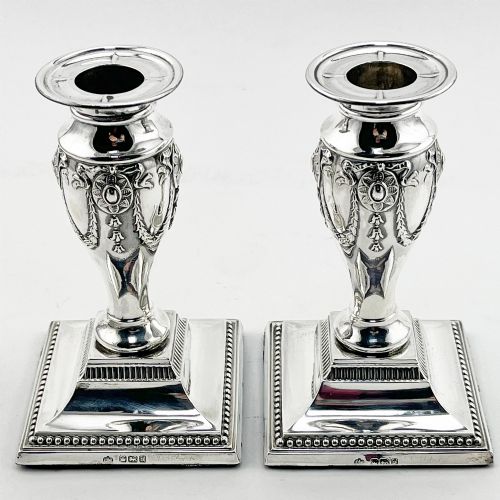
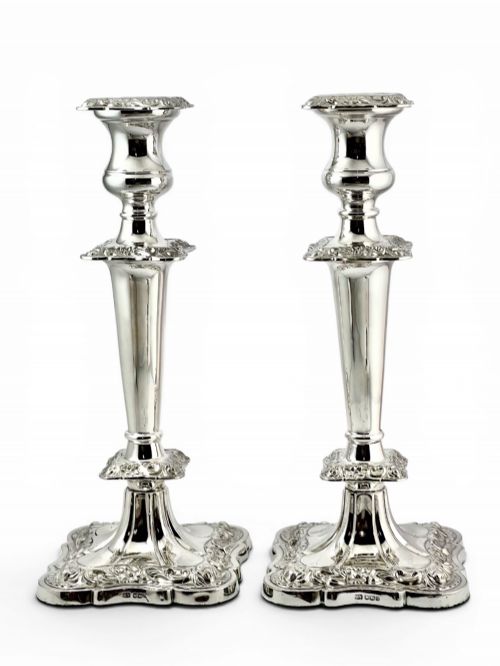
Candlesticks, napkin rings, serving spoons, and menu holders dominate the selection. You are likely to meet Georgian serving pieces, Victorian cased napkin rings, and Edwardian or mid-century candlesticks.
The objects originate across British centres of production, including London, Sheffield, Birmingham, and Scottish provincial towns. Each pairing demonstrates the standard practices of its respective period, from the neoclassical revival to mid-century modernism.
Materials and Working Methods
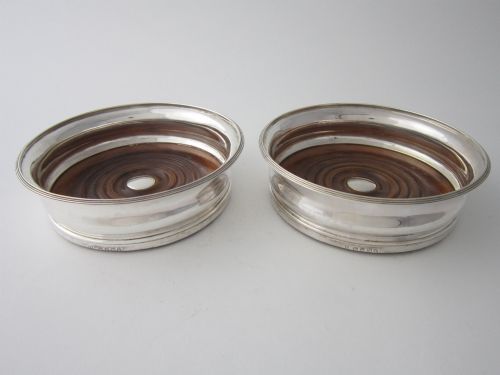
Silversmiths utilised sterling silver alongside supporting materials such as tortoiseshell, glass, mahogany, velvet, silk, and leatherette for fitted presentation cases. These mixed media elements appear primarily in boxes, butter dishes, and letter clips.
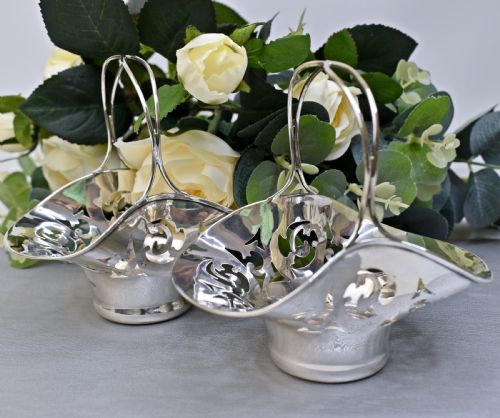
Techniques range from casting and piercing to hand-raising and chasing, depending on whether the item is a structural candlestick or a delicate bon bon basket. Hallmarking stamps provide official confirmation of metal purity and origin.
Listings include items from the 18th, 19th, and 20th centuries, incorporating materials like tortoiseshell, mahogany, and glass alongside sterling silver.
Distinctions in Standard
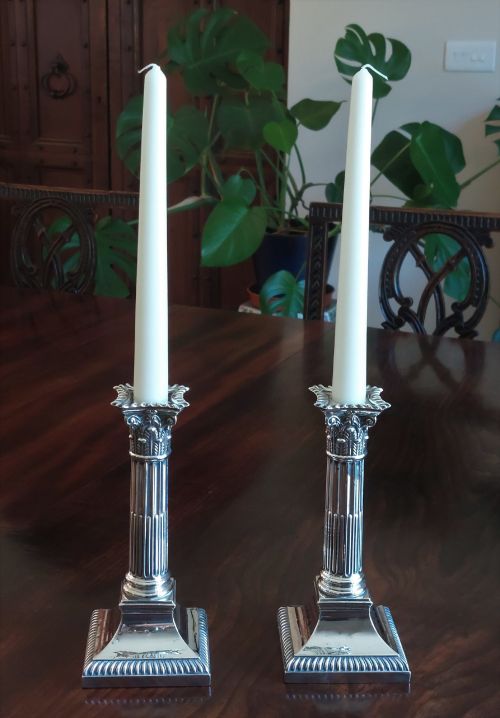
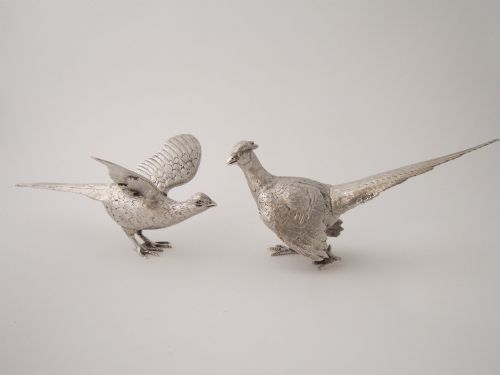
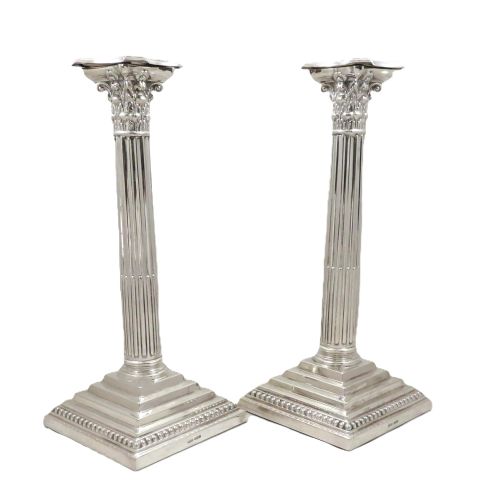
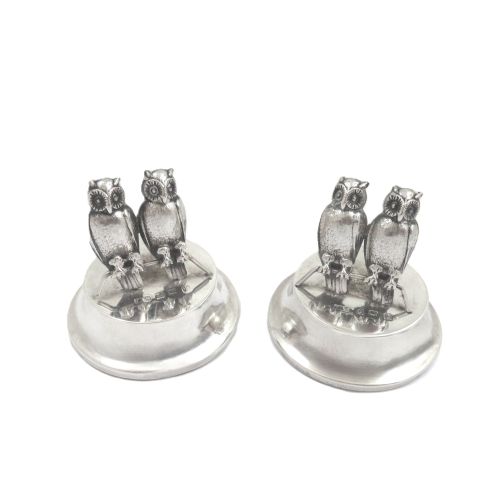
Quality rests in the crispness of detail, the weight of the silver, and the integrity of the original matched partnership. Cast ornamentation like Corinthian capitals or figural birds reveals the precision of the maker's hand.
Condition involves the preservation of hallmarks, the retention of original fitted cases, and the absence of excessive wear on pierced or engraved surfaces. Maker attribution also elevates the standing of a matched pair.
Elkington and Company·Garrard and Co·Bateman Family·John Cafe·Fenton Brothers·James Dixon and Sons·Adie Brothers·Sampson Mordan
The English Sterling Silver Pair Glossary
- Sterling silver
- An alloy comprising ninety-two point five percent silver and seven point five percent other metals, typically copper, ensuring durability for functional items.
- Hallmark
- An official stamp applied by an assay office indicating metal standard, origin city, and the year of manufacture.
- Provincial silver
- Items assayed outside the main London office, such as in Sheffield, Birmingham, or Scottish towns.
- Bon bon basket
- A small open vessel intended for serving sweets or confectionery at the table.
- Corinthian column
- A classical architectural style frequently adapted for the stems of tall table candlesticks.
- Sauce boat
- An open vessel with a lip and handle designed for serving gravies or sauces.
English Sterling Silver Pair: Frequently Asked Questions
How do I clean sterling silver?
Use a specialised silver cloth and mild cleaning agents designed to remove tarnish without abrading the metal surface. Avoid harsh chemical dips that strip away desirable patination.
Store items in dry conditions, and for cased pieces, keep them in their original velvet or silk-lined boxes to protect against atmospheric moisture.
What periods do these pieces cover?
The evidence spans from the mid-eighteenth century through the Georgian, Victorian, and Edwardian eras, extending into the mid-twentieth century.
Styles shift from ornate neoclassical revivals to clean mid-century modern designs, reflecting the changing aesthetic preferences of each generation.
Are these items supplied in original cases?
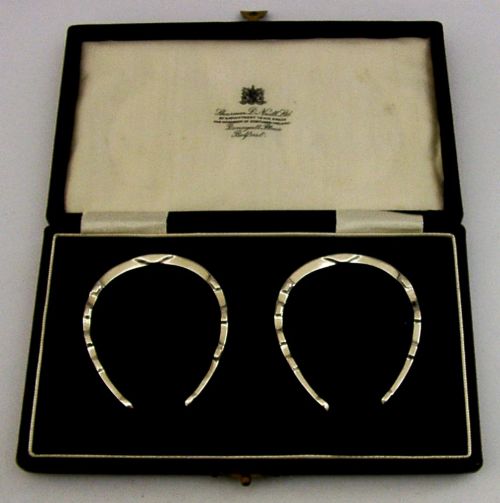
Several napkin rings, pepper pots, and butter dishes retain their original fitted boxes lined with velvet, silk, or leatherette.
Cased sets indicate items intended as presentation gifts or for careful preservation by past owners.
How do I identify the maker?
Maker marks stamped alongside the assay office symbols and date letters reveal the workshop or silversmith responsible for production.
Consulting historical records for these punch marks allows you to trace pieces to specific firms in London, Sheffield, or Birmingham.