


Antique Stationery Set
An antique stationery set organises correspondence materials upon a desk, bringing brass, walnut, leather, and glass to daily writing tasks.
Antique Stationery Set
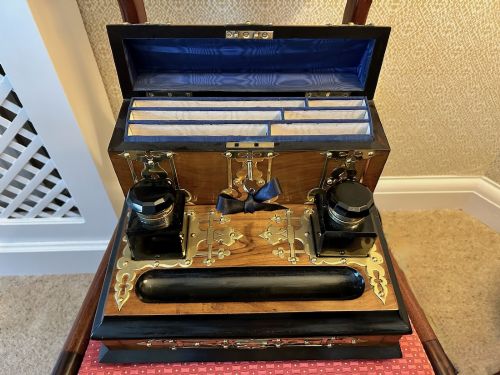
An antique stationery set encompasses coordinated desk accessories designed to hold writing paper, envelopes, and writing implements. The selection on this page ranges from compact inkstands and letter racks to grand walnut and ormolu writing cases spanning the Georgian, Victorian, and Edwardian eras.
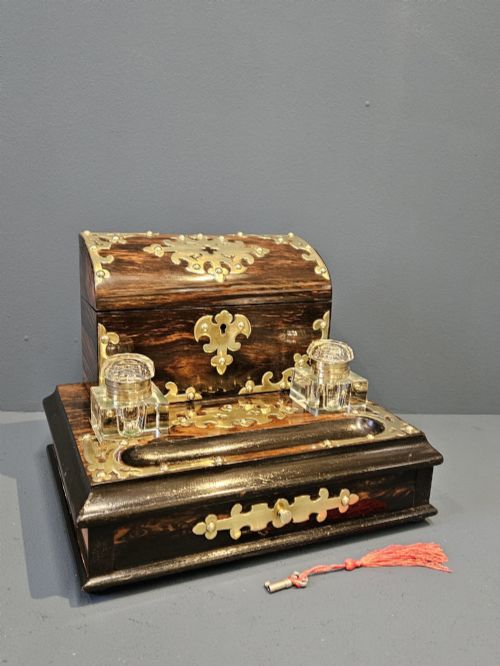
The most common configurations feature a combination of inkwells, pen trays, and stationery compartments fashioned from woods like walnut, coromandel, and mahogany, often accented with brass or gilt bronze. These pieces reflect the formal correspondence habits of the nineteenth and early twentieth centuries.
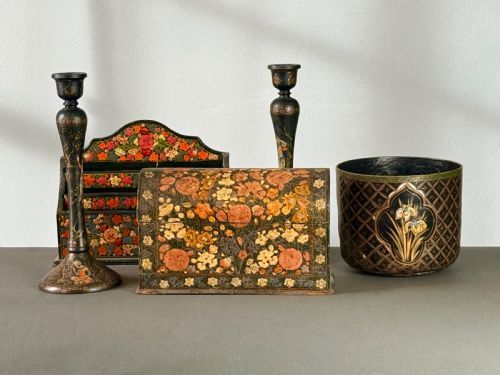
Origins vary across English, French, and Indian workshops, demonstrating distinct regional preferences in materials such as papier-mâché, marble, and ceramic. Buyers encounter both simple oak companions and elaborate French second empire porcelain-inset sets.
How they were made
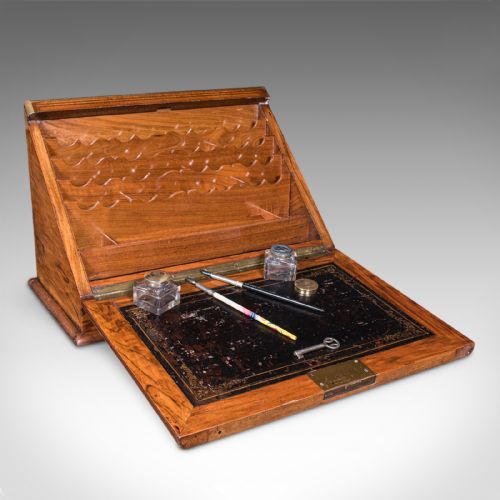
Maker's workshops employed cabinet-making techniques to construct the wooden bodies of stationery cases and writing boxes using walnut, mahogany, rosewood, and coromandel. Surfaces were frequently inlaid with mother-of-pearl, brass stringing, or leather panels.
Metal components, including brass mounts, ormolu, and gilded bronze, were cast and chased to frame inkwells and support letter racks. Glass and ceramic elements were integrated into inkstands, alongside specialised inclusions such as intaglio coloured-glass seals and rocker ink blotters.
Keep an eye out for playing cats and kittens cast in gilded bronze upon nineteenth-century desk sets.
What varies in quality
The standard of a stationery set depends upon the integration of its materials and the crispness of its metal mounts. Pieces featuring hand-painted porcelain plaques, thick ormolu castings, and substantial exotic hardwoods stand apart from simpler iterations.
Refinement in secondary details, such as closely fitted drawers, bevelled glass inkwell inserts, and matched components within a multi-piece desk tidy, distinguishes superior examples from standard utilitarian boxes.
Daniel Holy of Sheffield
The Antique Stationery Set Glossary
- Inkstand
- A tray or stand holding one or more inkwells, pen holders, and sometimes a sander or wafer box. It forms the central fixture of most desk sets.
- Ormolu
- Gilded bronze used extensively for decorative mounts on French and English desk pieces during the nineteenth century. The technique involves applying a gold amalgam to a bronze base.
- Coromandel
- A dense, heavy tropical hardwood prized for its rich dark brown colour and striking black grain. It was frequently utilised for luxury Victorian writing cases and stationery stands.
- Rocking blotter
- A curved desk accessory mounted with blotting paper, designed to roll across freshly written ink. They appear frequently in Edwardian and late Victorian brass or wooden sets.
- Papier-mache
- A composite material made from paper pulp mixed with glue and resin, pressed and lacquered. It provided a smooth surface for hand-painted decoration on mid-nineteenth-century desk sets.
Antique Stationery Set: Frequently Asked Questions
What pieces comprise a complete set?
A complete stationery or desk set typically groups functional writing implements together on a shared stand or tray. Common components include inkstands with glass-insert inkwells, letter racks, blotters, and companion drawers.
Larger configurations may incorporate candlesticks, cachepots, or specialised compartments for seals and wax. The exact composition varied according to the specific writing needs of the period.
How do I date an antique stationery set?
Dating relies on identifying the prevailing styles, materials, and manufacturing techniques evident in the piece. Georgian and Regency examples often feature rosewood, Sheffield plating, and inlaid brass details.
Victorian pieces frequently display heavier brass mountings, coromandel wood, or papier-mâché, while Edwardian sets tend toward lighter brass frames and structured wooden stationery tidies.
Were these sets made in England?
Many stationery sets originate from English workshops, utilising native oak alongside imported exotic hardwoods like walnut and mahogany. Sheffield plating and brass casting were prominent English trades.
Continental workshops, particularly French makers in Paris, also produced grand sets utilising vert marble, ormolu, hand-painted porcelain, and Chinoiserie lacquer finishes.
How should I maintain an antique wooden desk set?
Preservation of wooden and brass desk sets requires stable indoor humidity away from direct sunlight and heat sources. Gentle dusting with a dry, soft cloth prevents particulate buildup on delicate ormolu and lacquer surfaces.
Leather panels and wood veneers benefit from occasional light treatment with appropriate conservation waxes, avoiding modern chemical polishes that might damage historic finishes.