


Antique Marble Desk Accessory
An antique marble desk accessory sits heavily on the blotter, combining smooth stone with cast metal to organise correspondence.
Antique Marble Desk Accessory
An antique marble desk accessory serves utilitarian and decorative roles in a study or library. Buyers seek these items to bring period character to a working surface through functional objects like inkstands, paperweights and bookends.
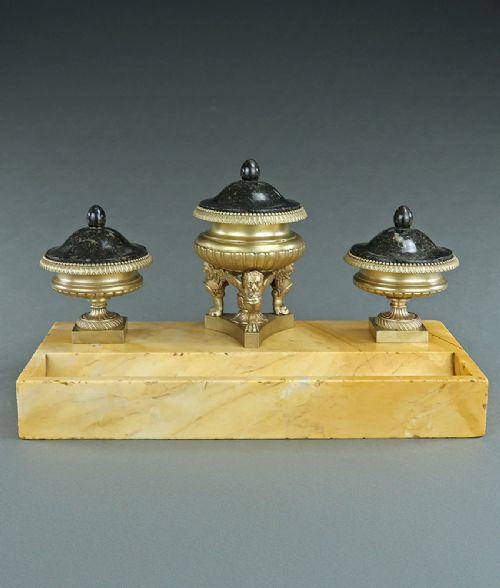
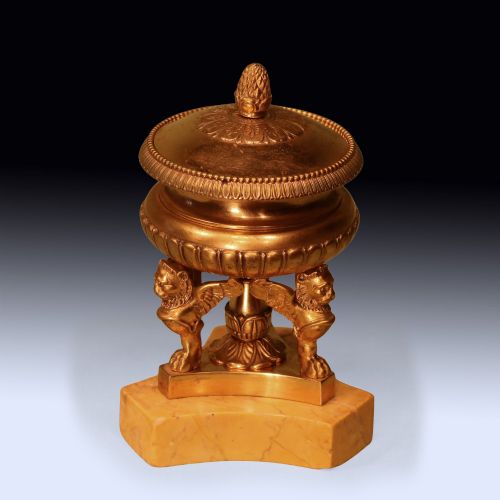
The version most commonly met on this page is the nineteenth-century French or Italian inkstand, often pairing variegated marble with gilt bronze or ormolu mounts. These pieces reflect the Grand Tour influence and nineteenth-century domestic stationery habits.
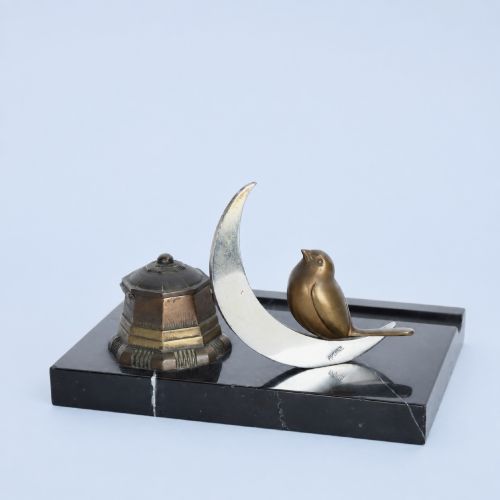
Beyond inkstands, the selection includes twentieth-century Art Deco desk tidies, cigar boxes and bookends in black marble, green onyx and alabaster. These later designs lean towards geometric forms and animal figures, mirroring changing interior aesthetics.
How they were made
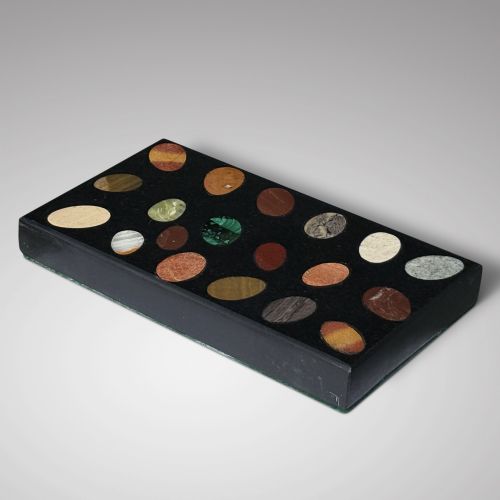
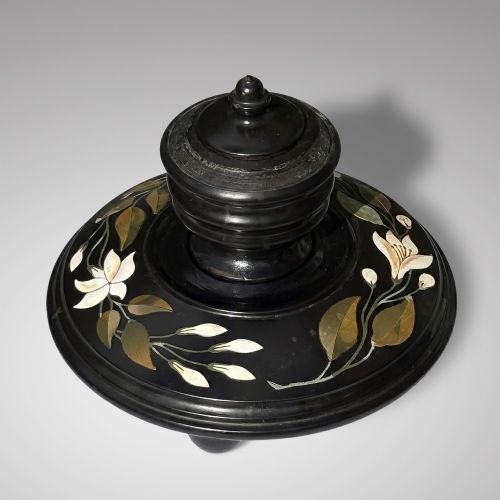
Makers shaped the heavy bases from blocks of natural stone including black marble, Sienna marble, Ashford marble and green onyx, sometimes polishing the surfaces to a high gloss. Stonemasons occasionally inlaid these bases with pietra dura specimen stones, lapis lazuli, malachite or carved lava cameos.
Metal components like inkwells, lids, mounts and figural bookends utilise cast bronze, brass, ormolu, gilt bronze, spelter and silver. Artisans combined the cold-painted or gilded metal elements directly onto the stone plinths using screws or pins.
Listings feature items spanning the nineteenth century through to the 1930s, uniting Victorian and Edwardian works with Art Deco designs.
What varies in quality
Quality separates by the precision of the stonecutting and the fineness of the metal casting. Superior pieces display crisp chiselling on the bronze mounts and tight, seamless joints where the stone meets the metal.
The choice of decorative medium influences the tier of the piece, with inlaid pietra dura work or hand-carved lava cameos representing greater workshop skill than plain polished slabs of marble or onyx.
Franz Bergmann·Albert Marionnet·Zimmermann
The Antique Marble Desk Accessory Glossary
- Ormolu
- Gilded bronze mounts applied to furniture, clocks and desk accessories. The technique involves coating bronze with a mercury-gold amalgam and heating it.
- Pietra dura
- An inlay technique using cut and fitted polished coloured stones to create pictorial designs. It appears frequently on nineteenth-century Grand Tour souvenirs.
- Ashford marble
- A Derbyshire limestone used for inlay work rather than true metamorphic marble. It takes a fine black polish and accepts colourful floral stone inlays.
- Spelter
- An alloy of zinc and lead used as a cheaper substitute for bronze in twentieth-century figures and bookends. It is softer and melts at lower temperatures than bronze.
- Grand Tour
- The nineteenth-century travel tradition where wealthy Europeans collected antiquities and architectural souvenirs. Desk accessories often incorporated specimens gathered on these journeys.
Antique Marble Desk Accessory: Frequently Asked Questions
What is an antique marble desk accessory used for?
These items held writing equipment, organised correspondence or kept loose papers anchored on nineteenth and twentieth-century writing desks. Inkstands provided a secure well for liquid ink alongside sanders and pen trays.
Bookends and paperweights kept volumes upright and documents steady in private libraries and studies. Today, collectors use them to bring tactile historic materials into modern workspaces.
How do I date a marble inkstand?
Stylistic markers and material combinations help narrow the date of manufacture across different eras. Nineteenth-century pieces frequently employ French Empire or Neoclassical bronze mounts combined with Sienna or vert marble.
Twentieth-century examples transition towards Art Deco geometry, utilising black marble, green onyx and chrome alongside stylized animal figures. Examining the metal casting technique and the type of stone provides further clues to the period.
What is Grand Tour marble?
Grand Tour marble pieces are souvenir objects purchased by travellers visiting Italy and classical sites during the nineteenth century. They often feature inlaid specimens of pietre dure, antique lava cameos or micro-mosaics set into local stone bases.
These items served as portable reminders of classical architecture and art encountered during European travels. Their craftsmanship reflects the specialised lapidary workshops operating in Rome, Naples and Florence at the time.
How should I clean marble desk accessories?
Gentle dusting with a dry, soft microfibre cloth removes surface particles without abrading the polished stone or vulnerable metal mounts. Acidic cleaning solutions must be avoided entirely because they etch and dull marble surfaces.
Metal components require careful handling to preserve original gilding or patination without introducing moisture to the stone junctions. Professional conservation advice is recommended for pieces with delicate pietra dura inlays.