

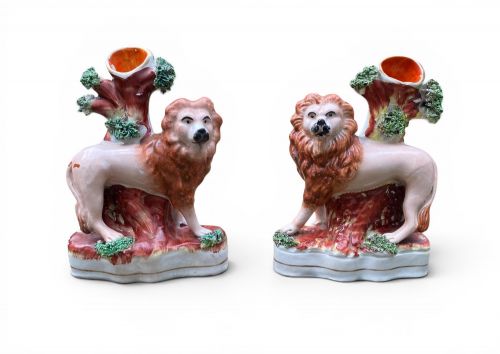


Antique Staffordshire Earthenware Statue
An antique staffordshire earthenware statue brings domestic Victorian character to a mantelpiece, depicting animals, royalty, or theatrical subjects.
Antique Staffordshire Earthenware Statue
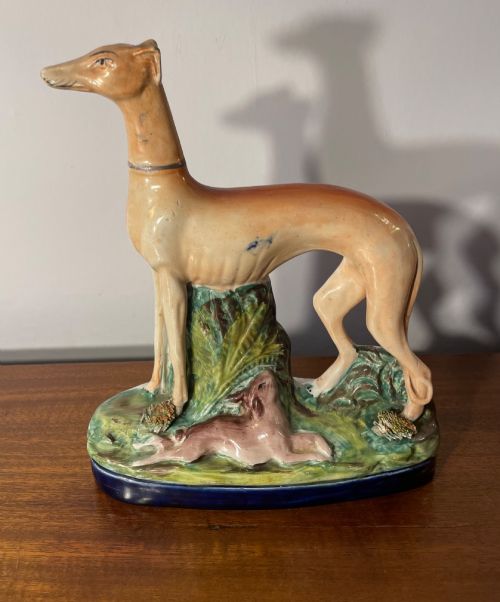
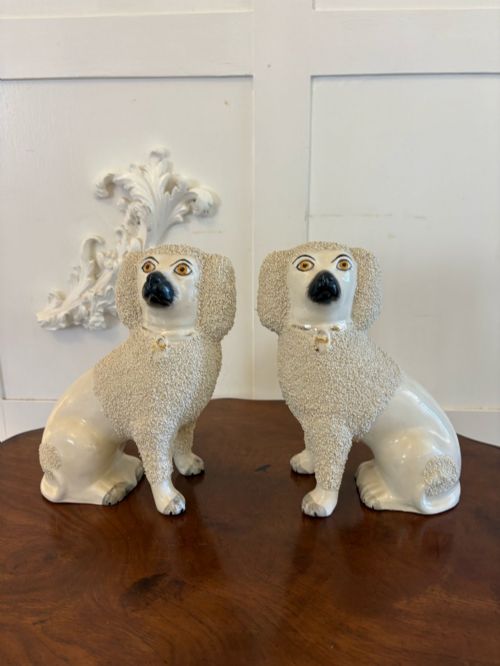
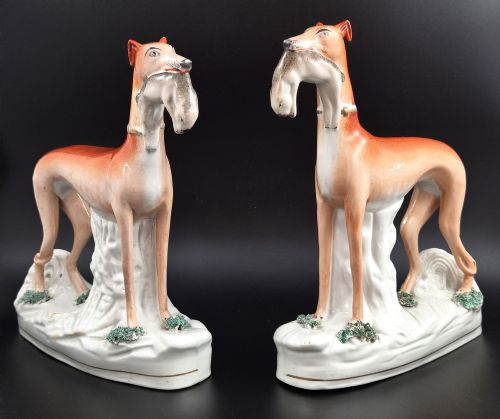
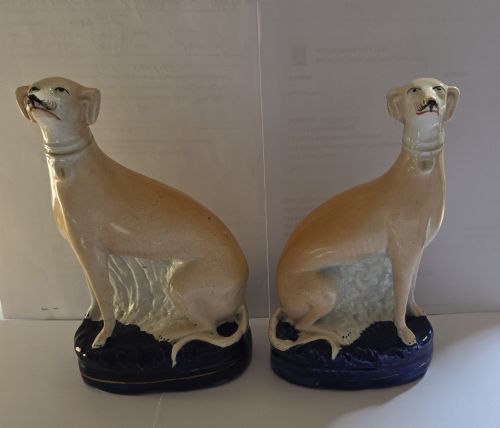
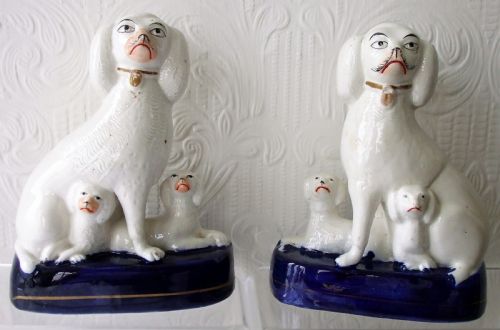
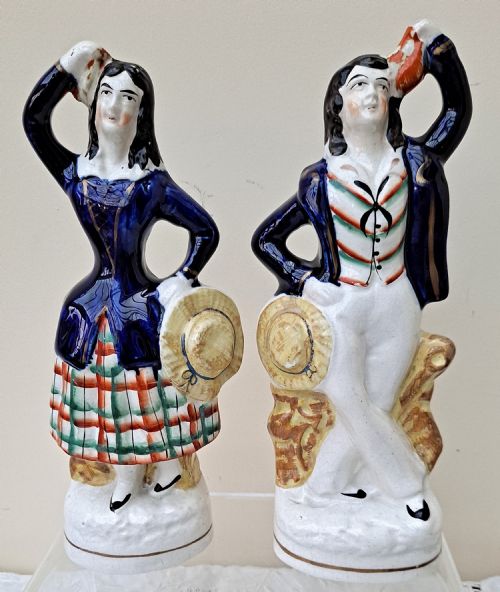
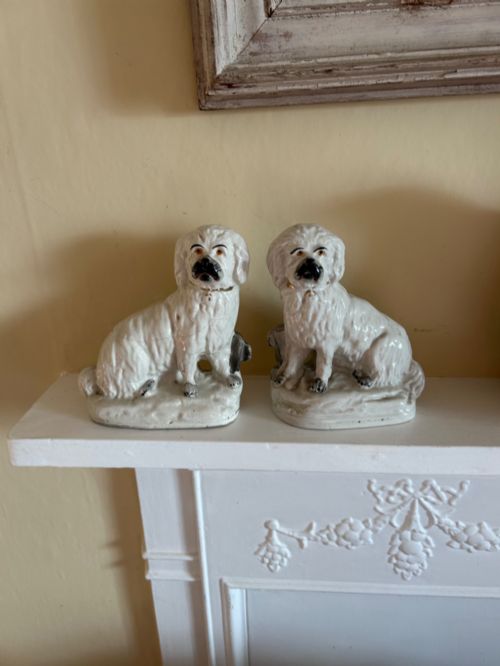
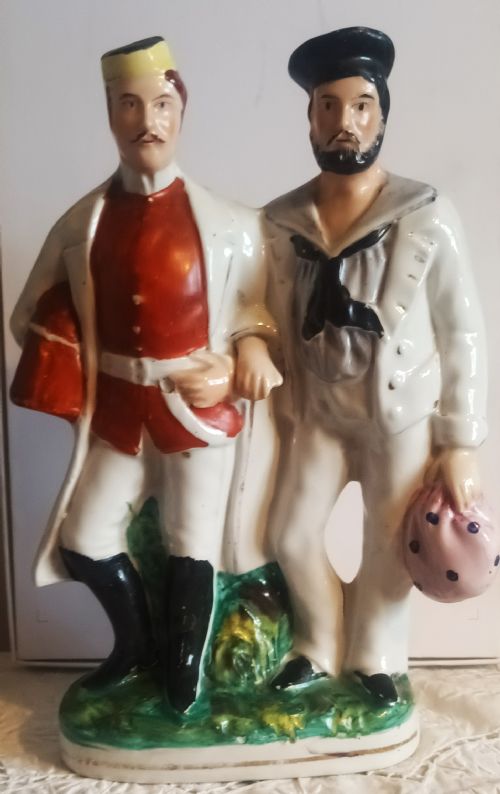
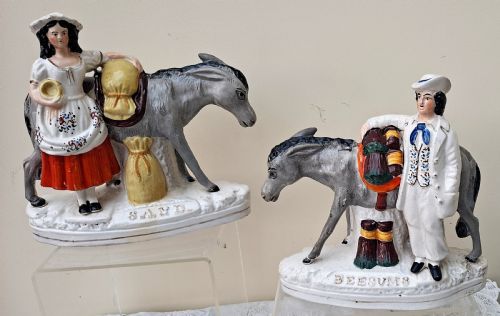
An antique staffordshire earthenware statue typically takes the form of a portrait figure, historical subject, or domestic animal model. Pairs of seated dogs such as spaniels, poodles, and greyhounds appear frequently across the selection.
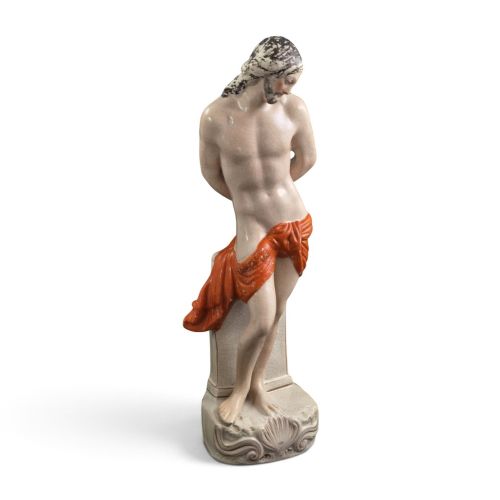
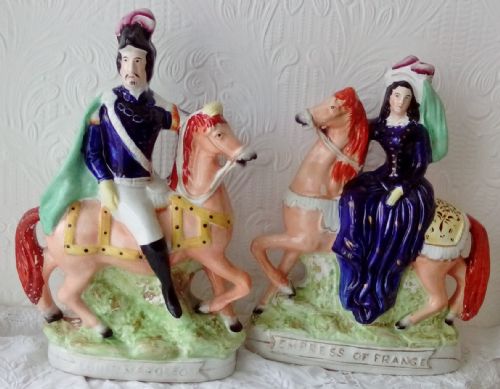
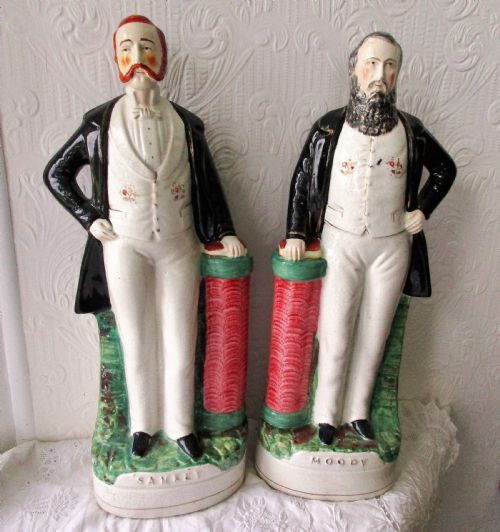
Makers also produced theatrical groups, literary figures, and biblical scenes, often fashioned as standing characters or seated pairs. Larger sculptural groups include spill vases and quill holders intended for functional desk use.
These figures span the nineteenth century, with Victorian examples dominating the current selection alongside earlier Georgian pearlware pieces and later Edwardian variations.
Materials and glazing
Potters shaped these figures from earthenware and pearlware, utilising ceramic moulds to form the body of each statue. Artisans then applied lead glaze to seal the porous clay base.
Colour came from enamel paint brushed onto the surface, sometimes accented with gold leaf details or left as monochrome black and white glaze. Firing in kilns set the hard finish over the moulded clay.
Among the menagerie of ceramic companions, fierce lions share shelf space with wigged poodles and earnest terriers.
Execution and detail
Matched pairs display uniform sizing and balanced decoration across both figures, whereas lesser examples show greater asymmetry or simpler hand-painted highlights.
Ralph Wood·Wedgwood and Co Ltd·Wooley
The Antique Staffordshire Earthenware Statue Glossary
- Earthenware
- A porous pottery body fired at lower temperatures than stoneware, requiring a glaze to hold liquids and create a smooth surface.
- Pearlware
- A refined earthenware developed in the eighteenth century featuring a subtle bluish glaze that pools in recesses to imitate Chinese porcelain.
- Spill vase
- A hollow ceramic cylinder attached to a figure, designed to hold wooden spills used for lighting pipes or candles.
- Enamel paint
- Vitreous pigments applied over the fired glaze and subjected to a lower second firing to bond the colours permanently to the ceramic.
Antique Staffordshire Earthenware Statue: Frequently Asked Questions
How do I identify a Victorian piece?
Victorian pieces typically display characteristic moulding styles, robust earthenware bodies, and hand-applied enamel colours depicting mid-nineteenth-century subjects.
Comparison with dated examples helps confirm the production era based on clothing styles and glaze types.
Were these figures made in pairs?
Many animal figures, portrait statues, and theatrical subjects were modelled and sold as symmetrical matching pairs for mantelpiece display.
Single figures also exist, representing individual characters, busts, or animals that stood alone.
What is a spill vase figure?
A spill vase figure incorporates an open ceramic tube beside the main subject to hold wooden spills for transferring fires.
This practical addition combined decorative figural sculpture with a functional fireside accessory.
How should I clean my statue?
Dusting gently with a soft dry cloth maintains the surface without disturbing the fragile overglaze enamel paint.
Harsh chemical cleaners and excessive moisture should be avoided to protect the historic glaze and gold leaf accents.