
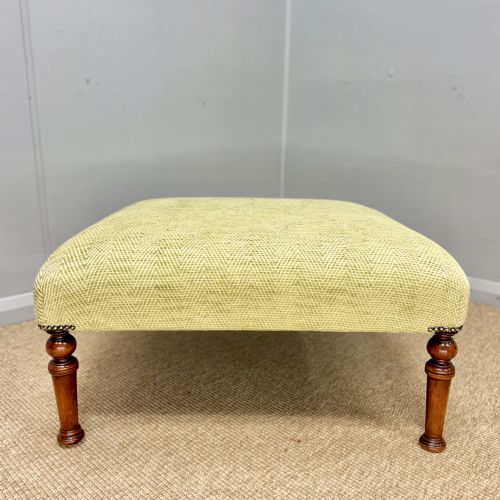


Antique Square Leg Coffee Table
An antique square leg coffee table brings low-profile utility and period timber character to a seating arrangement.
Antique Square Leg Coffee Table
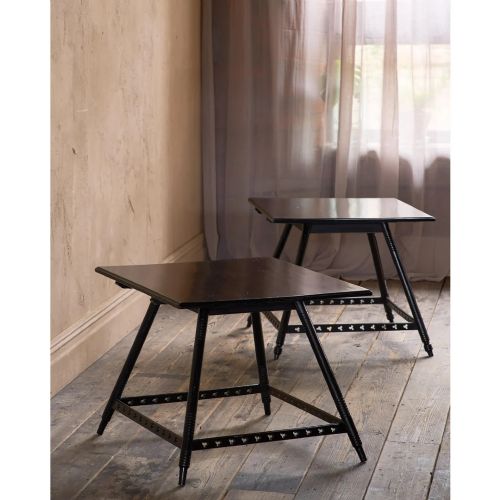
An antique square leg coffee table is a low surface built with straight, rectilinear supports, drawing from periods ranging from the nineteenth century up through the nineteen-thirties. While search terms specify coffee tables, listings span multiple low-profile forms including side tables, lamp tables, and centre stools that function equally well in a modern reception room.
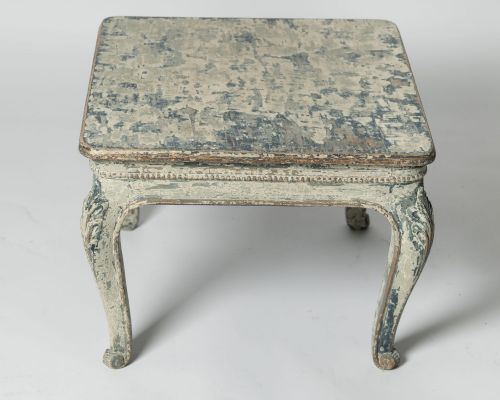
Makers and workshops across these decades adapted formal dining or salon forms into lower proportions, using sturdy timber frames and occasionally incorporating upholstered or caned tops. Buyers encounter diverse stylistic influences, from French Provincial and Louis XV marquetry to Carolean Revival and rustic country pine.
Origins vary between domestic English workshops and continental European centres, bringing distinct regional timbers and decorative finishes to the category. The resulting inventory offers a mix of formal revival pieces and simpler country house examples.
How they were made
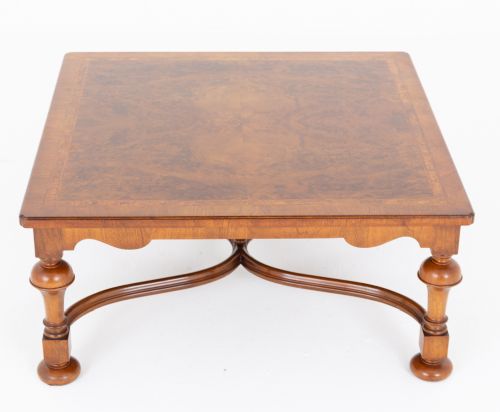
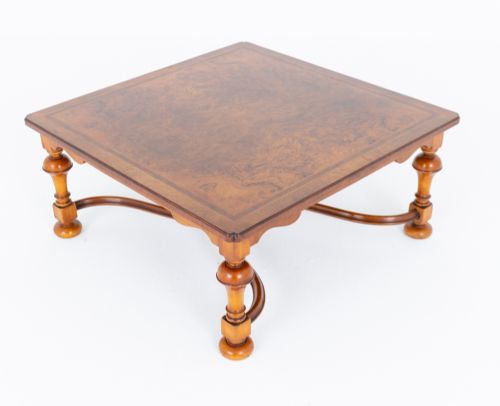
Construction relies on traditional cabinet-making timbers, principally walnut, mahogany, fruit wood, oak, and pine, selected for structural stability. Cabinet makers frequently employed figured veneers such as burr walnut or satinwood to add visual depth to table tops.
Decorative detailing on these frames involves marquetry inlay, painted finishes, and brass mounts, alongside leather buttoning and tapestry fabric on stool conversions. Joinery methods reflect the period of production, joining solid timber frames to straight legs designed to bear daily weight.
One large country house stool arrives ready for debate, upholstered in buttoned leather for feet or extra seating.
What varies in quality
Quality rests in the selection of cabinet timbers and the fidelity of period stylistic revivals, such as Carolean or Louis XV details. Finer examples display superior grain matching in walnut or mahogany and more complex marquetry work across the surface.
The integrity of the frame construction and the preservation of original decorative elements, whether brass mounts or polished wood finishes, separate standard utility pieces from higher-grade cabinet work.
Gillows of Lancaster
The Antique Square Leg Coffee Table Glossary
- Marquetry
- The art of applying decorative pieces of veneer to a structure to form intricate designs. This technique appears on continental European tables.
- Burr Walnut
- A figured wood grain obtained from tree growths, highly prized for its swirling patterns. It is used extensively on tabletops to create visual richness.
- Satinwood
- A durable, yellow-toned timber imported from tropical regions, utilised for fine veneer work and inlay details. It offers a contrasting pale lustre against darker woods.
Antique Square Leg Coffee Table: Frequently Asked Questions
What periods do these tables come from?
The pieces span from the late nineteenth century through the Victorian era and into the nineteen-twenties and thirties.
Designs draw on earlier historical revivals including Carolean, Regency, and Louis XV styles.
Are all these tables low coffee tables?
Not every piece started life as a coffee table, as the inventory includes side tables, lamp tables, and centre stools.
Lower proportions and sturdy frames make these alternative forms suitable for modern coffee table use.
What woods are commonly used?
Makers utilised a range of timbers including mahogany, walnut, burr walnut, fruit wood, oak, and pine.
Finer decorative examples incorporate satinwood veneers and brass mounts.
How do I identify French pieces?
Continental origins appear through specific stylistic markers such as Louis XV design traits, marquetry inlay, and provincial proportions.
Materials like marble tops combined with brass also point towards French manufacture.