
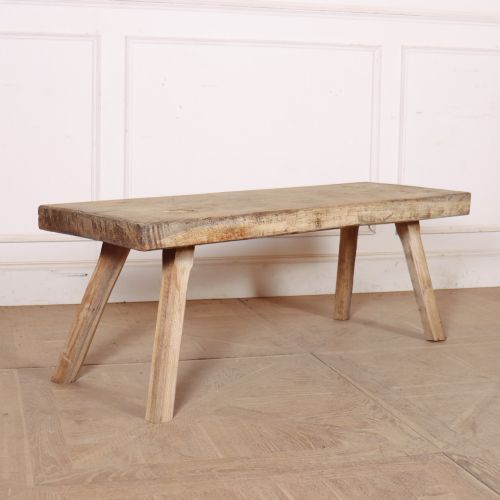
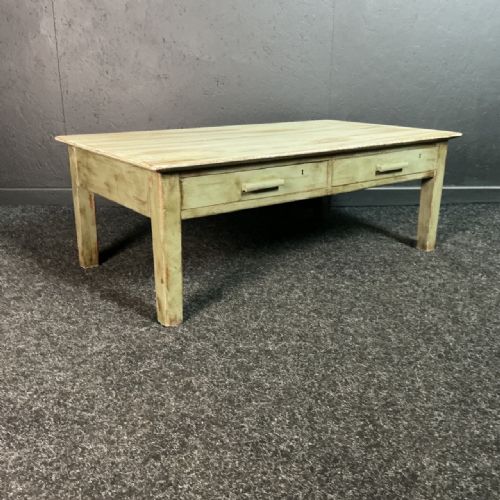
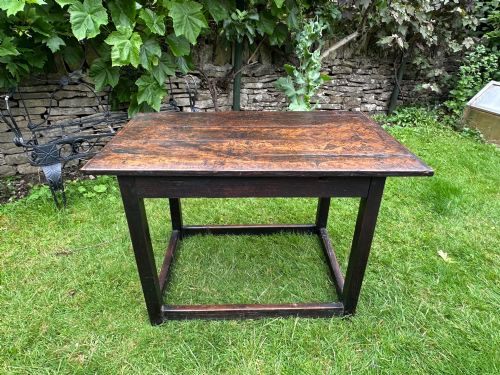
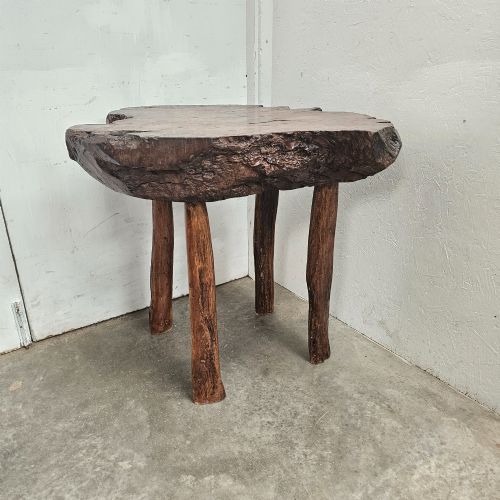
Rustic Country Coffee Table
A rustic country coffee table brings solid timber grain and centuries of utility straight into a modern sitting room.
Rustic Country Coffee Table
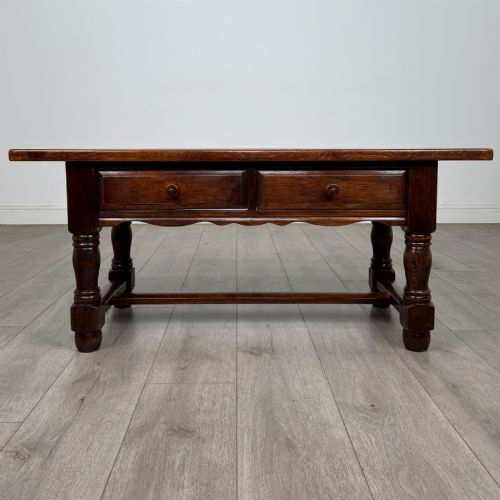
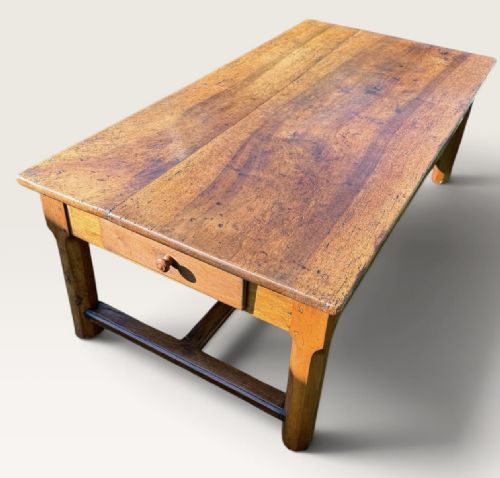
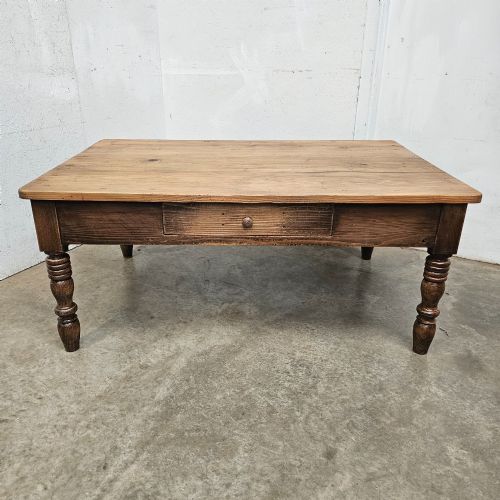
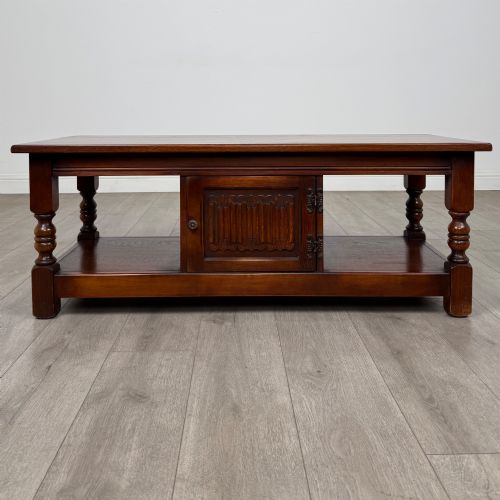
A rustic country coffee table comprises low tables and adapted benches built from sturdy domestic woods across the eighteenth, nineteenth, and early twentieth centuries. Buyers seeking this phrase encounter low furniture forms adapted from older workbenches, cheese presses, and pigment troughs.
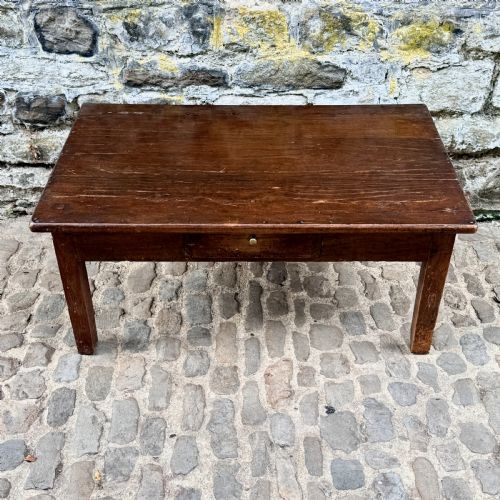
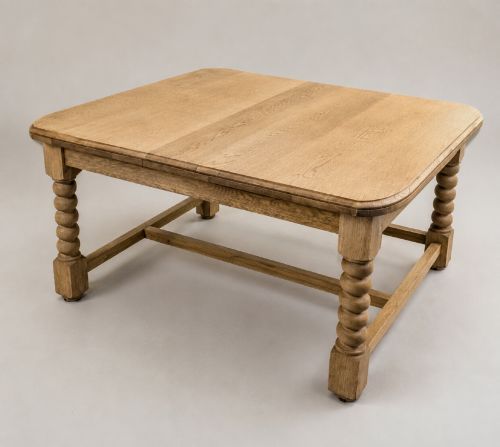
The selection ranges from French and English oak farmhouse examples to Hungarian oak pig benches and Austrian elm low tables. Many pieces originate as utilitarian workshop or kitchen items lowered to sit comfortably beside modern sofas.
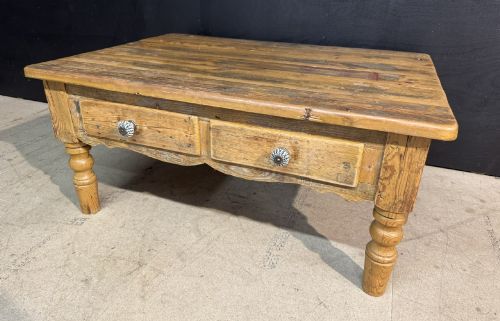
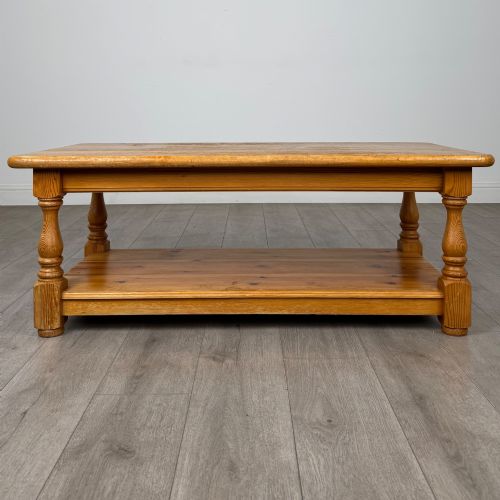
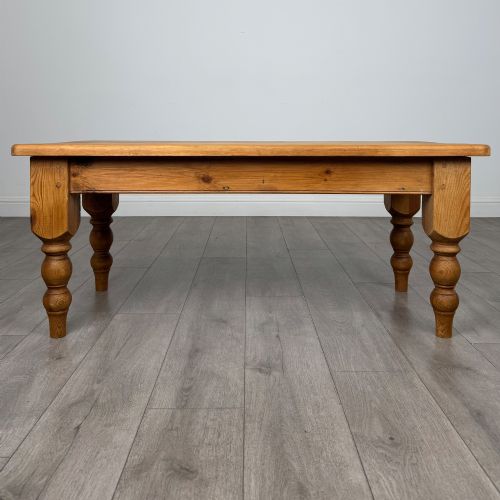
Pine and elm variants appear frequently alongside walnut and chestnut examples, spanning periods from late Georgian formats through to Edwardian interpretations. The heavy plank tops and turned or trestle legs define the domestic character of these low tables.
How they were made
Carpenters built these tables using heavy domestic hardwoods like oak, elm, chestnut, and walnut, supplemented by pine for simpler domestic boxes and benches. Planks were joined solidly, often supported by stout turned legs, trestle bases, or pegged stretcher frames.
Surface treatments rely on traditional waxes, simple paint layers, or bare scrubbed timber finishes that expose the natural grain. Wrought iron bracing and brass fittings appear where structural reinforcement was required for heavy daily labour.
Current listings feature pieces constructed from oak, pine, elm, walnut, chestnut, and hardwood across the eighteenth and nineteenth centuries.
What varies in quality
Quality rests in the integrity of the original timber and the restraint shown during any conversion to a low format. Tables retaining their unclipped original board thicknesses and honest surface wear stand apart from heavily sanded examples.
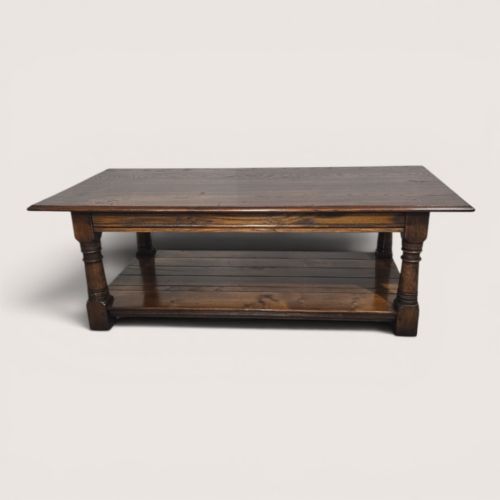
The proportion of the base to the top dictates visual success, where hand-turned legs or robust trestle ends balance massive planks. Original fixings, untouched patination, and honest structural scars elevate a piece above routine utility.
The Rustic Country Coffee Table Glossary
- Pig bench
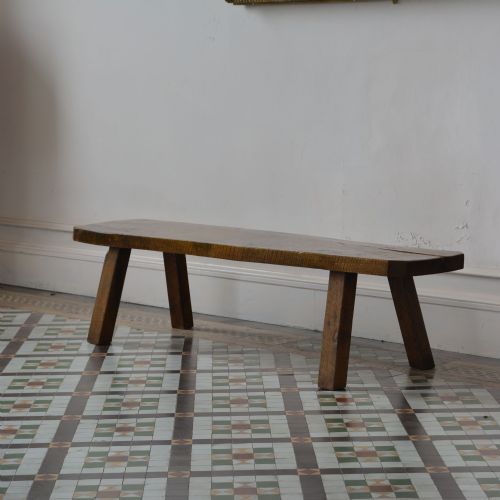
- A narrow wooden bench traditionally used in agricultural work, prized today for its exceptionally long, narrow proportions when used as a low table.
- Cheese press table
- A heavy structural base derived from dairy production, adapted to support a large wooden top.
- Trestle
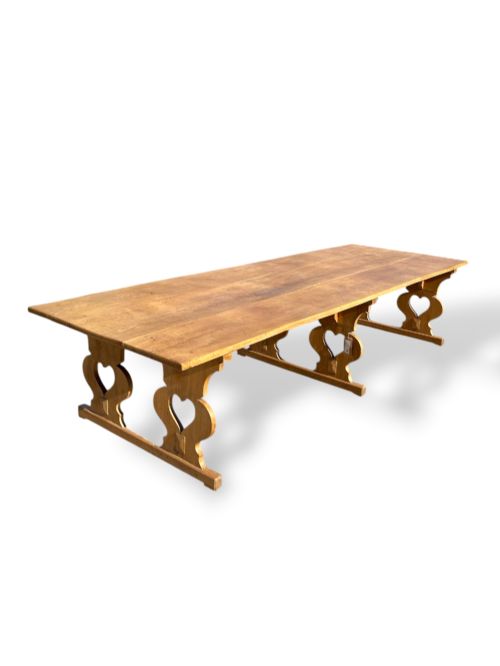
- A supporting framework consisting of a horizontal beam fixed to two pairs of splayed legs, providing sturdy support for long plank tops.
- Patina
- The surface sheen and colour developed by timber through decades of handling, polishing, and exposure to light.
- Plank top
- A table surface constructed from wide boards joined side by side, showing the natural grain and growth rings of the tree.
Rustic Country Coffee Table: Frequently Asked Questions
How do I choose the right length?
Consider the proportion of your seating and the clearance needed around the perimeter of the room. Longer formats derived from benches suit substantial open spaces.
Shorter square or rectangular variants fit snugly beside standard sofas without blocking movement paths through the room.
Are these tables practical for daily use?
Solid timber construction makes these pieces exceptionally durable for everyday living. Waxed and treated surfaces withstand normal household activities easily.
Use coasters to protect older timber surfaces from moisture rings and excessive heat.
How do I care for antique timber?
Apply traditional beeswax periodically to nourish dry wood and maintain the natural lustre of the grain. Avoid placing timber tables directly beside intense heat sources.
Dust regularly with a soft dry cloth rather than using modern chemical sprays.
How can I tell the period?
Examine the tool marks, timber selection, and construction joints visible beneath and around the frame. Eighteenth-century pieces typically display hand-sawn board edges and pegged joints.
Later Victorian and Edwardian examples often incorporate machine-cut elements alongside traditional forms.