




Antique Spice Mortar
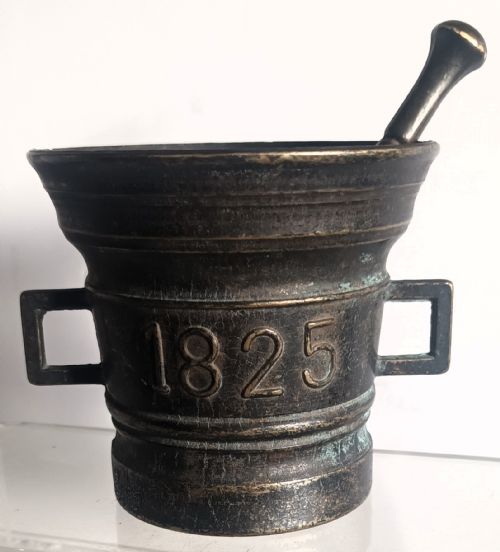
An antique spice mortar brings heavy metal or dense wood to the bench, ready to crush seeds and resins just as it did centuries ago.
Antique Spice Mortar
An antique spice mortar is a heavy vessel designed for grinding seeds, herbs, and resins in the kitchen or apothecary. When you search for an antique spice mortar, you find pieces intended for pounding ingredients with a matching pestle. The examples appearing here span from the seventeenth century through the Edwardian period, encompassing domestic treen alongside heavier metalware.
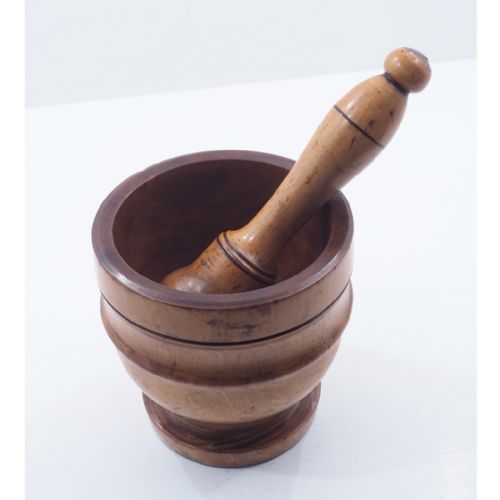
Metal versions dominate the selection, cast in bronze, brass, bell metal, and iron. These pieces often originate from English, Dutch, or French workshops. Alongside the metal forms, turned wood items emerge frequently in beech, fruitwood, and lignum vitae, sometimes accompanied by integrated graters.
Evaluating quality and proportion
Quality rests in the weight of the casting and the crispness of any decorative details. A heavy bronze or bell metal vessel with clear mouldings and a corresponding original pestle sits at the upper end of the range.
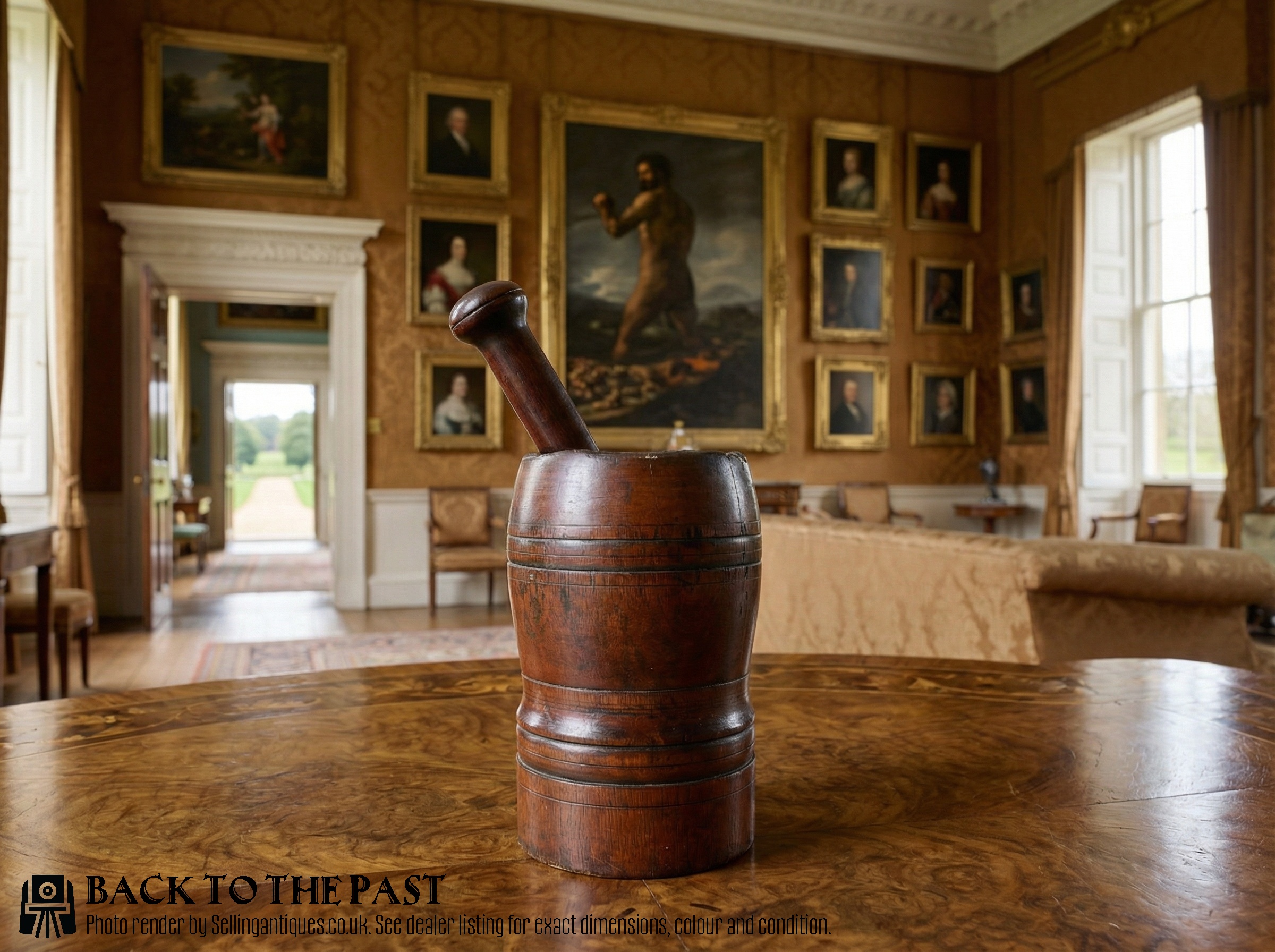
For wooden examples, the integrity of the turned grain and the depth of the bowl determine the standard. Pieces retaining their original fruitwood or lignum vitae surfaces without heavy splitting command greater interest.
The selection spans bronze, brass, bell metal, ceramic, beech, lignum vitae, and hardwood across periods from the seventeenth century to the Edwardian era.
The Antique Spice Mortar Glossary
- Bell metal
- An alloy of copper and tin traditionally used for casting bells, producing a resonant tone when struck. It appears often in seventeenth-century kitchenware.
- Treen
- Small handmade wooden domestic objects produced by turning on a lathe. This category includes nineteenth-century spice grinders and bowls.
- Lignum vitae
- A dense, heavy wood from trees of the genus Guaiacum, prized for its durability and oily grain. It was frequently utilised for turned treen items.
- Apothecary
- Pertaining to the preparation and sale of medicines and drugs. Many surviving metal vessels served chemists before entering domestic kitchens.
- Pestle
- A heavy tool with a rounded end used for pounding and grinding substances in a mortar. Finding the matching pestle with the vessel completes the set.
Antique Spice Mortar: Frequently Asked Questions
What were antique spice mortars used for?
These vessels served to crush and grind whole spices, seeds, and medicinal ingredients into powders or pastes. Cooks and apothecaries relied on them daily before the advent of mechanical grinders.
In the kitchen, they extracted flavours from stubborn roots and peppercorns. In the apothecary shop, they pulverized dry ingredients for remedies.
How do I date a bronze mortar?
Dating relies on stylistic clues such as rim profiles, flare, and cast ornamentation. Seventeenth-century examples often feature band decorations and Tudor motifs, whereas Georgian pieces display cleaner classical lines.
Foundry marks and surface wear also guide the dating process. Comparing the patina with documented pieces helps confirm the period.
Are wooden and metal mortars cleaned differently?
Metal vessels tolerate gentle washing and metal care, whereas wooden treen requires minimal moisture to prevent splitting. Maintaining the correct moisture balance preserves the natural grain.
Beeswax is often applied to treen to nourish the timber. Metal pieces retain their character best when allowed to keep an aged patina.
Can I still use an antique mortar?
Many metal and hardwood examples remain robust enough for culinary tasks. However, porous woods or metals with historical residues require careful assessment before food preparation.
Bronze and brass vessels should be washed thoroughly to remove any old oxidation. Hardwood items benefit from food-safe oil conditioning if used for cooking.