


Dark Metal Mortar
A dark metal mortar is a heavy vessel of bronze, iron or brass designed for crushing substances, offering tactile weight and historic utility.
Dark Metal Mortar
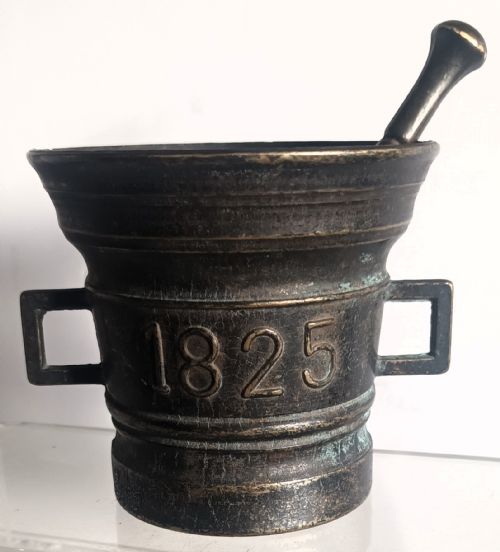
A dark metal mortar is a functional culinary or apothecary vessel designed for grinding and pounding, found in varied sizes from domestic kitchen tools to heavy industrial dye makers' equipment. When you search for dark metal mortar, you encounter pieces that span from the seventeenth century through the nineteenth century, including Spanish Baroque, Dutch Baroque, and Georgian examples.
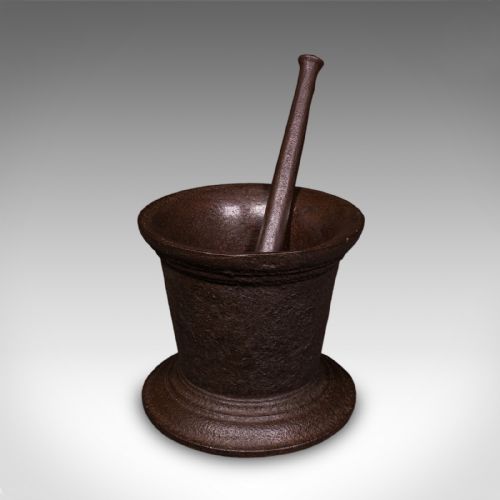
The selections range from modest kitchen and apothecary mortars to massive institutional specimens like a large dye maker's first stage mortar. Forms appear both on their own and complete with matching pestles, showing origins across England, France, Spain, and the Netherlands.
Materials and construction
These vessels are produced primarily through metal casting, utilising materials such as bronze, cast bronze, cast iron, and iron. Metal is poured into moulds to create thick, rigid walls capable of withstanding heavy impact from a pestle during use.
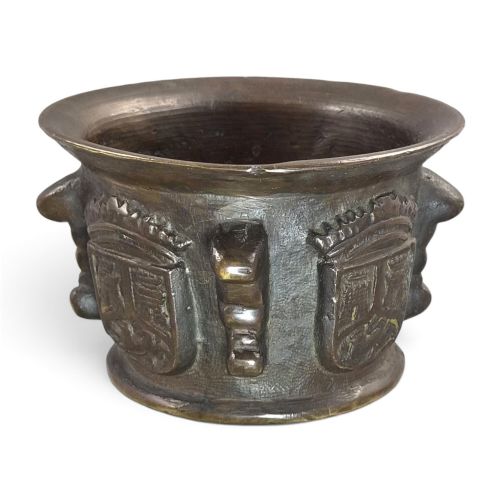
Surfaces often display the raw textural characteristics of early casting methods, sometimes accompanied by applied decorative motifs like the House of Enríquez arms or Tudor rose symbols cast directly into the metal.
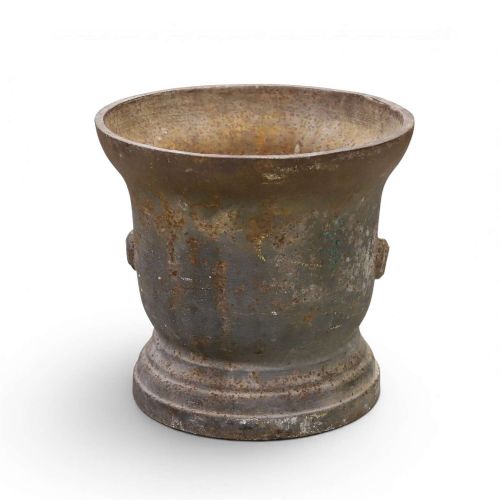
One massive industrial specimen weighs an impressive one hundred and forty pounds, having spent its working life crushing dye.
Assessing quality
Quality in a dark metal mortar rests primarily in the proportion, heft, and clarity of the casting rather than decorative excess. Finer examples show deliberate wall thickness, balanced proportions, and crisp relief in any cast heraldry or detail.
The integrity of the material and the survival of an original or period-matching pestle further distinguish exceptional examples from standard utilitarian kitchen hardware.
The Dark Metal Mortar Glossary
- Mortar
- A heavy bowl used with a pestle for crushing and grinding ingredients. These vessels have thick walls to absorb the force of pounding.
- Pestle
- A heavy tool with a rounded end used for pounding and grinding substances within a mortar. Matching pestles complete the functional set.
- Apothecary
- A historical practitioner who prepared and sold medicines. Apothecary mortars formed essential equipment in their dispensaries.
- Cast bronze
- An alloy of copper and tin poured into a mould to form a durable object. It provides the resonant ring and dark patina seen in early examples.
- Spanish Baroque
- An ornate artistic style prevalent in Spain during the seventeenth and early eighteenth centuries. Pieces from this period sometimes incorporate formal heraldic crests.
Dark Metal Mortar: Frequently Asked Questions
What is a dark metal mortar used for?
These vessels were historically utilised for crushing, grinding, and mixing herbs, medicines, spices, or industrial dyes. Their substantial weight prevented movement during vigorous pounding.
Today, they serve primarily as decorative objects or sculptural display pieces in kitchens and studies.
How old are these mortars?
The available pieces span from the seventeenth century through the nineteenth century, encompassing periods such as the seventeenth century, Georgian era, and the seventeen hundreds.
Dates are typically attributed based on stylistic markers, casting techniques, and regional design traits.
Are pestles always included?
Some listings include the original or period pestle, while others offer the mortar on its own. Finding a matched set is a notable advantage for collectors.
Pestles vary from simple cylindrical rods to unusual shaped implements designed for specific grinding tasks.
What metals are used?
The listings feature vessels made from bronze, cast bronze, iron, and cast iron. Each metal ages differently, developing distinct surface patinas over centuries.
Bronze examples often display a warm, dark metallic sheen, while iron versions show a heavy, industrial dark finish.
Where were they made?
The selection includes pieces originating from England, France, Spain, and the Netherlands. Regional foundries imparted distinct stylistic characteristics, such as Dutch Baroque forms or Spanish armorial bearings.
This geographic variety reflects the widespread use of metal casting across early European trade and craft networks.