

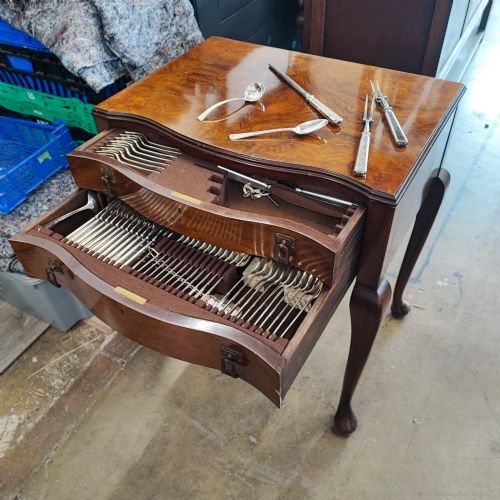


Antique Silverware Set
An antique silverware set brings genuine tablecraft to daily dining, uniting fitted canteens and matched serving groups across centuries of metalwork.
Antique Silverware Set
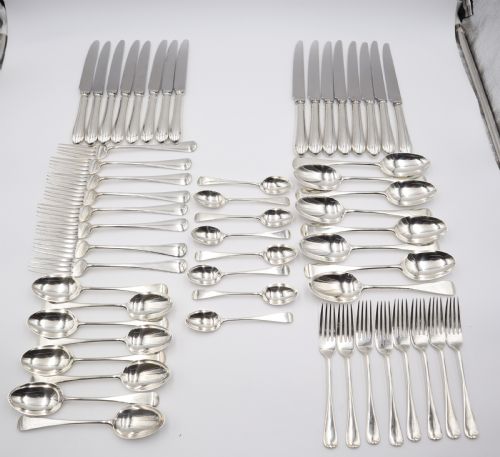
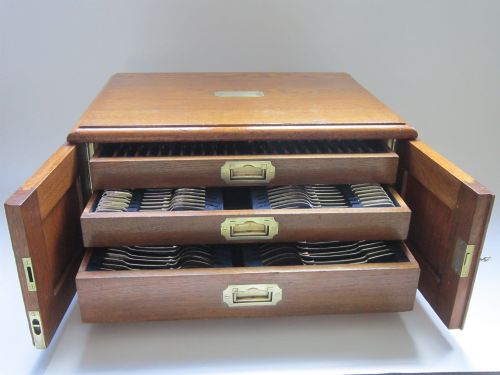
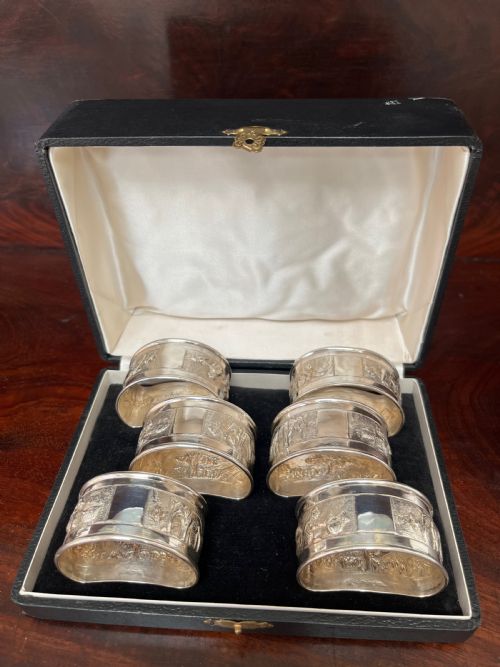
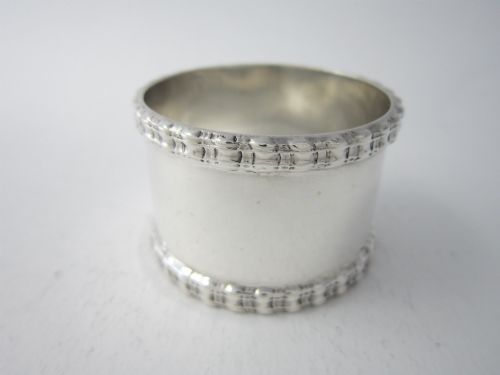
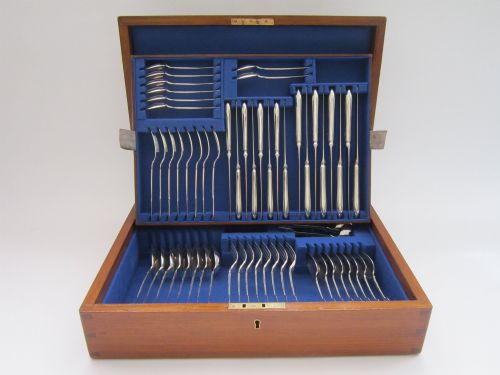
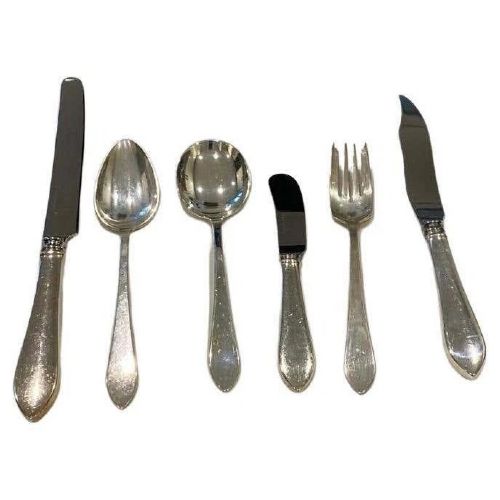
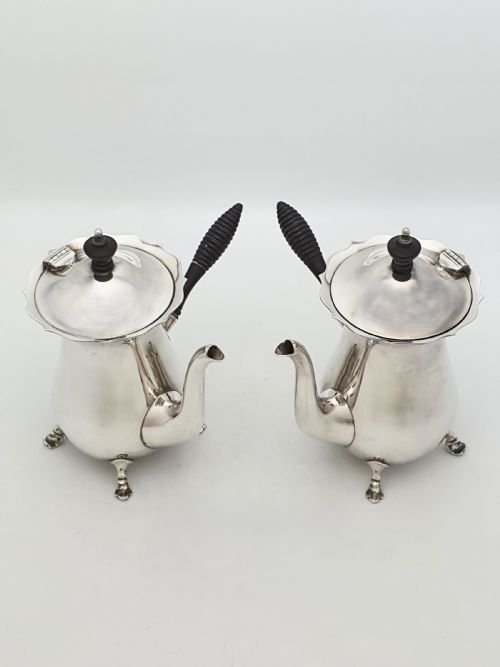
When you search for an antique silverware set, you encounter diverse groupings spanning formal canteens, cased tea services, and matched table servers. These assemblages range from compact boxed pairs of napkin rings and salt cellars to extensive dining canteens.
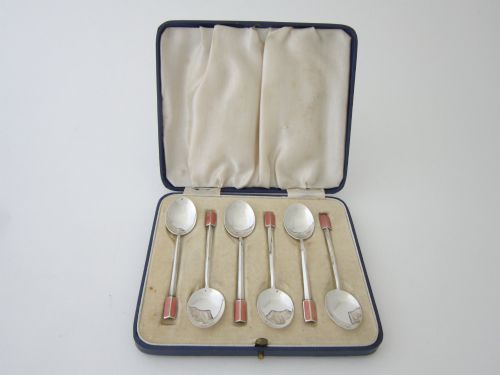
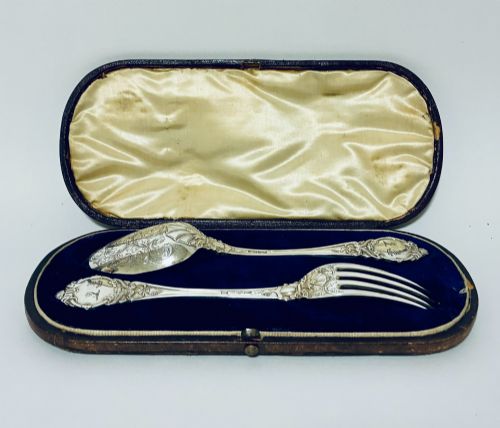
The versions most common in these listings include Victorian and Edwardian cutlery sets alongside Georgian serving spoons, often preserved in fitted wooden cases lined with velvet or silk.
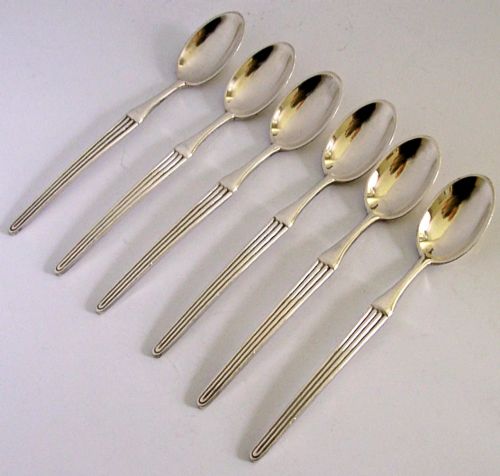
Compositions extend beyond standard dining tools to incorporate specialised subsets like christening sets, berry services, and demitasse teaspoons.
Materials and Construction
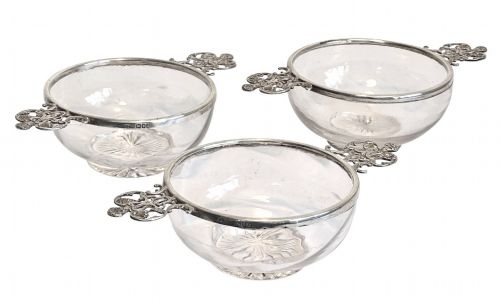
The primary material across these pieces is sterling silver, supplemented by silver plate applied to base metals like steel for hard-wearing utility canteens. Artisans combined precious metals with glass bowls, wooden boxes, and delicate enamel work.
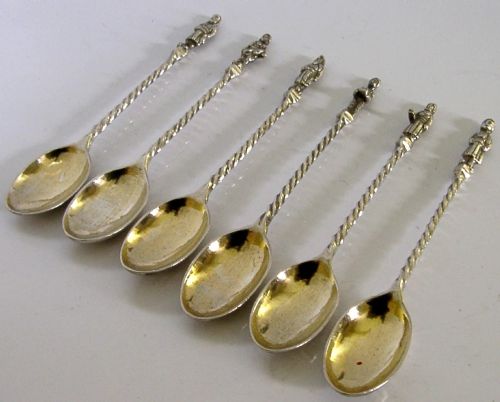
Handles and decorative elements frequently integrate cast components, hand-engraved crests, and parcel-gilt finishes where select sections receive a wash of gold.
Certain Victorian novelty salt cellars take the whimsical shape of tiny peppers.
Distinctions in Quality
The upper tier of these sets is defined by complete, unaltered original complements where every spoon, fork, and knife shares a unified maker and exact period hallmark. Weight and gauge of the silver distinguish substantial dining pieces from lighter wares.
Quality also rests in the preservation of fitted housing, such as silk and velvet lined canteens, and the crispness of hand-chased figural detail or cloisonné enamel work.
William Comyns·Dmitrii Nikolaevich Nikolaev·Bateman·John McDonald·Elkington·Harrison Brothers and Howson·Aleksandr Timofeyevich Shevyakov·Walter and John Barnard·Robert Stebbings
The Antique Silverware Set Glossary
- Sterling silver
- A standard alloy consisting of ninety-two point five percent silver by mass, with the remainder comprising copper or other metals. This composition provides durability for functional dining implements.
- Canteen
- A fitted box or chest designed specifically to store a complete set of cutlery in dedicated slots or layers. These storage pieces often feature velvet or silk linings.
- Fiddle pattern
- A traditional nineteenth-century cutlery handle design featuring a distinctive broadened, shoulders-and-crest shape resembling a stringed instrument.
- Silver-gilt
- Silver objects that have been coated with a thin layer of gold on their exterior or interior surfaces. This technique adds rich colour and protects vulnerable areas from tarnish.
- Cloisonné
- An ancient decorative metalwork technique where thin wire partitions form enclosed cells that are filled with vitreous enamel paste and fired.
Antique Silverware Set: Frequently Asked Questions
How do I clean tarnished silver?
Polishing requires specialised silver cloths or gentle liquid solutions designed to lift oxidation without removing the underlying metal. Care must be taken around engraved crests and inset enamel.
Avoid abrasive scouring pads that scratch sterling surfaces and diminish crisp hallmarking.
What does a canteen include?
A traditional dining canteen typically holds matching arrangements of table forks, dessert forks, tablespoons, and teaspoons. Larger services incorporate specialised carving knives and ladles.
Complete sets maintain uniform monograms or crests across all constituent items.
How are periods identified?
Official assay office marks, maker stamps, and date letters stamped directly onto the metal reveal the precise year of manufacture. Stylistic indicators like fiddle handles or enamel work further confirm the era.
Georgian pieces display distinct hallmarks compared to later Victorian or Edwardian items.