

Antique Silvered Centrepiece
When you search for an antique silvered centrepiece, you seek a commanding table focal point, most often found here in Victorian or Edwardian silver plate and sterling silver.

Antique Silvered Centrepiece
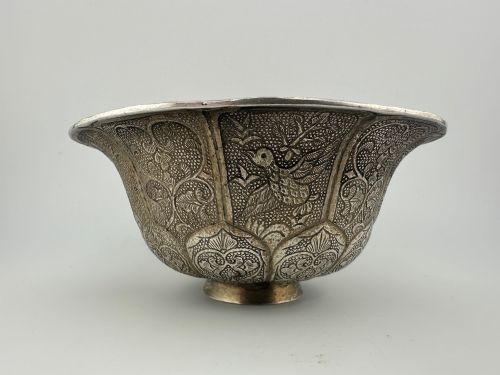
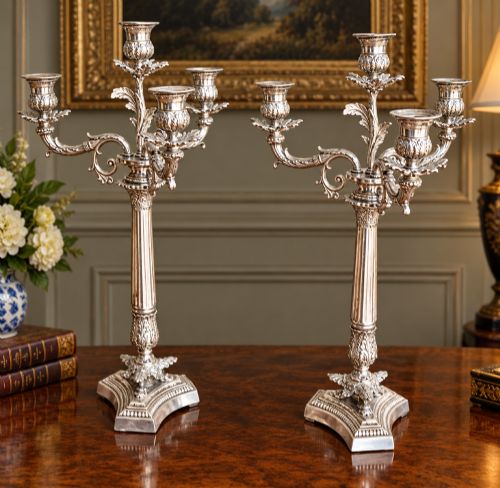
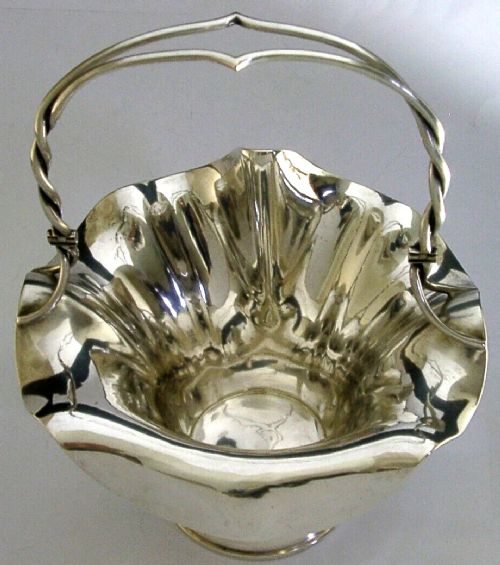
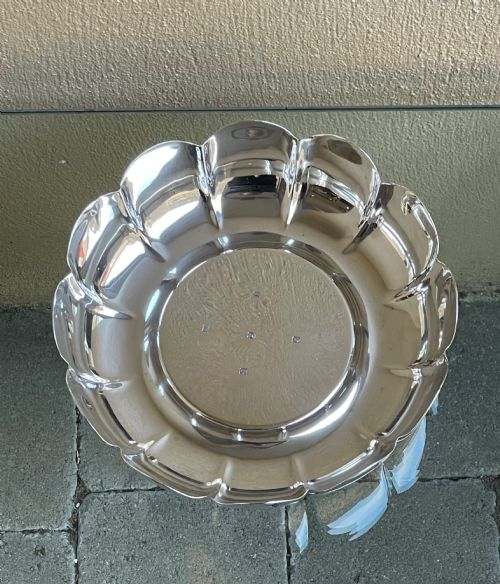
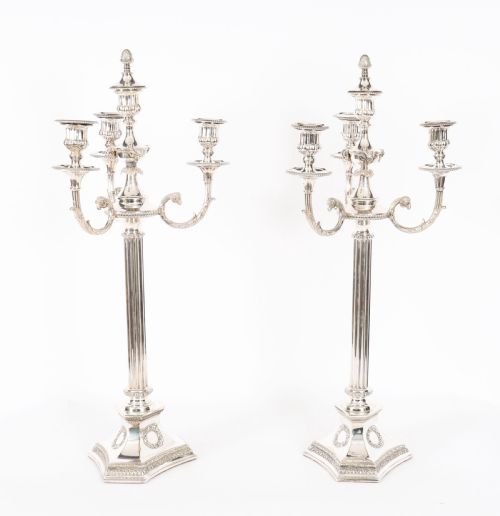
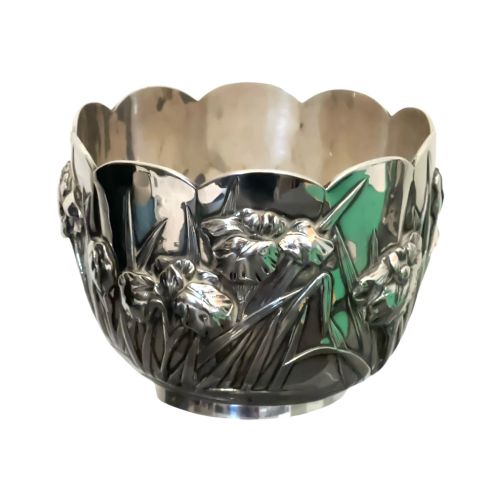
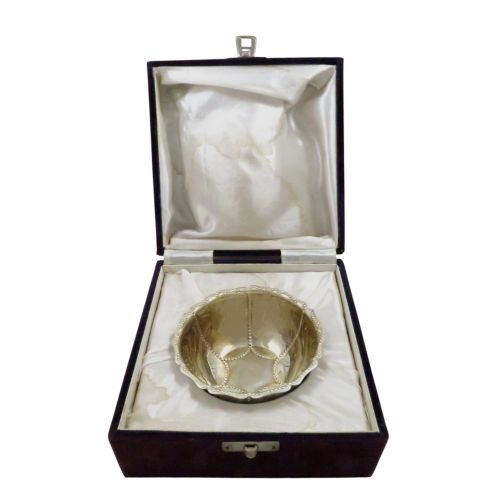
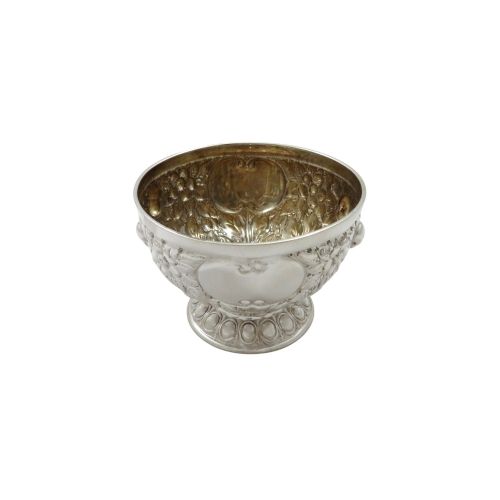
An antique silvered centrepiece encompasses large display items intended for the middle of a dining table, including fruit baskets, bowls, tazzas and monumental candelabras. The examples met on this page span the nineteenth century into the mid twentieth century, drawing on Victorian, Edwardian and Art Nouveau aesthetics.
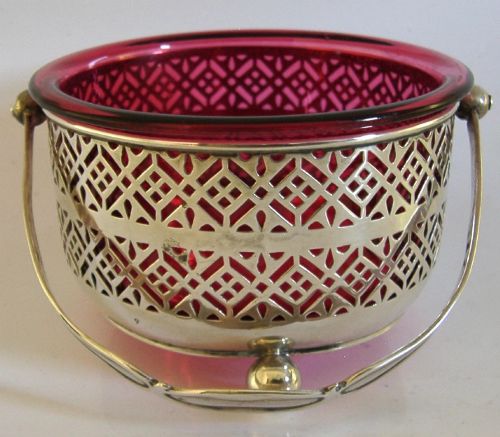
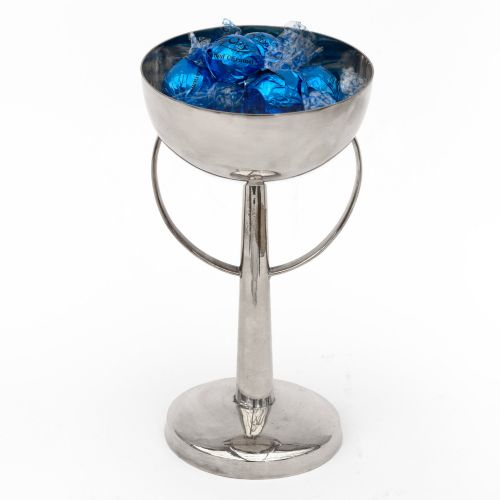
The objects take diverse structural forms, ranging from pedestalled fruit bowls with swing handles to multi-light candelabras and epergnes incorporating coloured glass liners. British makers dominate the selection, alongside continental European and Anglo-Indian pieces executed in solid silver or heavy silver plate.
Materials and Techniques
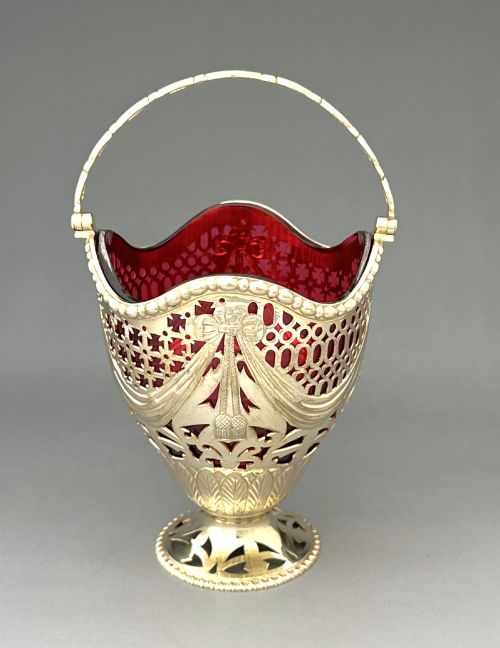
Makers utilised sterling silver and silver plate over copper or nickel silver, frequently pairing metalwork with cut or coloured glass liners such as cranberry glass. Sheffield plating methods and electroplating technology provided durable coats of silver over base metals for large architectural pieces.
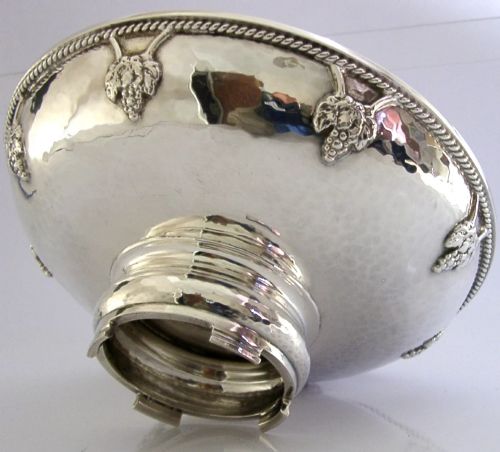
Arts and Crafts examples display hand-hammered planished surfaces that reveal the direct labour of the silversmith, while Victorian and Edwardian items often incorporate cast ornament, piercing and silver-gilt highlights.
Craftsmanship and Weight
The measure of quality lies in the heft of the metal and the crispness of the chased, pierced or hammered details. Substantial weight in solid silver or thick old Sheffield plate separates robust domestic pieces from lighter, purely decorative items.
Design integrity distinguishes superior work, where handles, feet and glass liners integrate harmoniously rather than relying on applied ornamentation alone.
Fabergé·Garrard and Co·Liberty and Co·Goldsmiths and Silversmiths Company
The Antique Silvered Centrepiece Glossary
- Candelabra
- A large branching candlestick designed to hold multiple taper candles. These pieces often form the central height of a table arrangement.
- Epergne
- An ornate ornamental centerpiece featuring a central dish surrounded by smaller hanging baskets or branching arms for fruit and flowers.
- Planished
- A metal surface beaten with a small-faced hammer to produce a textured pattern of small, flat facets. This technique appears frequently in Arts and Crafts silver.
- Sheffield Plate
- A composite material formed by fusing a sheet of silver to a thicker copper ingot before rolling them together. It represents an early precursor to electroplating.
- Silver-Gilt
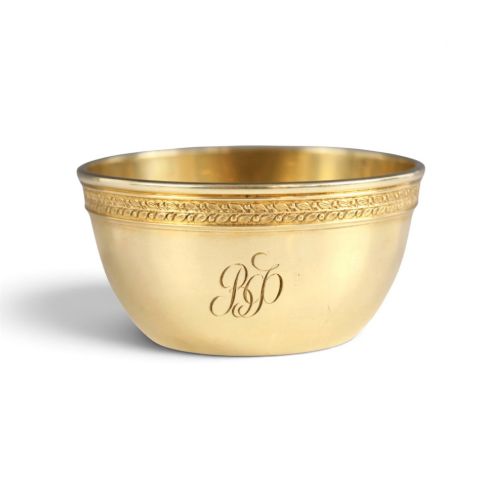
- Silver that has been coated with a thin layer of gold on its surface. This finish provides a warm, rich interior tone inside bowls and baskets.
Antique Silvered Centrepiece: Frequently Asked Questions
How do I clean an antique silver centrepiece?
Use a soft cloth and a gentle, non-abrasive silver polish formulated for antiques to preserve the original plate or sterling surface. Avoid aggressive rubbing on raised details and plated edges.
Take special care if your piece includes a glass liner or delicate applied handles. Wash glass components separately in lukewarm soapy water and dry them thoroughly before reassembly.
How do I date a silver centrepiece?
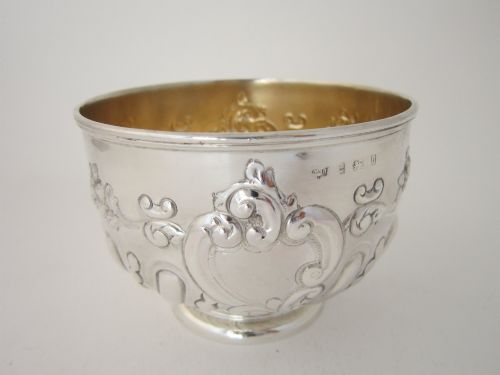
Look for hallmarks stamped into the metal, which indicate the assay office, standard of silver and year of manufacture for British sterling pieces. Unmarked items require stylistic analysis of decorative motifs.
Art Nouveau curves and planished surfaces typically point towards the late nineteenth or early twentieth century. Geometric frames and heavy cast neoclassical ornament often signal Victorian or Georgian origins.
What is the difference between silver plate and solid silver?
Solid silver objects consist entirely of precious metal throughout their structure, often marked with standard purity indicators such as lion passants for sterling. These pieces carry greater inherent weight and metal value.
Silver-plated items feature a thin layer of pure silver bonded to a base metal like copper, nickel silver or brass. Old Sheffield plate uses a fused metal sandwich, while later pieces employ electroplating.