
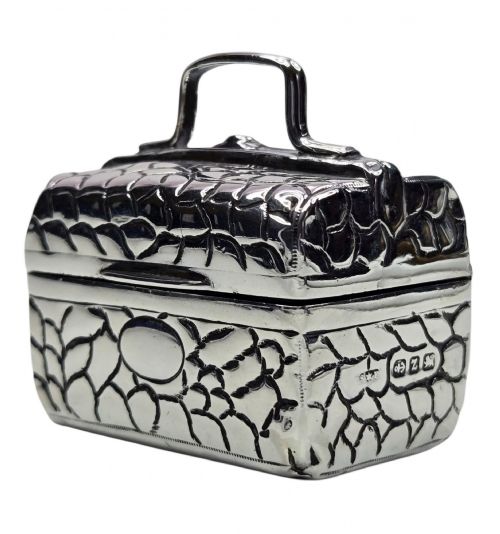


Antique Silver Trunk
An antique silver trunk is a sturdy receptacle designed to protect valuable plate, and these pieces combine utilitarian strength with fine cabinetmaking.
Antique Silver Trunk
When you examine an antique silver trunk, you are looking at substantial storage vessels built primarily to house precious tableware, flatware, and service items securely during transit or storage. These pieces bridge the gap between heavy-duty utilitarian transit gear and refined country house furniture.
The version you are most likely to meet on this page is the heavy oak box bound in iron, steel, or brass, originating from the Victorian or Georgian periods. Such examples frequently display robust metal banding, reinforced corners, and drop handles intended for estate management or travel.
Markers of Distinction
The standard of timber selection and joinery separates basic utilitarian containers from those produced by notable retailers and makers. Oak figures with strong medullary rays or finely figured mahogany indicate a higher grade of workshop production.
Original internal fittings, such as compartmentalised baize-lined trays and functioning lever locks with maker stamps, elevate a piece significantly. The precision of the metalwork, including hand-beaten straps and flush-mounted hardware, further distinguishes superior examples from standard storage chests.
One exceptional Victorian model takes the form of a novelty crocodile skin trunk box.
Elkington·Lambert London·James Wood·Frederick Rowe of Great Marlow
The Antique Silver Trunk Glossary
- Silver chest
- A heavy wooden box reinforced with metal bands, constructed specifically to store and transport family silver plate. These containers often feature reinforced corners and internal baize-lined trays.
- Campaign trunk
- Portable furniture designed for military officers or travellers on the move. They typically incorporate robust carrying handles and durable exterior strapping.
- Steamer trunk
- A lower-profile luggage piece built for travel on steamships during the late nineteenth and early twentieth centuries. These utilise materials like oak, aluminium, and leather.
- Coffer
- A traditional sturdy chest with a lid, used historically for storing valuables or household goods. They pre-date specialised silver chests but share similar heavy construction.
Antique Silver Trunk: Frequently Asked Questions
What were antique silver trunks used for?
These trunks served as secure repositories for families to store and transport valuable silver tableware, tea services, and flatware. Wealthy households relied on them to protect delicate metal items from tarnish, dust, and damage during relocation or extended travel.
Beyond travel, they functioned as permanent storage solutions within large country houses and estates. Their robust construction ensured that heavy metal services remained organised and safe from theft.
How do I live with an antique silver trunk?
An antique silver trunk works exceptionally well as a coffee table in a living room, offering both a flat surface and internal storage space. Placing one at the foot of a bed provides a convenient spot for spare blankets and linens.
The sturdy timber and metal construction allows these pieces to anchor a room visually. Keep them away from direct heat sources to prevent the oak or mahogany from drying out and splitting.
How can I tell Georgian trunks from Victorian ones?
Georgian trunks generally display earlier cabinetmaking traits, featuring simpler lines, hand-wrought ironwork, and dense native oak or mahogany. Their proportions often reflect eighteenth-century domestic requirements before industrial manufacturing standardisation.
Victorian examples frequently incorporate heavier, more mechanically uniform iron banding, brass manufacturer plates, and complex internal lift-out trays. They often bear retail stamps from specific Bond Street silversmiths or high-end outfitters.