
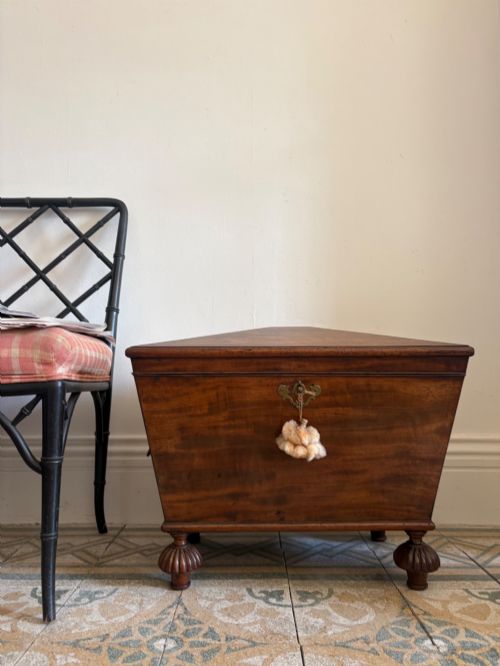

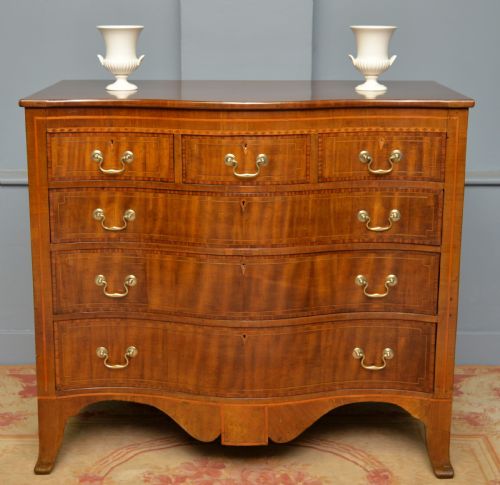


Georgian Mahogany Blanket Box
A georgian mahogany blanket box provides sturdy, handsome storage with rich timber grain that brings genuine period character to a modern room.
Georgian Mahogany Blanket Box
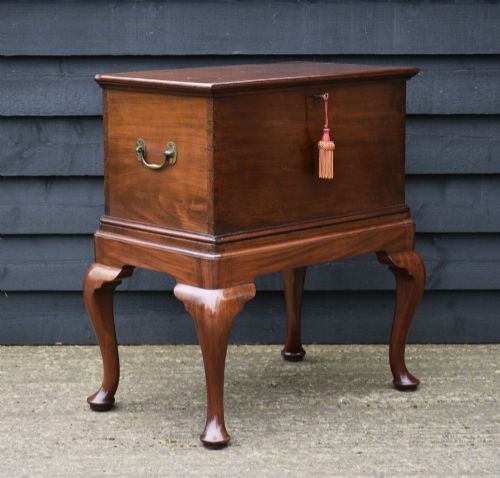
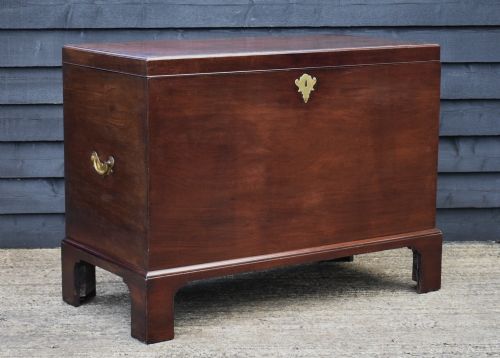
A georgian mahogany blanket box serves as a robust storage chest, frequently appearing in forms like mule chests, blanket boxes on stands, and housekeepers trunks. These pieces date principally from the Georgian, George III, and Regency periods, utilising deep timber to store linens and domestic goods.
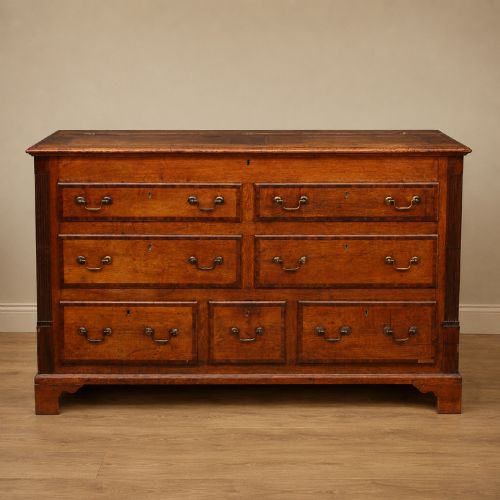
Buyers seeking a georgian mahogany blanket box will encounter variations including Lancashire mule chests equipped with lower drawers, military campaign chests, and simpler coffer forms. The selection ranges from straightforward 18th-century storage boxes to more elaborate models featuring crossbanding and satinwood details.
How they were made
Cabinetmakers constructed these chests primarily from solid mahogany and flame mahogany veneer, frequently incorporating secondary timbers such as oak inside the carcass. Panels were carefully joined to allow the wood to move naturally with changes in household humidity.
Brass handles, escutcheons, and hinges provided essential functional hardware, particularly on military and campaign variations designed for travel. Some specialised pieces like cellarettes and ottomans included lead linings or velvet upholstery to protect their contents.
Listings span periods from the mid-18th century through the Victorian era, utilising mahogany, oak, satinwood, brass, and lead.
What varies in quality
Quality in these chests rests upon the choice of timber, distinguishing plain boards from highly figured flame mahogany or fiddleback grain carefully matched across the front. The precision of inlay work, such as satinwood crossbanding, further separates standard utilitarian boxes from finer parlour pieces.
Structural integrity and the retention of original brass hardware, locks, and internal till boxes dictate the standing of an individual piece. Finer examples display meticulous dovetail joinery and well-preserved timber surfaces that reflect the skill of the original workshop.
The Georgian Mahogany Blanket Box Glossary
- Crossbanding
- A border technique where thin strips of veneer are laid perpendicular to the surrounding grain, often utilising contrasting timbers like satinwood. This frames the primary mahogany panels.
- Mule chest
- A storage chest featuring one or more drawers at the base beneath the main compartment. These pieces bridge the gap between traditional coffers and chest of drawers.
- Cellarette
- A specialised timber box or cooler designed for storing wine bottles, sometimes featuring original lead linings to hold ice. They appear in various Georgian and Regency forms.
- Fiddleback
- A type of figured mahogany grain displaying undulating ripples resembling the wood used for violin backs. It creates a distinctive three-dimensional optical effect under light.
- Escutcheon
- A protective plate surrounding a keyhole, typically cast from brass on these pieces. Original hardware contributes to the historical integrity of the box.
Georgian Mahogany Blanket Box: Frequently Asked Questions
Where were blanket boxes used?
These chests were kept in bedrooms, landings, and hallways to store heavy woollen blankets, household linens, and winter garments.
In grander houses, larger trunks served housekeepers for managing domestic stores, while portable campaign variants travelled with officers.
How do I style a blanket box today?
A chest sits well at the foot of a bed or beneath a window, providing both surface display space and concealed storage.
Keep the timber surface conditioned with suitable wax and avoid placing damp items directly onto the historical wood.
What is a mule chest?
A mule chest combines a traditional lift-lid storage box with one or more timber drawers fitted beneath the main compartment.
This hybrid form emerged to offer easier access to smaller items without requiring users to lift contents out from the top.