


Antique Silver Storage Chest
An antique silver storage chest provides robust protection for precious metalwares, uniting heavy timber construction with utilitarian strength.
Antique Silver Storage Chest
An antique silver storage chest encompasses large timber trunks built for secure transport, smaller fitted canteens designed for flatware, and tabletop boxes intended for precious items. These pieces emerge from periods spanning the eighteenth, nineteenth, and early twentieth centuries, reflecting changing domestic requirements for safeguarding valuable possessions.
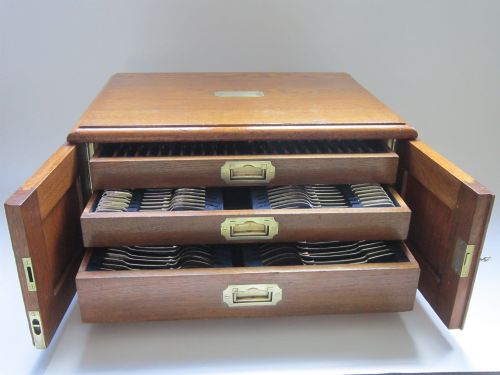
The most common examples on this page are heavy oak trunks strengthened with iron or steel bands, originally engineered to travel safely on ships or railway carriages. Alongside these rugged transport boxes appear fitted mahogany and walnut cutlery canteens, plus smaller tortoiseshell and wood tea caddies designed for domestic parlour use.
Materials and Construction
Makers constructed these storage pieces using durable hardwoods such as oak and mahogany, often selecting dense timber to withstand the rigours of travel and heavy handling. Iron and steel strapwork, brackets, and carrying handles reinforce the corners and seams of the larger transport trunks, ensuring structural integrity under immense weight.
Internal arrangements demonstrate precise joinery, utilising fitted baize-lined trays, partitions, and custom slots tailored to hold specific flatware patterns or tea vessels securely in place. Finer tabletop boxes incorporate delicate decorative elements like tortoiseshell plating, mother of pearl inlay, and hand-painted details.
Several travel chests retain traces of bygone journeys, carrying original shipping destination labels and brass owner plaques from Victorian voyages.
Judging Quality
Quality rests upon the integrity of the primary timber, the substance of the metal mounts, and the survival of original interior fittings. Superior examples display thick oak bodies with hand-hammered iron straps and intact compartment trays rather than later replacements.
The distinction between a utilitarian transit box and a high-status piece lies in the refinement of the secondary materials, such as polished mahogany, burr maple veneers, or maker-stamped hardware from notable retailers and silversmiths.
Walker & Hall·Elkington·Parkins and Gotto·Lambert London
The Antique Silver Storage Chest Glossary
- Silver chest
- A heavy storage trunk built from timber and reinforced with iron or steel bands, designed to protect heavy tableware during transit.
- Canteen of cutlery
- A fitted box or chest containing a complete, matched service of forks, spoons, and knives, often arranged across multiple internal tiers.
- Tea caddy
- A small lidded box constructed for storing loose tea leaves securely, frequently featuring internal compartments or mixing bowls.
- Iron-bound
- A method of reinforcing timber chests with external metal straps to provide structural strength and prevent splitting.
- Fiddle pattern
- A traditional nineteenth-century flatware silhouette characterised by a stem that widens toward a notched, rounded end.
Antique Silver Storage Chest: Frequently Asked Questions
What were antique silver storage chests used for?
These robust trunks served to protect family silver collections from damage, tarnishing, and theft during storage or long journeys by sea and rail. Wealthy households relied on them to transport heavy plate safely between country estates and town residences.
Smaller iterations, such as tea caddies and cutlery canteens, kept precious consumables and dining implements organised within the secure confines of the dining room or parlour.
How do I date an antique silver chest?
Dating relies upon observing the construction methods, timber choices, and hardware styles employed by the maker. Georgian and early nineteenth-century examples typically feature heavy oak bodies with hand-forged iron strapping and simple dovetailed joints.
Later Victorian and Edwardian iterations often incorporate machine-rolled steel bands, brass plaque details, and maker stamps from established silversmith retail firms.
Can I use a silver chest as a coffee table?
The flat, sturdy tops and substantial proportions of these oak trunks make them popular candidates for alternative domestic functions in modern living spaces. Their reinforced construction easily supports books, decorative objects, and daily use.
Placing one in a reception room introduces historical character while offering concealed storage for household blankets, games, or media equipment.
What is the difference between a trunk and a canteen?
A silver trunk is a large, heavy-duty container built with thick timber walls and iron corner brackets for safeguarding bulk collections of plate and shipping valuables. A canteen is a dedicated, smaller case specifically engineered with custom slots and baize linings to hold matched flatware sets.
Trunks emphasise exterior protective strength for travel, whereas canteens focus on internal organisation and presentation for the dining table.