



Antique Silver Server Pair
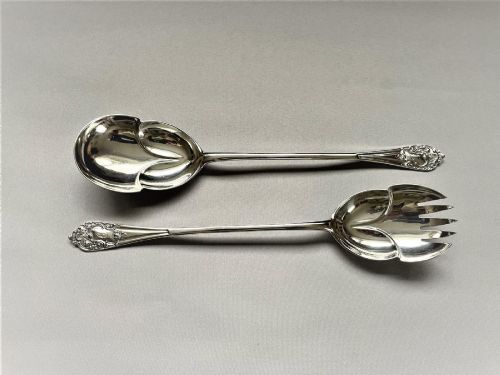
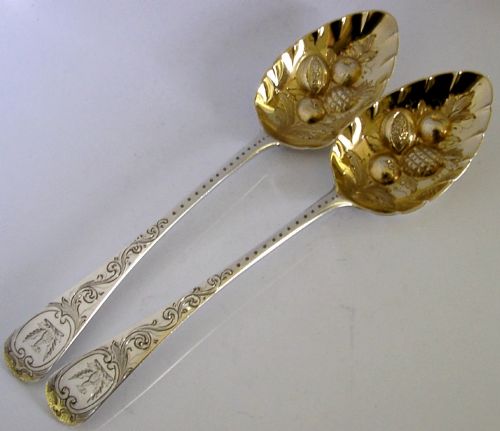
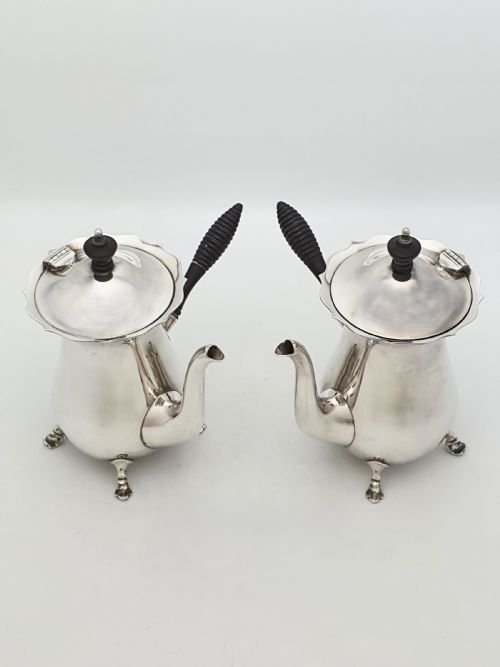
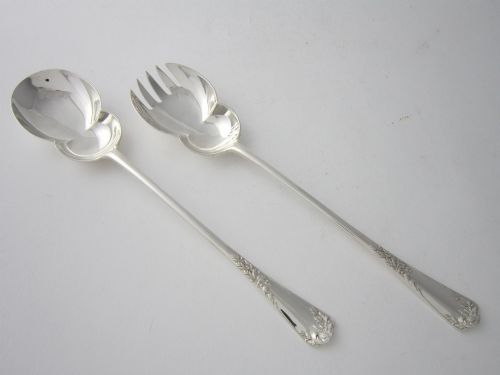
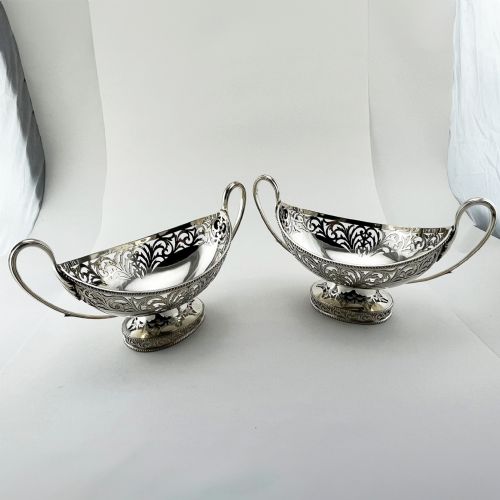
An antique silver server pair brings matched execution and utility to the table, spanning fish servers, salad forks and spoons, and berry spoons.
Antique Silver Server Pair
When you search for an antique silver server pair, you encounter matched utensils designed for specific dining tasks such as serving fish, salads, berries, or asparagus. These objects emerge from periods ranging through the eighteenth, nineteenth, and early twentieth centuries, encompassing Victorian, Edwardian, Georgian, and Art Deco styles.
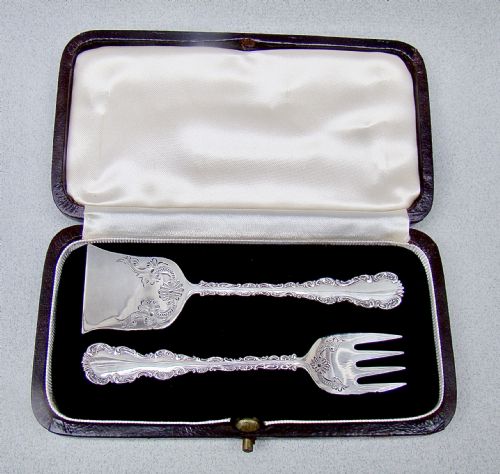
The items on this page lean heavily toward salad servers, fish servers, and serving spoons. Many arrive in fitted boxes, reflecting their original purpose as presentation pieces or wedding gifts intended to be kept safe when not in use on the dining table.
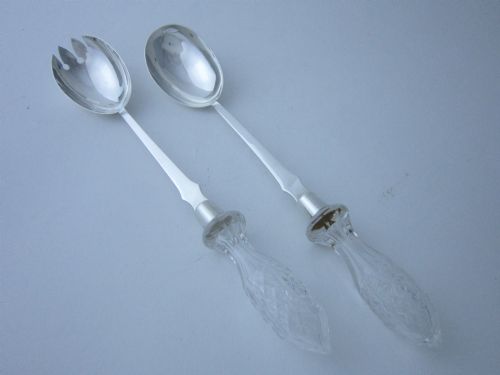
Originating predominantly from British workshops, these utensils show the evolution of formal dining habits across generations. Buyers meet both solid sterling silver and silver plated versions, often paired with handles of bone, ivory, or glass.
Materials and methods
Makers utilised sterling silver and Old Sheffield plate alongside standard silver plate, shaping the metal through casting, hammering, and piercing. Pierced blades on fish servers and fruit spoons allowed liquid or juice to drain while holding solid food.
Handles incorporated diverse materials including bone, ivory, glass, and velvet lining within presentation boxes. Silversmiths applied crests, engraving, and rat tail motifs to reinforce stress points and personalise the service for aristocratic or middle-class households.
Some nineteenth-century diners required solo asparagus tongs because eating spring vegetables gracefully without mechanical assistance proved entirely impossible.
Distinctions in craftsmanship
Quality rests in the weight of the metal and the crispness of the chased or pierced decoration on the blades and bowls. Superior examples display clear hallmarks and balanced proportions between the handle and the working end.
The integrity of fitted presentation cases and the preservation of secondary materials like bone or ivory handles separate ordinary utility pieces from high-status surviving sets.
Henry Wilkinson·Thomas Bradbury·Wilkes Booth·Matthew Linwood·Dan Holy·John Grinsell and Son·Garrard and Co
The Antique Silver Server Pair Glossary
- Sterling silver
- An alloy containing 92.5 percent silver by mass, standard for British tableware and marked with a lion passant.
- Old Sheffield plate
- A composite material formed by fusing a thin sheet of silver to a thicker copper base, common in nineteenth-century serving dishes.
- Rat tail
- A traditional strengthening spine extending from the handle down the back of a spoon bowl.
- Assay office
- An official body responsible for testing the purity of precious metals and stamping them with hallmark punches.
- Crest
- An engraved family heraldic device added to silver pieces by the original owner.
Antique Silver Server Pair: Frequently Asked Questions
What were antique silver servers used for?
These matched utensils served specific courses at formal Victorian and Edwardian dining tables, including fish, salad, asparagus, and berries.
They allowed hosts to portion food cleanly before guests, often matching the specific texture of the dish with pierced blades or deep bowls.
How do I clean antique silver servers?
Use a soft cloth and a reputable silver polish formulated to remove tarnish without stripping thin plating or fine engraved detail.
Avoid harsh abrasives, especially on pieces featuring organic handle materials like bone or ivory, which should be kept away from soaking water.
Are cased server pairs original?
Many Victorian and Edwardian server pairs survive inside their original velvet or silk-lined leather presentation boxes stamped with retailer details.
These fitted cases protected the silver from tarnish and damage, making complete boxed sets highly desirable for collectors.
How can I tell the date of a silver server?
British sterling silver bears hallmarks indicating the assay office, the maker's mark, and a date letter corresponding to the exact year of testing.
Unmarked silver plated items require stylistic analysis of the shape, handle form, and manufacturing technique to establish an approximate period.