


Engraved Silver Serving Set
An engraved silver serving set brings formal dining history to the table, combining intricate decoration with practical utility for serving fish, fruit, meat, or berries.
Engraved Silver Serving Set
An engraved silver serving set covers specialised cutlery and serving pieces designed for specific dining tasks, ranging from fish servers and fruit sets to carving implements and large spoons. When searching for an engraved silver serving set, buyers encounter various forms including fish servers, carving cutlery, salad servers, fruit sets, and boxed serving spoons.
The material composition spans sterling silver, silver plate, and silver gilt, frequently paired with handles made from stag antler, horn, wood, silk, or velvet lining inside presentation boxes. Pieces frequently originate from the Victorian and Georgian eras, spanning the eighteenth and nineteenth centuries.
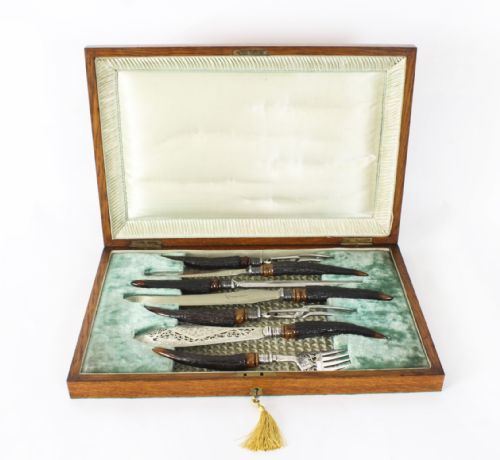
Victorian silver-plated examples with engraved blades and stag antler or horn handles appear frequently alongside sterling silver Georgian and Victorian serving spoons and fish servers. Boxed sets remain common, often retaining their original fitted interiors lined with silk or velvet.
How they were made
Makers utilised sterling silver and silver plate as the primary metal foundations, shaping blades and spoons through casting, hammering, and rolling techniques. Engravers then applied detailed surface patterns by hand using gravers to cut foliate, scroll, or hunting motifs directly into the metal.
Handles required different materials, combining natural stag antler, polished horn, and turned wood secured with metal pins or ferrules. Presentation containers for these sets relied on timber carcases covered in leather or cloth and lined with silk or velvet to protect the polished surfaces.
Listings span the Georgian, Victorian, and Edwardian periods, utilising sterling silver, silver plate, wood, silk, velvet, stag antler, and steel.
What varies in quality
Quality depends upon the depth and crispness of the hand engraving across the metal surface, where deeper, more intricate cutting distinguishes finer pieces from shallow machine work. The integration between the metal working parts and natural handles such as stag antler or horn also dictates overall standard.
The survival of original fitted presentation boxes lined with silk or velvet adds significantly to the desirability of a set. Maker marks, hallmarks, and the weight of the sterling silver or the quality of the silver plate further separate standard domestic items from exceptional production.
Elkington
The Engraved Silver Serving Set Glossary
- Sterling silver
- A silver alloy containing 92.5 percent pure silver and 7.5 percent other metals, usually copper, to increase durability. This standard is frequently denoted by hallmark stamps on British pieces.
- Silver plate
- A base metal substrate, commonly copper or nickel brass, coated with a thin layer of silver through electroplating or older fusion methods. Elkington pioneered commercial electroplating in the nineteenth century.
- Fish servers
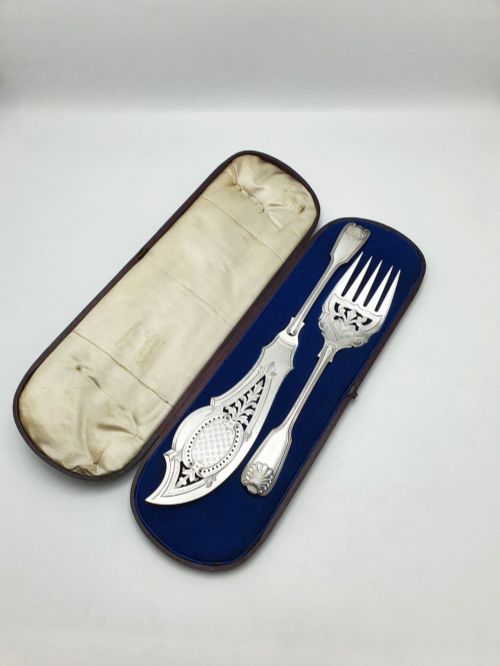
- A matched knife and fork combination designed specifically for serving fish courses at formal meals. The blade is typically wide and heavily engraved with floral or aquatic motifs.
- Berry spoon
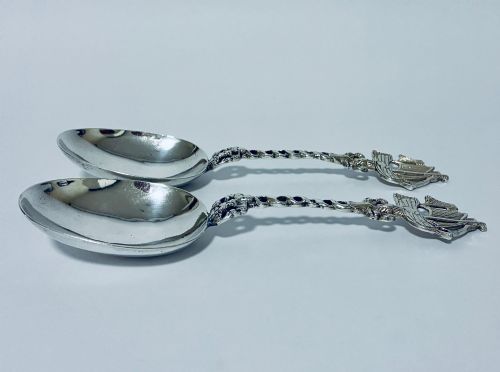
- A large serving spoon, often dating from the Georgian or Victorian period, featuring fruit and leaf engraving added to the bowl and handle. These spoons were frequently adapted from earlier tablespoons.
- Salver
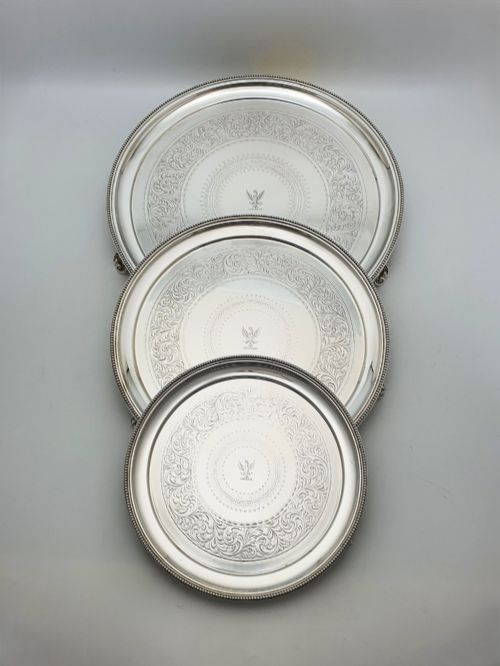
- A flat, circular serving tray raised on feet, often featuring engraved borders and surfaces. They provide a stable base for presenting glasses or smaller serving items.
Engraved Silver Serving Set: Frequently Asked Questions
What is an engraved silver serving set used for?
These sets are designed for serving specific courses at the dining table, including fish, meat, fruit, salad, and berries. Each tool performs a dedicated function, such as the wide blade of a fish server or the deep bowl of a serving spoon.
Historically, larger gatherings required specialised cutlery to portion food cleanly and present dishes formally. Today, many collectors use these pieces for special occasions or display them within their original presentation boxes.
How do I tell sterling silver from silver plate?
British sterling silver items typically bear a series of hallmark stamps indicating the metal standard, assay office, and date letter. Silver plate items often carry manufacturer marks or stamps such as EPNS, denoting electroplated nickel silver.
Examining the edges can also reveal underlying base metals if the silver plating has worn away through extensive use or cleaning over time.
How should I care for antique silver serving pieces?
Regular gentle cleaning with a soft cloth and appropriate silver polish helps maintain the shine without wearing down the engraved details. Avoid abrasive cleaners or harsh chemicals that can damage delicate surfaces and natural handle materials.
Storing pieces in lined wooden boxes or anti-tarnish rolls protects them from moisture and atmospheric pollutants when not in use.
Can I use these antique sets for daily dining?
Many people enjoy using their silver serving pieces for special meals, provided they receive careful hand washing rather than machine dishwashing. Silver is relatively soft, so gentle handling prevents bending or scratching the blades and handles.
Items with natural materials like stag antler or horn require extra care, as prolonged exposure to hot water or moisture can damage organic components.