




Silver Dessert Knife Fork
These silver dessert knife fork sets combine sterling silver and mother of pearl for formal dining.
Silver Dessert Knife Fork
When you search for a silver dessert knife fork, you are looking at items designed for the final course of a meal. These pieces appear in periods ranging from the Georgian era through to the 1930s.
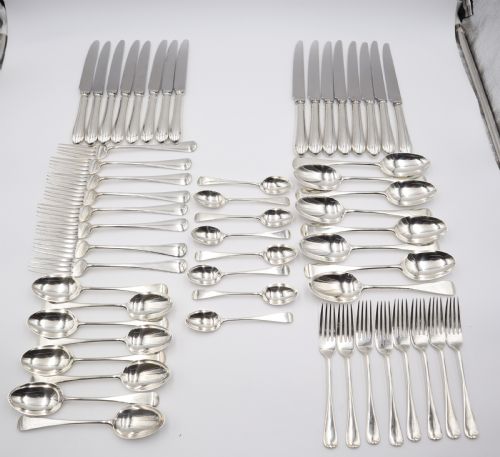
You are most likely to meet boxed sets and canteens on this page. The listings show forms spanning individual dessert cutlery sets to serving cutlery and larger canteens for twelve persons.
The origins stretch across Victorian, Edwardian, and George V styles. Traditional designs dominate, alongside specific patterns such as Coburg.
Materials and construction methods
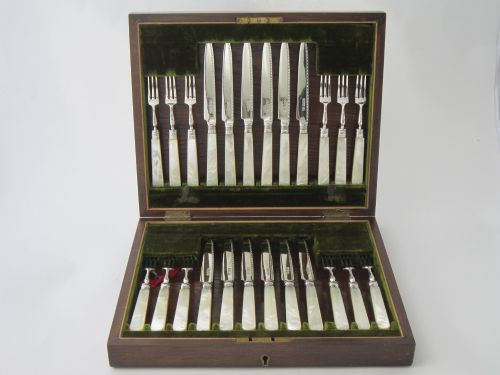
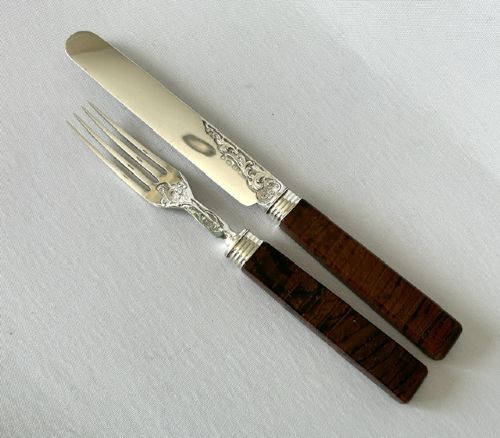
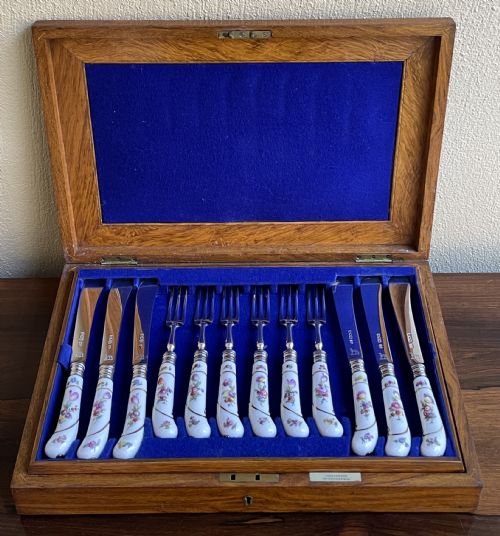
The pieces listed on this page combine sterling silver and silver plate with handles formed from mother of pearl, agate, and porcelain. Steel and wood also appear, sometimes housed within oak cases lined with velvet.
Sheffield production methods are represented alongside traditional silversmithing techniques. Blades and tines are fashioned from silver or steel, while natural handles are shaped and riveted to the metal shafts.
Listings span periods from the Georgian era through Victorian, Edwardian, and George V, up to the 1930s.
Distinguishing quality in dessert cutlery
Quality rests upon the selection of materials and the preservation of the original boxing. Sets featuring intact mother of pearl, agate, or porcelain handles paired with sterling silver rather than silver plate sit higher in the range.
The presence of fitted oak cases and matched makers, such as Carrington, elevates the standing of a set. Finer examples maintain crisp hallmarks and unblemished metalwork across every knife and fork.
Carrington
The Silver Dessert Knife Fork Glossary
- Sterling silver
- A silver alloy containing 92.5 percent pure silver and 7.5 percent other metals, usually copper. This standard is marked by hallmarks on British cutlery.
- Mother of pearl
- The iridescent internal layer of pearl oyster shells, utilised for decorative knife and fork handles. It provides a smooth, lustrous grip.
- Canteen
- A fitted box or chest designed to hold a complete set of cutlery securely. These often feature wooden construction, such as oak, with internal velvet linings.
Silver Dessert Knife Fork: Frequently Asked Questions
What is a silver dessert knife fork used for?
These utensils were created specifically for eating fruit, cheese, and sweet courses at the end of a formal meal. They provide a smaller, more delicate scale than standard dinner cutlery.
Many sets include matching knives and forks housed together in fitted boxes, ready for service on the dining table.
How do I identify the period of my cutlery?
Dating relies upon examining the hallmarks stamped into the silver components, which indicate the assay office and year of manufacture. Stylistic clues such as handle materials and fitted oak cases also point to Georgian, Victorian, or Edwardian origins.
Makers' marks provide further confirmation of the era in which the workshop operated.
Are these sets safe to use today?
Silver and mother of pearl items require careful hand washing rather than mechanical dishwashing to preserve the materials. Avoiding harsh detergents protects both the metal surfaces and the natural handle inlays.
Storing them in their original fitted boxes prevents scratching and tarnishing between uses.
What materials are common in these sets?
Sterling silver and silver plate form the primary metal components for the blades, tines, and ferrules. Handles are frequently shaped from mother of pearl, agate, or porcelain.
Storage containers are typically constructed from oak and lined with velvet to protect the contents.