
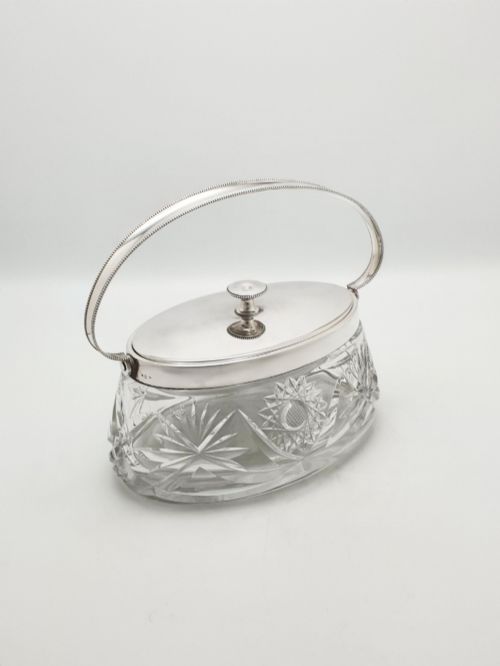


Antique Silver Cookie Box
An antique silver cookie box brings practical elegance to the table, offering a sturdy yet decorative vessel for storing biscuits.
Antique Silver Cookie Box
When you search for an antique silver cookie box, you encounter containers historically designed for biscuits, often called biscuit barrels or boxes. These items appear across Victorian, Edwardian, and early twentieth-century periods, reflecting changes in dining habits and interior decoration.
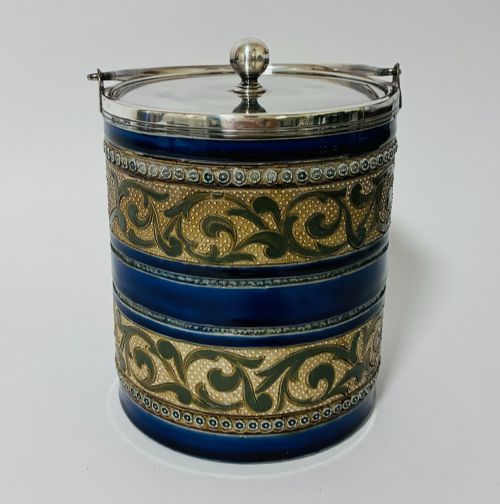
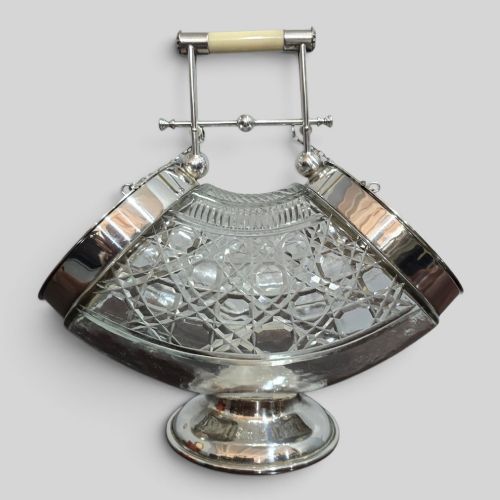
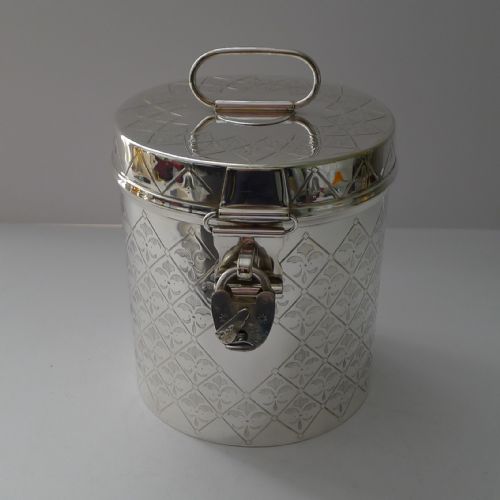
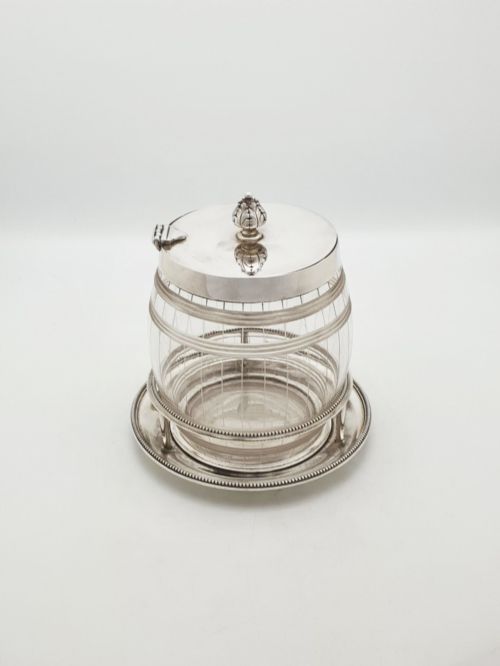
The pieces on this page span from the mid-nineteenth century through the 1920s, showing forms ranging from cylindrical drums to novelty weights and oak bodies. Most examples combine a metal mount with glass liners, ceramic bodies, or carved wood, originating from English workshops and continental makers.
Makers utilised various stylistic movements, including Arts and Crafts, Jugendstil, and Art Deco, to shape these domestic objects. Buyers frequently meet silver-plated versions paired with cut glass or stoneware, alongside select solid sterling silver pieces.
Materials and Construction
Makers combined silver plate, electroplated nickel silver, or sterling silver with cut glass, ceramic bodies such as Doulton Lambeth stoneware, and oak. Metal mounts, hinged lids, and swing handles required precise smithing to secure glass liners and stoneware vessels.
Techniques involved hobnail and faceted cutting on glass, piercing on metal mounts, and drum-form construction using banded wood. Silver plating covered base metals like nickel, while solid silver pieces received hallmarks to certify metal purity.
Listings feature items spanning the Victorian, Edwardian, and early twentieth-century periods, incorporating materials like oak, cut glass, and stoneware.
Assessing Quality
Quality rests on the crispness of glass cutting, the weight of the silver plating or solid silver, and the structural integrity of hinged mechanisms and locks. Superior examples feature intricate engraving, heraldic finials, or robust oak framing by recognised makers.
Lighter electroplate, simpler pressed glass liners, and plain surfaces without maker marks sit lower on the scale. The distinction lies in the depth of hand-finishing, the quality of the ceramic body, and the overall harmony between the metal mounts and the insert.
Mappin and Webb·Elkington and Co·Robert and Belk·Walker and Hall·John Grinsell and Sons·James Dixon and Sons·Atkin Brothers
The Antique Silver Cookie Box Glossary
- Biscuit barrel
- A cylindrical container designed for holding biscuits on the dining table. These vessels typically feature a fitted lid and a swing handle for transport.
- Electroplated nickel silver
- A base metal alloy coated with a layer of pure silver through electrolysis. This technique allowed manufacturers to produce durable tableware with a silver finish.
- Doulton Lambeth
- A prominent British pottery known for stoneware ceramics. Their bodies frequently formed the main compartments of late nineteenth-century biscuit containers.
- Hobnail cut
- A decorative glass-cutting pattern featuring rows of small, pointed pyramids. This technique catches the light and adds texture to the body of the container.
- Finial
- A decorative knob or ornament attached to the top of a lid. On these boxes, finials often take the form of heraldic figures or simple spheres.
Antique Silver Cookie Box: Frequently Asked Questions
How were these boxes used originally?
These vessels sat on dining tables and sideboard surfaces to keep biscuits fresh and dry during dessert courses or afternoon tea. Household staff filled them in the kitchen before bringing them to the dining room for guests.
The hinged lids and secure latches or locks prevented moisture from softening the baked goods. Swing handles allowed diners to pass the container easily around the table.
How do I date an antique silver cookie box?
Dating relies on maker's marks, registry stamps, and stylistic cues from periods like the Victorian era or the 1920s. Hallmarks on sterling silver pieces provide specific assay office letters and date symbols.
Material combinations and manufacturing techniques also indicate age, as electroplating methods and glass-cutting styles shifted between 1860 and 1920. Comparing the form against known dated examples helps narrow the decade of production.
Can I use these boxes for food today?
Glass-lined and ceramic-bodied containers remain functional for storing dry foods like biscuits or cookies on a contemporary counter. The inner liners lift out easily for washing and routine maintenance.
Care should be taken with silver-plated surfaces to avoid harsh detergents that strip the plating. Gentle hand washing preserves both the metal finish and the structural integrity of the antique mounts.
What is the difference between silver plate and sterling silver?
Sterling silver contains a high proportion of pure silver alloyed with other metals throughout its entire mass, verified by official hallmarks. It represents the solid precious metal standard of the piece.
Silver plate consists of a base metal, such as nickel silver, coated with a thin layer of pure silver on the surface. Plated items offer the appearance of silver at a different level of manufacturing.