

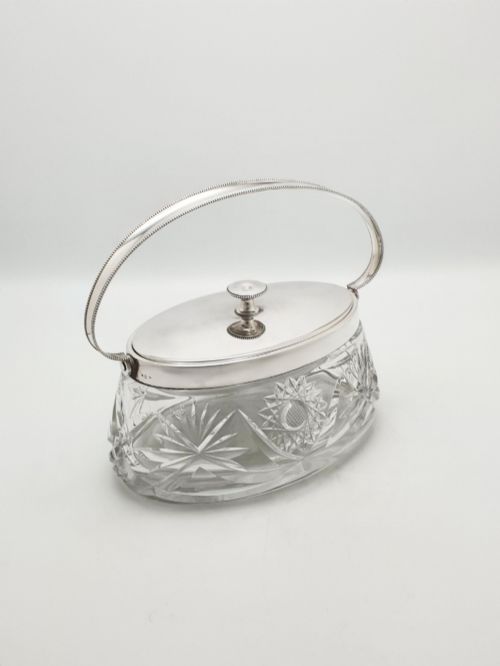


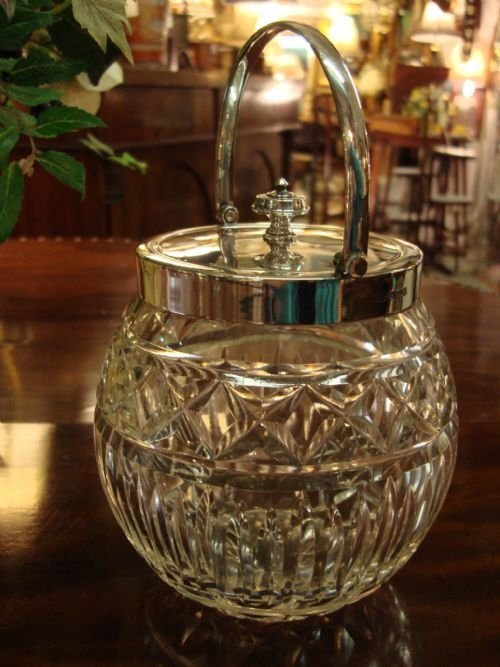
Cut Glass Biscuit Box
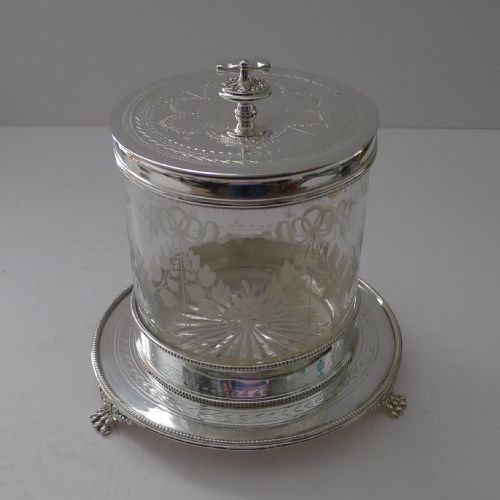
These cut glass biscuit box examples combine heavy crystal bodies with gleaming silver plate or sterling mounts, offering a formal centrepiece for the Edwardian or Victorian drawing room.
Cut Glass Biscuit Box
A cut glass biscuit box serves as a heavy glass barrel or drum designed to store dry provisions on the dining table or sideboard. These pieces originate across the Georgian, Victorian, Edwardian, and Art Deco periods, spanning the nineteenth and twentieth centuries.
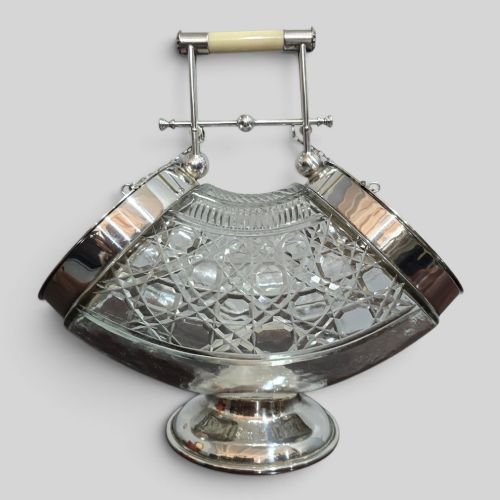
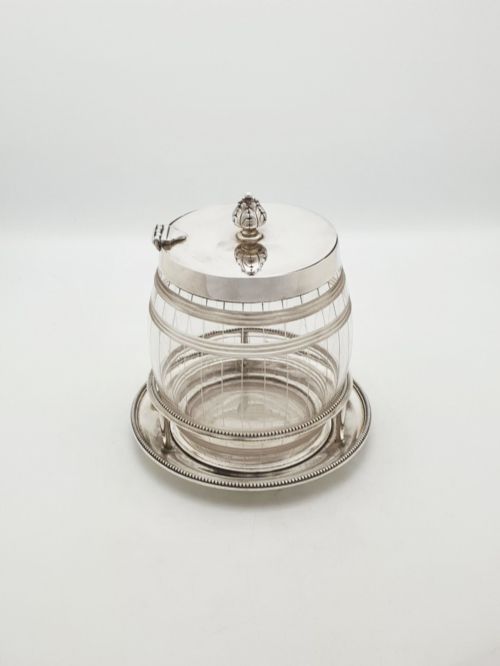
The version most commonly met on this page pairs a deep-cut glass body with a hinged silver plated or sterling silver lid, frequently fitted with a handle. Makers also styled these vessels as biscuit barrels or cookie jars, occasionally mounting them on dedicated metal stands.
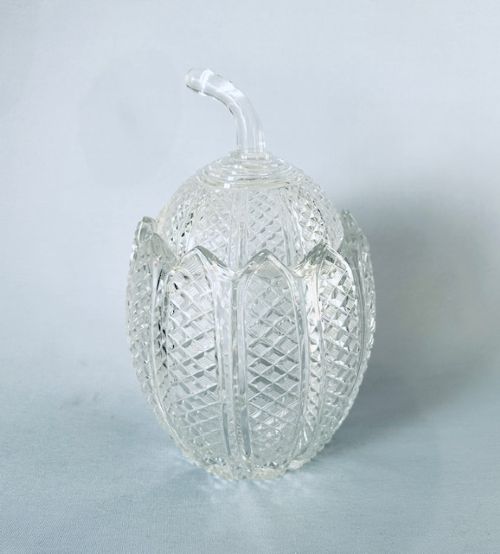
Collector interest focuses on the interplay between the refractive glass cutting and the metal mounts, whether the form takes a straightforward cylindrical drum or a novelty melon shape.
Materials and construction methods
The body relies upon lead crystal or heavy cut glass, shaped by blowing or pressing before artisans applied deep wheel-cut patterns such as hobnails or spiral flutes. This heavy glass gives the vessels substantial weight and brilliant light refraction.
Metal components utilise silver plate over base metal or solid sterling silver for the rims, hinged lids, handles, and finials. Specialised firms stamped or cast these mounts, adding details like heraldic dragon finials or Jugendstil curves.
Cut Glass Biscuit Box Retail Price Guide 2026
Typical asking prices for cut glass biscuit box among the pieces listed under this phrase on Sellingantiques today, from the lower quarter to the upper quarter. They describe what is for sale here now, not the wider market.
Certain Victorian examples include a heraldic dragon finial guarding the biscuit supply from midnight raids.
Distinctions in quality and execution
Quality rests heavily upon the crispness and depth of the glass cutting, where sharper facets and intricate patterns create superior light play. Lesser examples show softer, shallower impressions from mass-produced moulds rather than skilled hand-cutting.
The refinement of the metal mounts further separates standard production from top-tier specimens. Substantial silver plating, fully hallmarked sterling silver, and complex mechanical actions like automated or double-ended opening mechanisms elevate the status of a piece.
Elkington·WMF·Walker and Hall·James Dixon and Sons·Cooper Bros·W Coulthard Ltd·Grinsell and Sons·William Hutton·Martin Hall
The Cut Glass Biscuit Box Glossary
- Biscuit barrel
- A cylindrical or drum-shaped container used for storing biscuits, typically featuring a fitted lid and handle. These vessels formed a standard part of nineteenth and twentieth-century dining ware.
- Hobnail cut
- A raised, multi-faceted glass cutting pattern resembling the hobnails on stout boots. This technique produces intense sparkle across the body of the glass.
- Sterling silver
- An alloy containing ninety-two point five percent silver by mass, with the remainder composed of other metals for durability. Pieces made from this material carry official assay office hallmarks.
- Silver plate
- A thin layer of silver fused or electroplated onto a base metal such as copper, nickel brass, or Britannia metal. This process provided the look of solid silver at a lower manufacturing cost.
- Finial
- A decorative knob or ornament attached to the top of a lid. On these boxes, they take forms ranging from simple spheres to heraldic dragons.
Cut Glass Biscuit Box: Frequently Asked Questions
What were cut glass biscuit boxes used for?
These vessels held dry biscuits and small cakes served during afternoon tea or after-dinner gatherings in Victorian and Edwardian drawing rooms. The fitted lids helped keep the contents fresh and protected them from moisture.
Well-to-do households placed them on sideboards or dining tables as functional tableware that also displayed the family's taste and disposable income.
How do I tell Victorian boxes from later pieces?
Victorian examples often feature heavy, ornate silver-plated mounts with naturalistic or heraldic ornamentation, combined with deep hobnail or spiral glass cutting. They frequently carry registry marks or stamps from nineteenth-century Sheffield and Birmingham makers.
Later pieces from the Edwardian and Art Deco periods shift towards cleaner geometric lines, lighter framing, or distinct stylistic movements like Jugendstil, reflecting changing interior design tastes.
Are sterling silver mounts marked?
Solid sterling silver mounts carry official hallmarks stamped directly into the metal, including symbols for the assay office, the maker's mark, and a date letter. These marks identify the exact town and year of testing.
Silver-plated versions use different stamps, such as maker initials paired with phrases like EPNS, indicating electroplated nickel silver beneath the silver layer.
How should I clean the glass and silver?
Wash the glass body in warm, soapy water using a soft cloth, avoiding harsh abrasives that might scratch the surface. Ensure the metal mounts remain dry to prevent moisture from damaging the silver plate or hinges.
Polish the silver portions gently with a specialised cloth, keeping cleaning creams away from the glass-to-metal joins to protect the original cement or washers.