





Edwardian Cut Glass Container
These edwardian cut glass container pieces bring heavy crystal and bright silver mounts together for dressing tables and tea services.
Edwardian Cut Glass Container
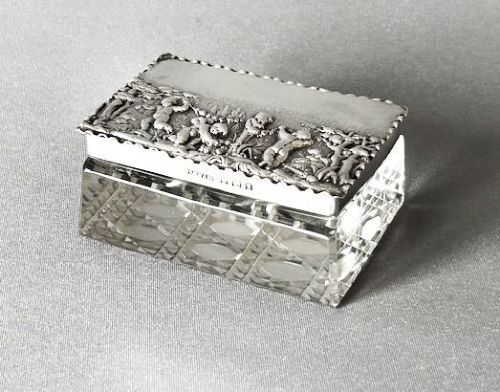
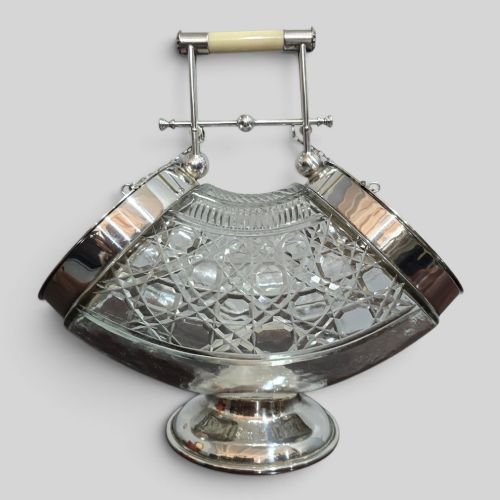
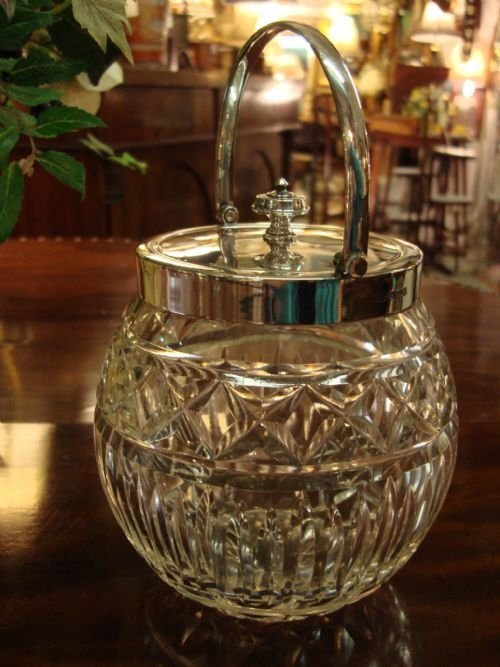
An edwardian cut glass container covers a range of domestic items, from heavy biscuit barrels and tea caddies to small vanity jars, stamp boxes and scent bottles. Most examples on this page date from the Edwardian period through to the 1920s, spanning George V and Art Deco styles alongside earlier Victorian survivals.
Biscuit barrels and ice buckets sit alongside smaller desk accessories, trinket boxes and rouge pots. These vessels combine functional storage with decorative metal mounts in sterling silver, silver plate, and occasionally tortoiseshell or leather cases.
How They Were Made
The glass bodies rely on deep cutting techniques, creating hobnail patterns, faceted surfaces and crystal clarity that catch the light. Amethyst glass and standard clear glass form the main vessels, shaped into cylinders, hearts and cased sets.
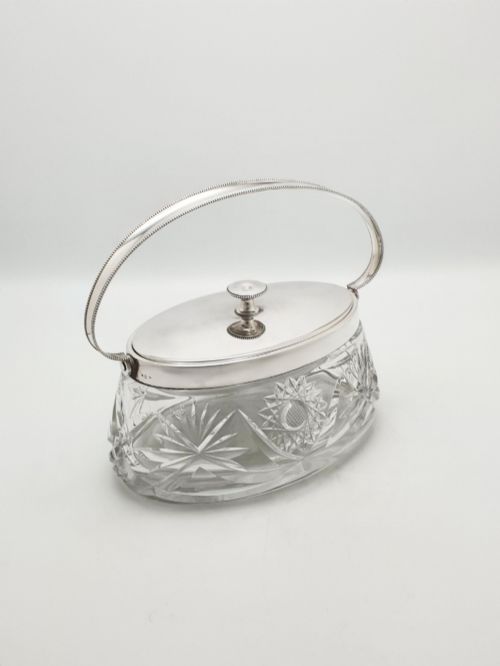
Metal mounts utilise sterling silver and silver plate, fitted closely to rims, hinged lids and swing handles. Makers secure these mounts to the glass using collars, sometimes incorporating makers marks and Birmingham assay details.
Edwardian Cut Glass Container Retail Price Guide 2026
Typical asking prices for edwardian cut glass container among the pieces listed under this phrase on Sellingantiques today, from the lower quarter to the upper quarter. They describe what is for sale here now, not the wider market.
Several containers include swing handles designed specifically for passing biscuits safely around the Edwardian tea table.
What Varies in Quality
The weight and depth of the glass cutting separate basic vessels from finer pieces, alongside the crispness of hobnail patterns and faceted edges. Thick cut crystal carries a substantial feel in the hand compared to lighter pressed glass alternatives.
The metalwork dictates the overall standard, where heavy sterling silver mounts with clear hallmarks elevate a piece above standard silver plate. Fitted cases, functioning locks and intact tortoiseshell details also define the upper tier.
Hasset & Harper·James Dixon and Sons·WMF
The Edwardian Cut Glass Container Glossary
- Hobnail cut
- A pattern of sharp, pyramid-like facets cut into the surface of the glass. This traditional technique creates texture and refracts light across the body of the container.
- Sterling silver
- An alloy of silver containing 92.5 percent pure silver and 7.5 percent other metals, usually copper. Hallmarks on the metal mounts confirm this standard.
- Tea caddy
- A small storage container originally designed to hold loose tea leaves. In cut glass forms, these feature secure lidded tops to preserve the contents.
- Silver plate
- A layer of silver applied to a base metal core, such as nickel silver or copper. Many biscuit boxes and ice buckets utilise this method for durability.
- Jugendstil
- The continental European counterpart to Art Nouveau, focusing on organic lines and flowing forms. Pieces from this movement occasionally appear among the metal mounts.
Edwardian Cut Glass Container: Frequently Asked Questions
What were cut glass containers used for?
These containers served multiple domestic functions across the home, holding dry biscuits on the dining table, tea leaves in the parlour, or cosmetics on the dressing table.
Smaller versions functioned as desk accessories, keeping stamps and trinkets secure under fitted hinged lids.
How do I identify an Edwardian piece?
Edwardian items typically display bright silver mounts combined with deep hobnail cutting or faceted crystal bodies, often reflecting the tastes of the early twentieth century.
Assay office hallmarks and date letters stamped on the silver components provide precise confirmation of the manufacturing period.
How should I clean cut glass with silver mounts?
Wash the glass gently in warm soapy water using a soft cloth, taking care to avoid harsh abrasives that might scratch the surface.
Keep silver cleaning compounds away from the glass body to prevent residue buildup around the mounted rims and hinges.