



Antique Silver Cake Basket
An antique silver cake basket brings formal Georgian and Victorian dining ceremony to the table with swing handles and pierced metalwork.
Antique Silver Cake Basket
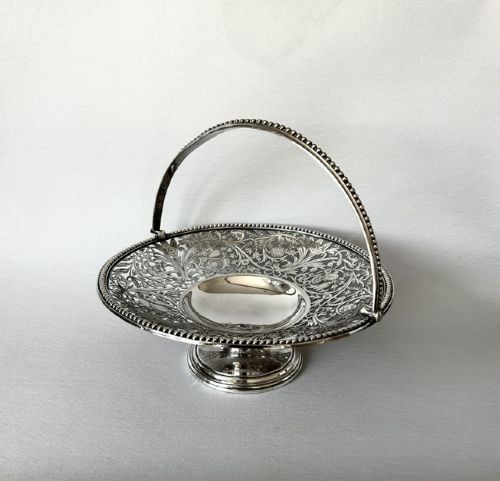
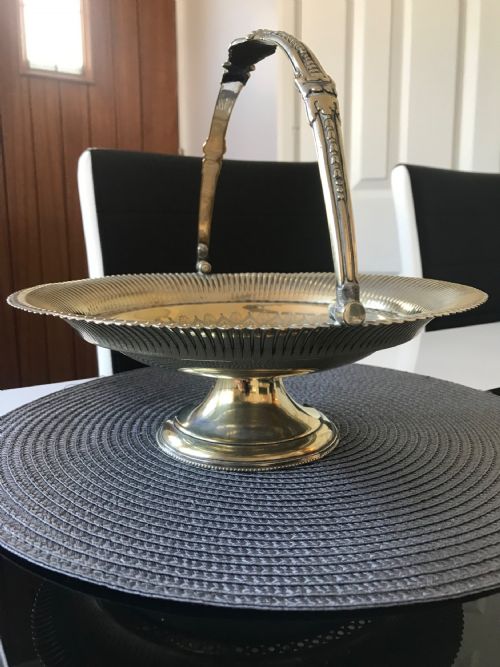
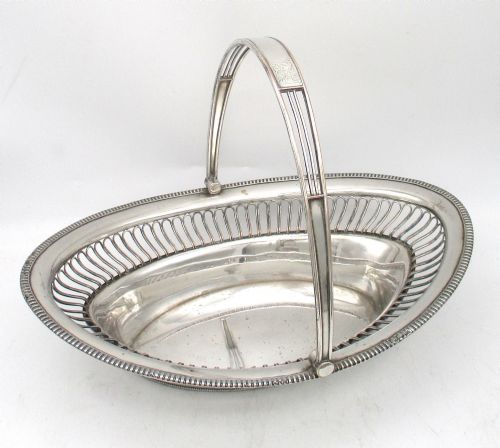
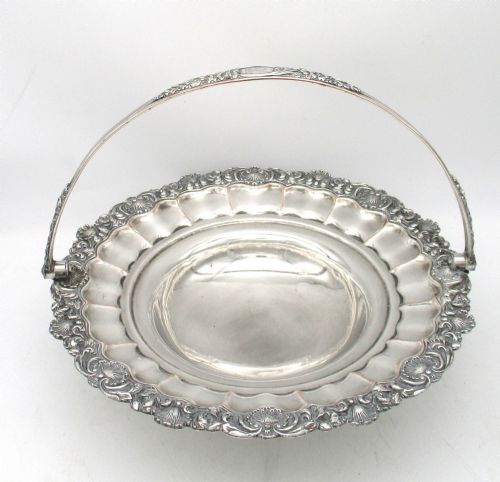
An antique silver cake basket is a footed or flat-bottomed vessel designed to serve baked goods, fruit and bread during formal dining. You will frequently encounter examples from the Georgian, Victorian and Edwardian periods.
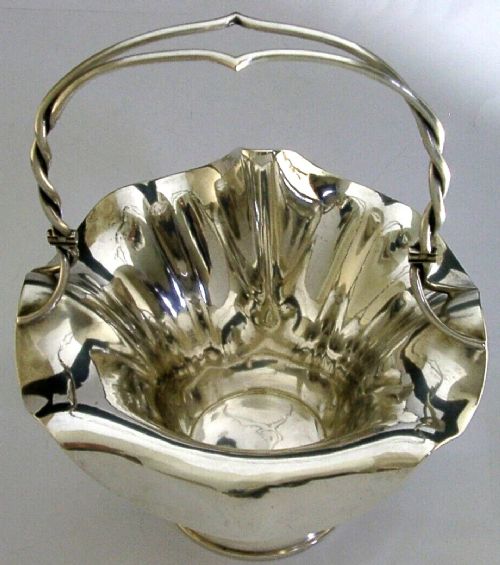
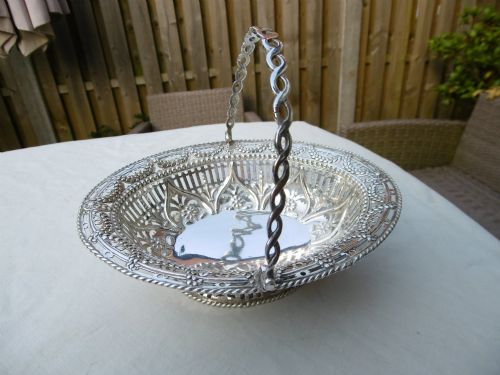
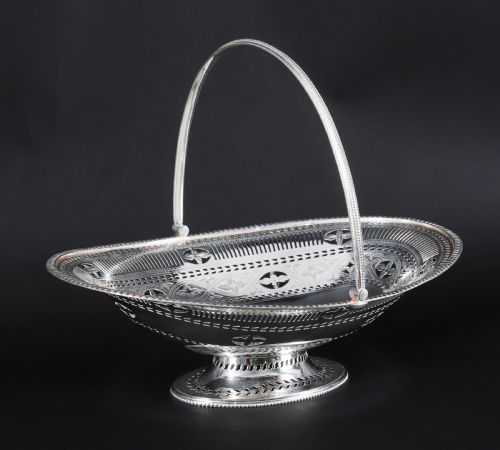
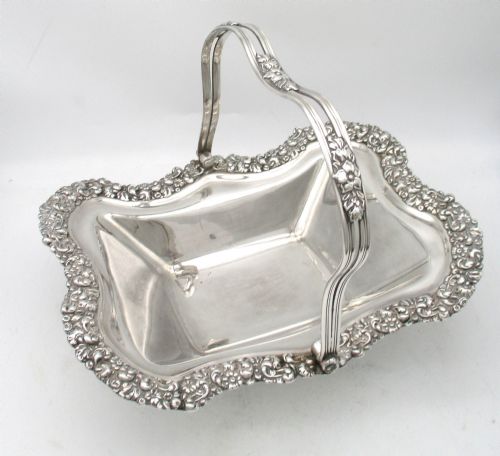
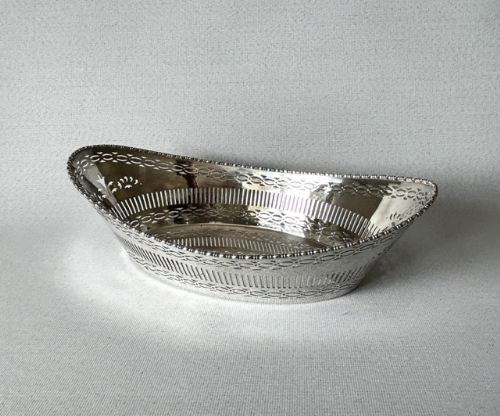
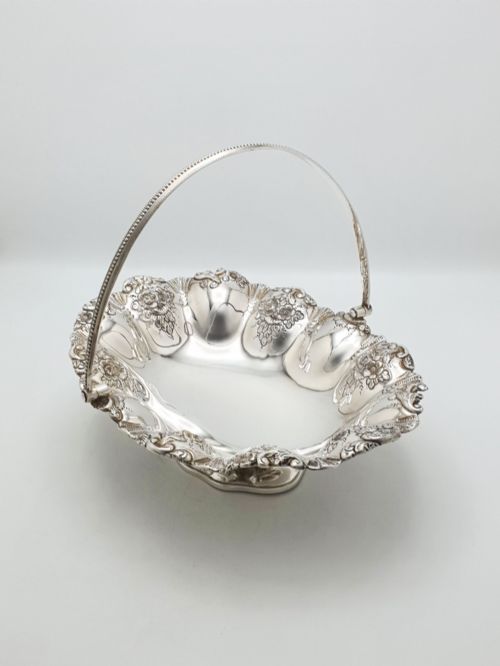
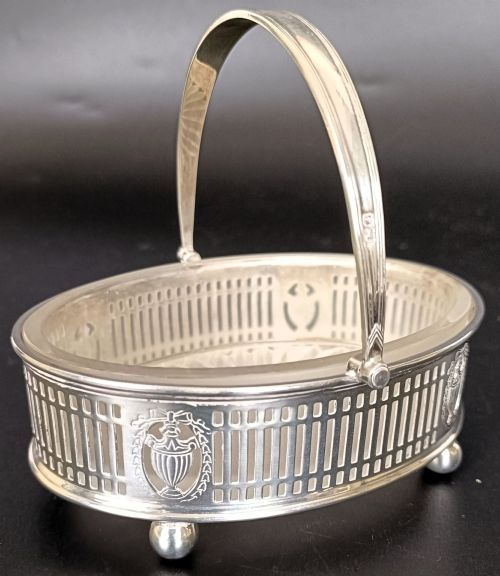
The form typically incorporates a swing handle and an openwork bowl shaped through piercing, fretwork or wirework. These pieces span sterling silver, solid silver and various plated methods including Old Sheffield Plate.
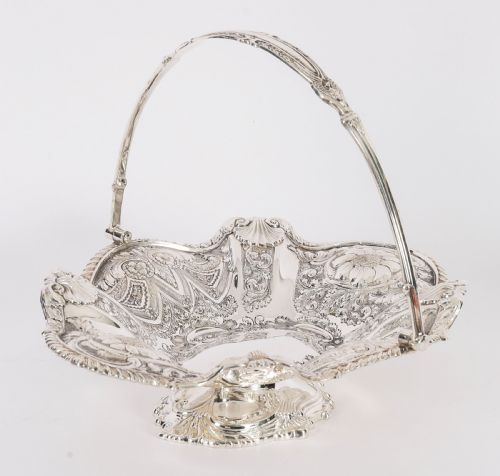
Makers produced these items in stylistic idioms ranging from Rococo Revival and Neoclassical to Art Nouveau. They function today as table centrepieces or decorative serveware.
How they were made
Silversmiths utilised sterling silver or copper fused with silver in Old Sheffield Plate, shaping the metal by hand through hammering and raising. Piercing, fretwork and lattice designs were achieved by hand-sawing intricate patterns into the metal sheets.
Embossed detailing and repoussé rims required skilled chasing from the reverse side to push the floral and classical motifs outward. Swing handles were attached with pins or hinged joints to allow the arm to drop neatly to the side of the vessel.
Antique Silver Cake Basket Retail Price Guide 2026
Typical asking prices for silver cake basket among the pieces listed under this phrase on Sellingantiques today, from the lower quarter to the upper quarter. They describe what is for sale here now, not the wider market.
Listings feature items spanning the eighteenth, nineteenth and twentieth centuries, constructed in sterling silver, silver plate, Old Sheffield Plate and opaline glass.
What varies in quality
Quality rests upon the crispness of the pierced or fretwork detailing and the structural integrity of the swing handle mechanism. Heavier gauge silver provides a more substantial weight and resists bending across the span of the bowl.
The fineness of hand-chased repoussé work and the preservation of the original plating or hallmarks distinguish standard production items from master silversmith output.
George W. Scott & Sons Ltd·Mappin & Webb·John Hunt·Samuel Herbert·Hammond, Creake & Co·James Deakin & Sons·William Hutton & Sons·James Dixon & Sons Ltd·John Walton
The Antique Silver Cake Basket Glossary
- Swing handle
- A movable arched handle attached to the rim of the basket by pivots, allowing it to drop flat when the vessel sits on a sideboard.
- Old Sheffield Plate
- A composite material made by fusing a thin sheet of silver to a thicker copper core, popular before electroplating developed.
- Pierced work
- A decorative technique involving patterns cut through the silver sheet to let light pass through the metal wall.
- Repoussé
- A method of shaping metal by hammering it from the reverse side to form raised floral or scroll designs on the front.
- Wirework
- An open lattice construction formed by soldering together fine strands of metal wire into geometric or looped patterns.
Antique Silver Cake Basket: Frequently Asked Questions
What were antique silver cake baskets used for?
These vessels held cakes, bread and fruit during formal meals and afternoon tea gatherings in affluent households.
Servants passed them around the dining table or displayed them centrally as decorative tableware when empty.
How do I clean an antique silver cake basket?
Use a soft cloth and a gentle, non-abrasive silver polish formulated specifically for antique metalwork.
Avoid harsh chemical dips that strip away the original patina, particularly on Old Sheffield Plate where the underlying copper might emerge.
How can I tell the period of a basket?
Examine the stylistic details such as the flowing asymmetrical lines of Art Nouveau or the strict symmetry of Neoclassical revival.
Maker marks, assay office symbols and date letters stamped into the metal provide the exact year of manufacture for solid silver pieces.
Can I use an antique basket for food today?
Solid silver and sterling pieces remain safe for serving dry foods like cakes and bread during modern meals.
Plated items require care to ensure the base metal does not touch acidic foods if the silver layer has worn thin over the centuries.