



Antique Silver Bell
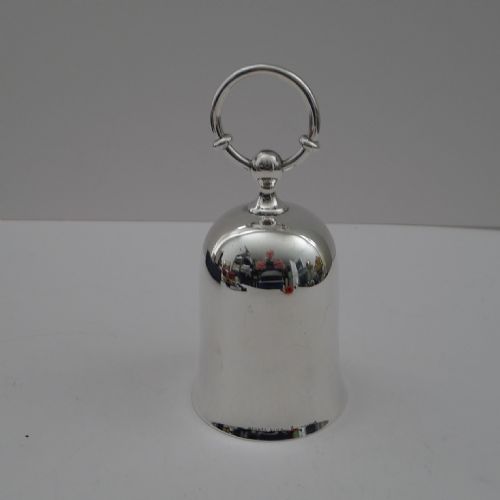
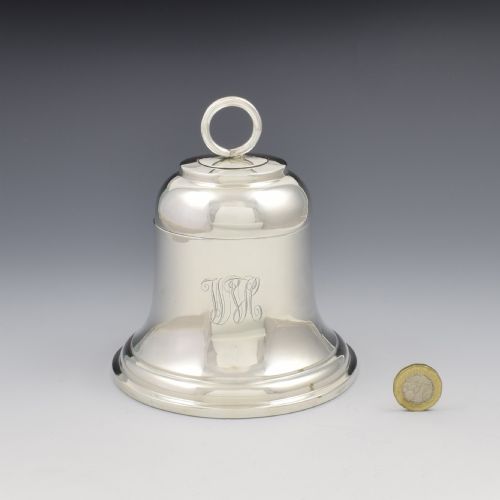
When you search for an antique silver bell, you enter a diverse field spanning desk call bells, inkwells, and rattles made across the Georgian, Victorian, and Edwardian eras.
Antique Silver Bell
The pieces grouped under the search for an antique silver bell encompass utilitarian items and desk accessories created from the eighteenth century through the early twentieth century. Buyers encounter domestic table bells, reception call bells, inkwells housing hidden mechanisms, and infant rattles featuring integrated bells.
Stylistic influences range from classic Georgian designs and ornate Victorian revivalism to Edwardian novelty items and Art Deco geometric forms. Origin points stretch across English provincial assay offices, continental European workshops, and American silversmiths.
Materials and Construction
Makers utilised sterling silver, silver plate, and white metal alongside contrasting substances such as oak, brass, glass, horn, and mother-of-pearl. Table bells and desk accessories frequently combine a heavy cast metal base with an internal steel clapper to ensure a clear tone.
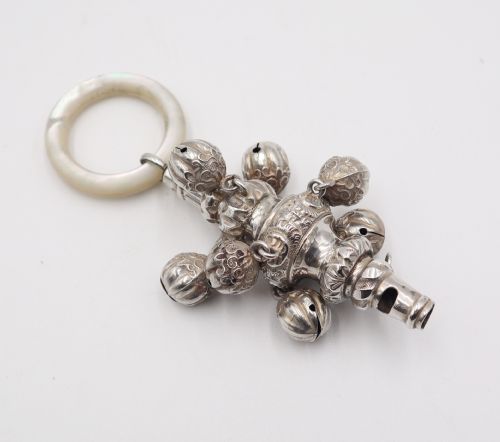
Novelty pieces and inkwells demonstrate specialist silversmithing techniques like filigree, hand-chasing, and mechanical spring actions. Baby rattles incorporate hollow-formed silver sections joined with whistles and coral teethers.
Listings feature items spanning Georgian, Victorian, and Edwardian eras, executed in sterling silver, silver plate, brass, glass, and oak.
Assessing the Pieces
Quality rests upon the crispness of the cast or chased detail across figural handles, floral motifs, and crests. Crisp maker's marks and clear assay stamps confirm the standard of the metal and the origin of the piece.
The integrity of internal mechanisms dictates performance in mechanical desk bells and spring-loaded inkwells. Original components, uncompromised silver weight, and harmonious proportions separate standard production items from workshop highlights.
George Unite·Joseph Taylor·Bateman London·Asprey & Co
The Antique Silver Bell Glossary
- Sterling silver
- A silver alloy containing 92.5 percent pure silver by mass, standard for British domestic plate. Items bear hallmark stamps indicating the assay office and date.
- Novelty silver
- Silver items fashioned into whimsical or disguised shapes, such as animals, figures, or everyday objects. These pieces were particularly popular during the Victorian and Edwardian periods.
- Assay office
- An official body charged with testing the purity of precious metal items and stamping them with hallmarks. Prominent English offices include London, Birmingham, and Chester.
- Table bell
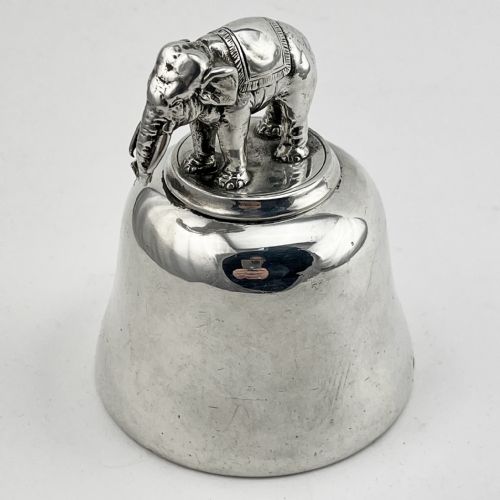
- A domestic call bell placed on dining tables or reception desks, often featuring a plunger or a swinging hand-held handle. They were utilised to summon servants or attention.
Antique Silver Bell: Frequently Asked Questions
How do I date an antique silver bell?
Dating relies heavily upon the stamped hallmarks found on sterling silver pieces, which indicate the specific assay office and year of manufacture. Stylistic indicators like Edwardian novelty forms or Georgian proportions also provide a clear chronological framework.
Silver-plated items lack official date letters, requiring buyers to look at construction methods, retailer marks, and registration numbers to narrow down the decade of production.
Were desk bells used in homes or businesses?
Desk and table bells served both domestic and commercial environments depending on their size and form. Heavy reception bells stood on hotel counters and shop desks, while smaller call bells sat in drawing rooms to summon household staff.
Many examples double as inkwells or combine with card cases, reflecting the multifaceted nature of Victorian and Edwardian desk accessories.
Why do some silver bells have wooden bases?
Wooden bases made from oak or mahogany provided necessary weight and stability for heavy metal bells and table gongs. The contrast between polished silver plate or sterling mounts and dark wood was a favored aesthetic of the late nineteenth century.
Base materials also served a practical acoustic purpose, helping to project the tone of the bell when the plunger or clapper was struck.
What is a mechanical desk bell?
Mechanical desk bells operate via an internal spring or lever mechanism rather than a traditional swinging clapper. Pressing a top button or a figure causes an internal hammer to strike the dome instantly.
These clever desk accessories gained popularity in the late nineteenth century as office and hotel equipment became increasingly specialised and novel.