


Antique Shirvan Runner
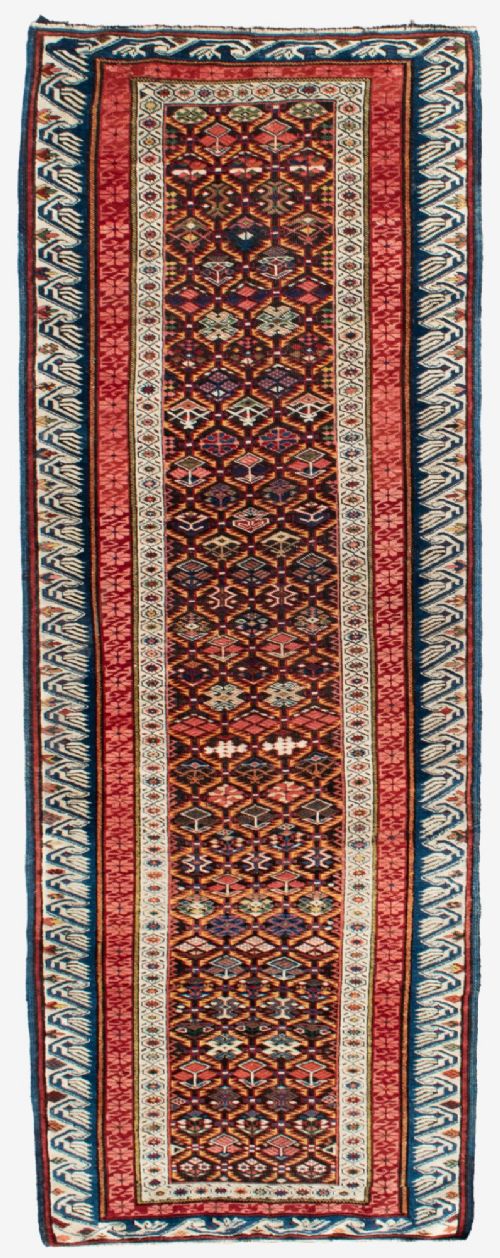
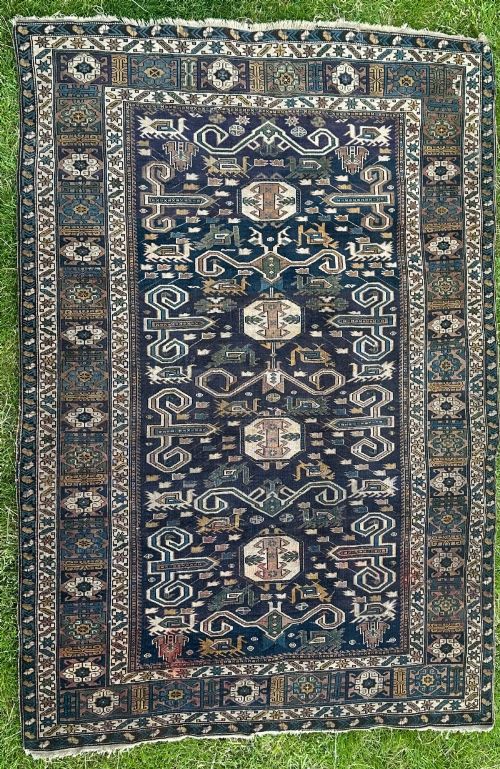
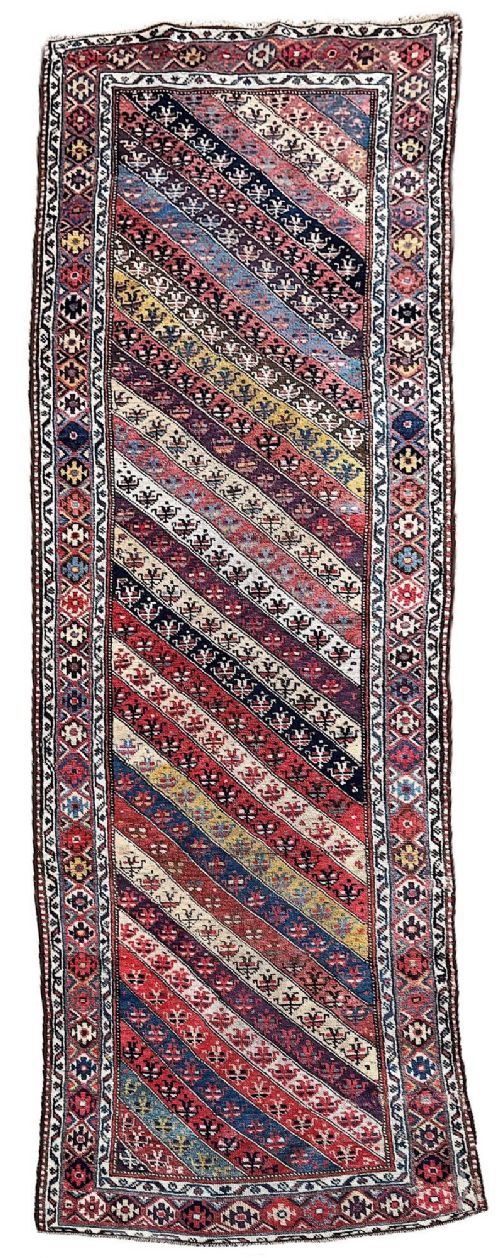
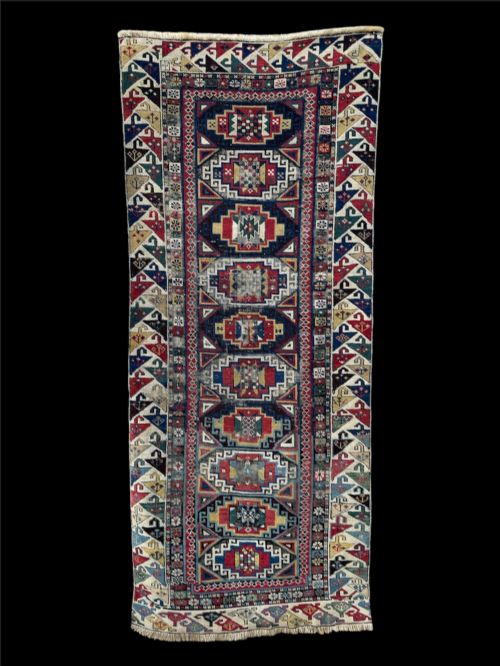
An antique shirvan runner brings geometric tribal artistry and rich saturated hues from the Eastern Caucasus straight to narrow hallways and long corridors.
Antique Shirvan Runner
When you search for an antique shirvan runner, you are looking at woven floor coverings originating from the Caucasus region during the nineteenth and early twentieth centuries. These pieces typically display elongated formats designed specifically for narrow spaces, featuring structured geometric motifs and repeating medallions.
The examples recorded here date from periods spanning the 1880s through to 1910, encompassing traditional regional styles such as Caucasian tribal and banded designs. Alongside full runners, the selection includes related long rugs and flatwoven kilims originating from the same Eastern Caucasian workshops.
How they were made
Weavers constructed these runners using hand-spun wool for the pile and foundation, providing a dense and resilient structure suited to heavy domestic traffic. Cotton also appears in the foundational elements of certain pieces to add stability to the longer format.
Colour comes from natural dyes applied to the wool, yielding soft or deep tones that age gracefully over time. The weaving technique relies on traditional Caucasian knotting methods, resulting in crisp geometric lines and durable flatwoven kilim ends.
Some weavers inserted tiny misplaced geometric knots just to ward off the evil eye, ensuring no two carpets ended up identical.
What varies in quality
Quality in these runners rests on the precision of the weave and the clarity of the geometric drawing. Finer knot counts allow complex motifs like Lesghi stars or boteh patterns to maintain sharp outlines along the narrow field.
The vibrancy and depth of the natural dyes significantly influence the visual impact of the piece. Well-preserved wool pile combined with balanced secondary colours separates standard examples from exceptional survivors.
The Antique Shirvan Runner Glossary
- Runner
- A long, narrow carpet format traditionally woven for corridors, hallways or staircases. These pieces measure significantly longer than they are wide.
- Kilim
- A flatwoven textile produced without a pile by tightly interweaving warp and weft threads. Shirvan examples often feature horizontal banded designs.
- Natural Dyes
- Colourants derived from plants, insects and minerals rather than synthetic compounds. They produce organic hues that develop a subtle patina with age.
- Boteh
- A stylised almond or teardrop motif with a curved upper end. This ancient Persian and Caucasian symbol frequently appears in flaming or repeating arrangements.
- Lesghi Star
- An octagonal geometric medallion motif associated with Caucasian weaving traditions. It typically repeats in series along the central vertical axis of the rug.
Antique Shirvan Runner: Frequently Asked Questions
Where were these runners made?
These runners originate from the Shirvan region in the Eastern Caucasus. The weavers belonged to local tribal groups working within traditional village and workshop traditions.
Production dates span the late nineteenth century and the opening decades of the twentieth century. The geography influenced the distinct geometric vocabulary found across the region.
How do I care for my runner?
Protect the hand-spun wool pile by placing a quality underlay beneath the textile on hard floors. This prevents slipping and reduces friction between the fibres and the floorboards.
Vacuum gently without using a rotating beater bar to avoid pulling the wool knots. Professional cleaning should be undertaken periodically by specialists familiar with antique natural-dyed carpets.
Are natural dyes easy to spot?
Natural dyes present a rich, variegated appearance where the colour absorbs into the hand-spun wool with subtle tonal shifts. This variation gives the surface depth under changing light.
Synthetic dyes introduced later can sometimes appear flat or overly uniform across the field. Examining the base of the wool pile often reveals how deeply the natural colour penetrated.
How are runners and long rugs different?
Runners are strictly defined by their elongated proportions, making them ideal for narrow architectural spaces like corridors. Long rugs share a similar extended format but tend to be slightly broader in width.
Both categories utilise the same Caucasian design repertoire and regional weaving techniques. The primary distinction lies entirely in the specific ratio between length and width.