


Antique Sheraton Armchair
An antique sheraton armchair brings neoclassical proportion and refined inlay into a room, offering both seating and architectural grace.
Antique Sheraton Armchair
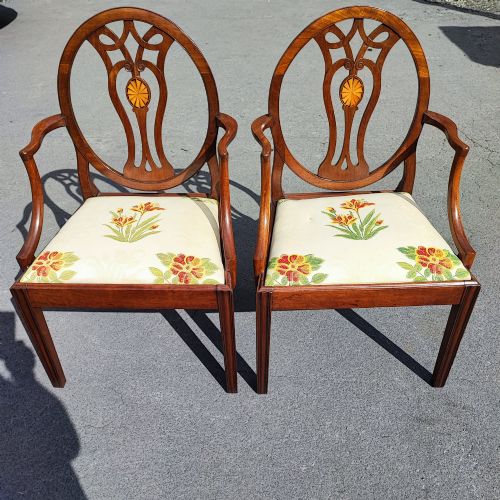
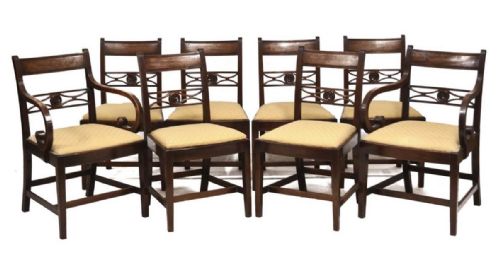
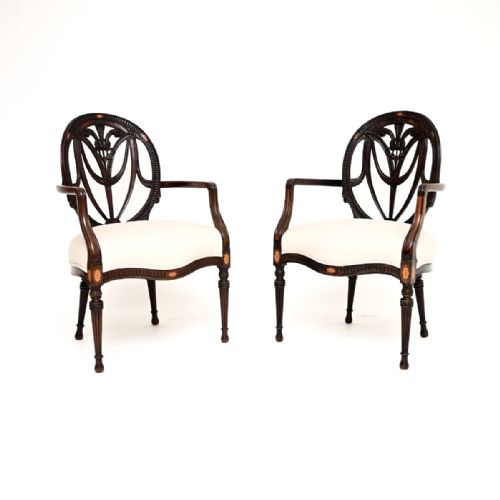
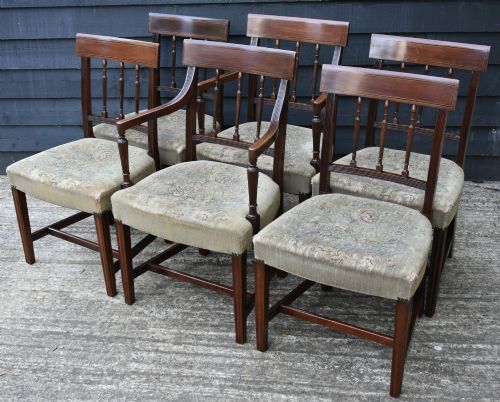
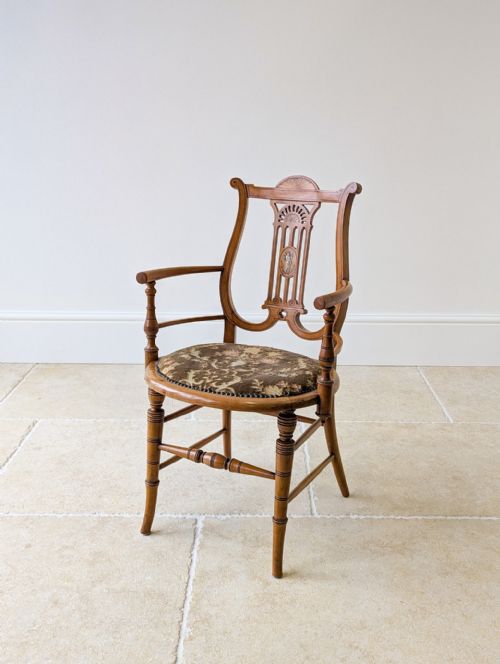
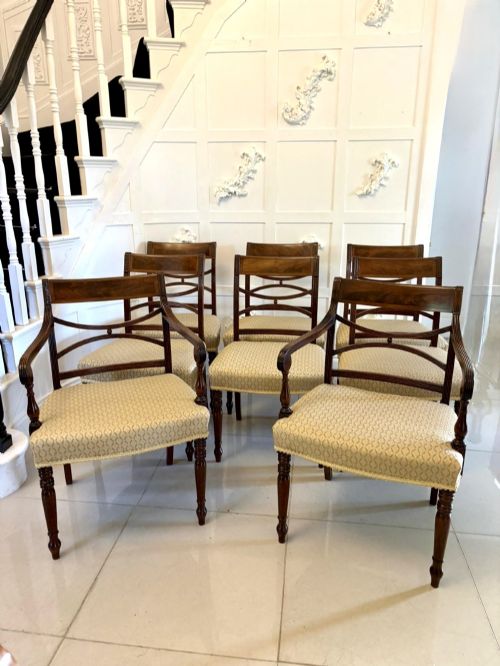
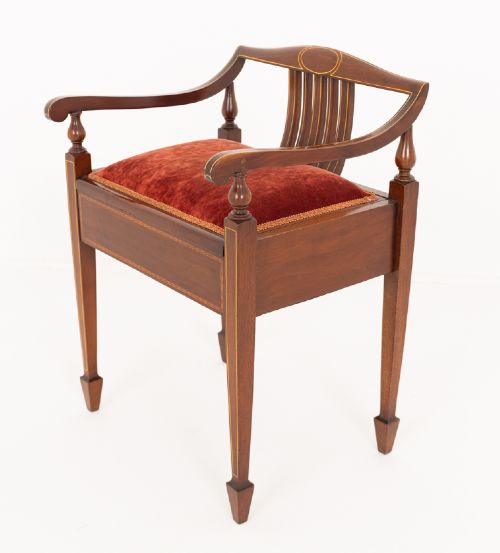
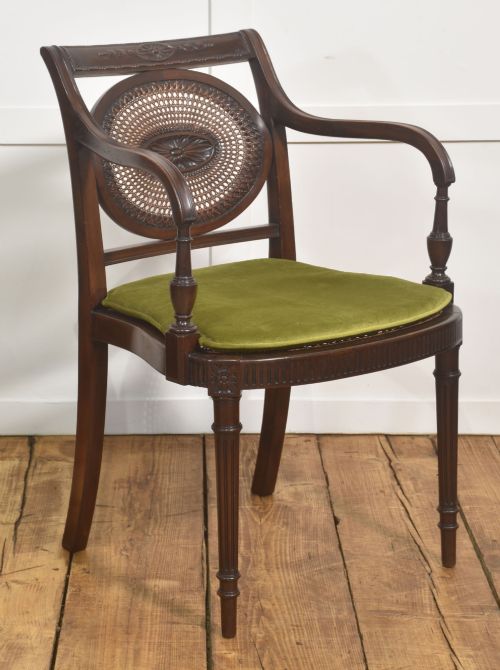
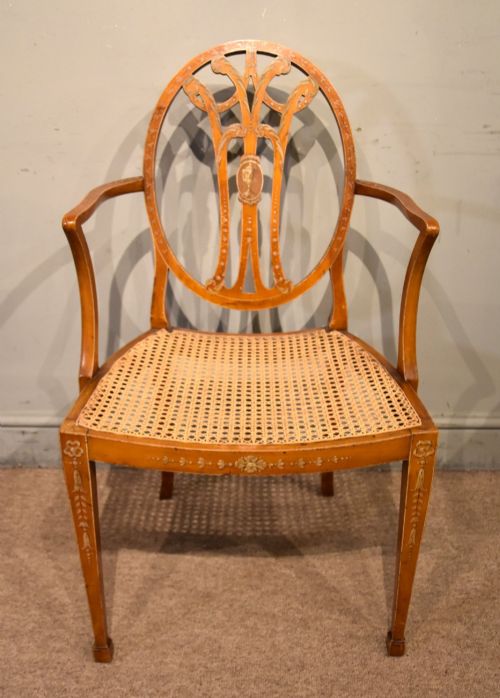
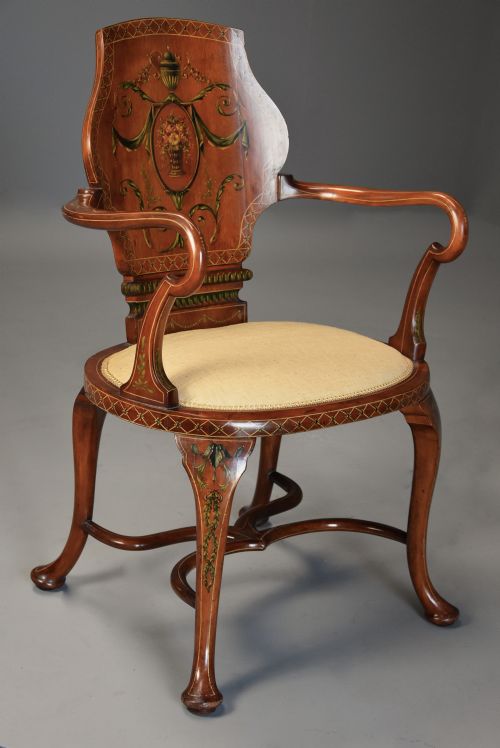
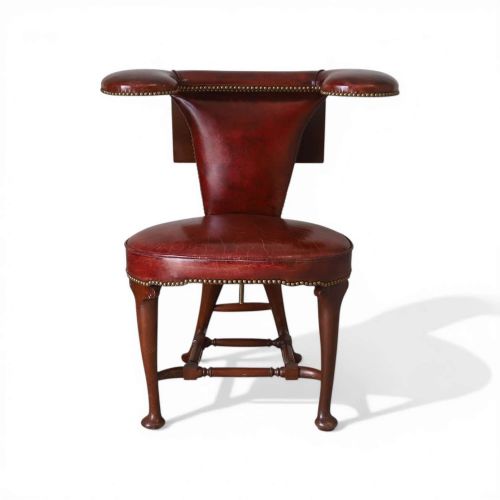
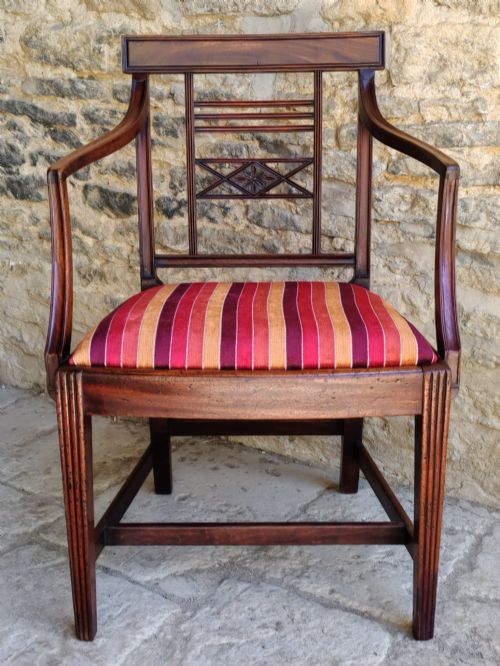
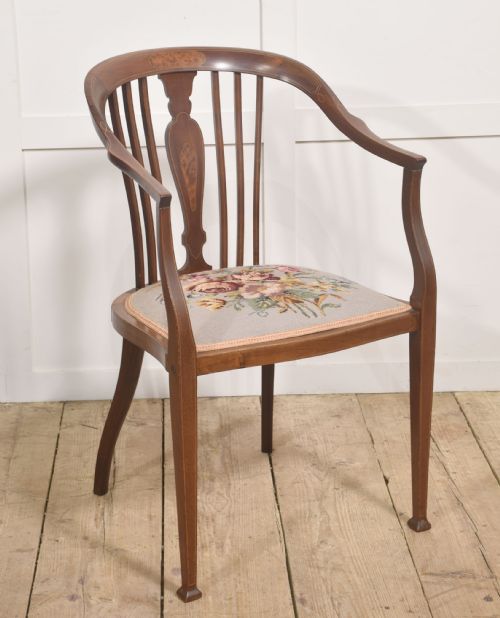
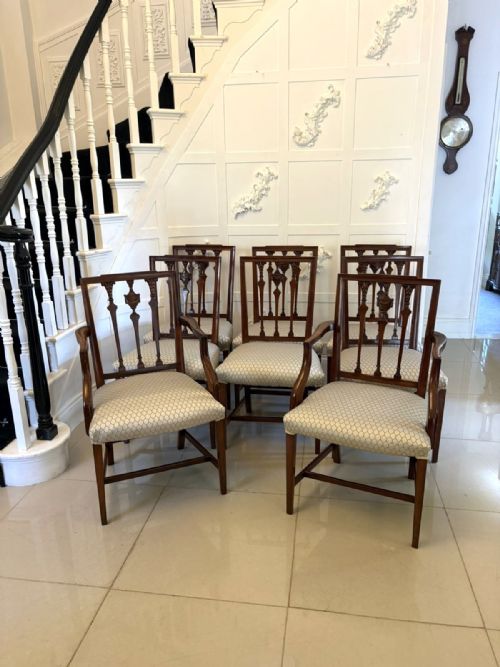
When you search for an antique sheraton armchair, you encounter seating spanning the late eighteenth century through the Edwardian period and the later revival eras. The pieces take several distinct forms, including carvers for the dining table, library elbow chairs, reading chairs, and satinwood painted occasional seats. The most frequently met examples on this page date from the Georgian period up to the Edwardian Sheraton Revival.
The designs derive from the neoclassical vocabulary popularized in the late eighteenth century, characterised by straight tapering legs, shield or square backs, and delicate decorative motifs. Makers across the nineteenth and early twentieth centuries reinterpreted these forms, producing matching sets of dining chairs alongside single library and desk armchairs.
How they were made
Makers constructed these chairs primarily using solid mahogany and satinwood, often combining the two timbers to create tonal contrast on the frame. Artisans applied fine boxwood stringing and contrasting inlay to accentuate the straight lines of the legs and the geometry of the backrest.
Surface ornament frequently relied on satinwood inlay or delicate painted decoration rather than heavy carved relief. Upholstery materials recorded in the evidence include velvet, fabric, red leather, cane, and traditional stuffing applied to seat pads and elbow rests.
Periods represented span from eighteenth-century George III pieces through Victorian interpretations to Edwardian Sheraton Revival work.
What varies in quality
Quality in an antique sheraton armchair rests upon the crispness of the inlay and the subtlety of the timber selection rather than the mere presence of decoration. Pieces at the higher end display tightly fitted joinery in the joints of the arm supports and precise contrast between the mahogany frame and the satinwood or boxwood details.
Proportion and restraint separate superior examples from heavier or more derivative revival pieces. The most accomplished items maintain light, elegant structural lines while retaining robust joinery that withstands daily use in a library, desk space, or drawing room.
Maple And Co
The Antique Sheraton Armchair Glossary
- Carver
- An armchair designed to match a set of single dining chairs, featuring open arms to accommodate dining attire. These sit at the head and foot of a dining table.
- Satinwood
- A lustrous tropical hardwood with a yellow or golden sheen, frequently utilised for inlay, banding, and painted decorative panels in neoclassical furniture.
- Sheraton Revival
- A late nineteenth and early twentieth-century design movement that recreated the light neoclassical styles of the eighteenth century. Makers utilised mahogany, satinwood, and delicate painted motifs.
- Boxwood
- A dense, pale wood employed for fine stringing and inlay lines to create contrasting borders on mahogany furniture.
- Bergere
- An upholstered armchair with enclosed sides, traditionally filled with cane or upholstery work. These pieces provide deep, comfortable seating for a library or morning room.
Antique Sheraton Armchair: Frequently Asked Questions
What is an antique sheraton armchair?
An antique sheraton armchair is a neoclassical seating piece defined by straight tapering legs, geometric backrests, and contrasting timber inlay. These chairs originate either from the late eighteenth century or from later nineteenth and twentieth-century revival periods.
They serve as functional seating for desks, libraries, and dining rooms while adding architectural elegance to an interior.
How do I tell original eighteenth century from revival pieces?
Distinguishing original period pieces from later revivals involves examining timber ageing, construction methods, and the tool marks left by the maker. Eighteenth-century examples display hand-cut joinery and period-specific secondary woods.
Revival pieces from the Victorian and Edwardian eras often show nineteenth-century machine assistance or later upholstery techniques while retaining the characteristic Sheraton design vocabulary.
Were these chairs used at dining tables?
Dining carvers and elbow chairs were placed at the head and foot of a table, accompanied by matching single chairs. Their open arms allowed diners to sit comfortably while partaking in meals.
Complete sets often paired six single chairs with two matching armchairs for formal dining arrangements.
Where should I place a painted satinwood armchair?
Painted satinwood armchairs suit drawing rooms, bedrooms, or reading corners where their delicate decoration can be appreciated away from heavy wear. These lighter occasional chairs function well as accent pieces next to a window or fireplace.
They complement both period interiors and neutral spaces that highlight their painted motifs.