




Painted Neoclassical Armchairs
Painted neoclassical armchairs bring painted wood and classic lines into a room, offering enduring seating with a decorative finish.
Painted Neoclassical Armchairs
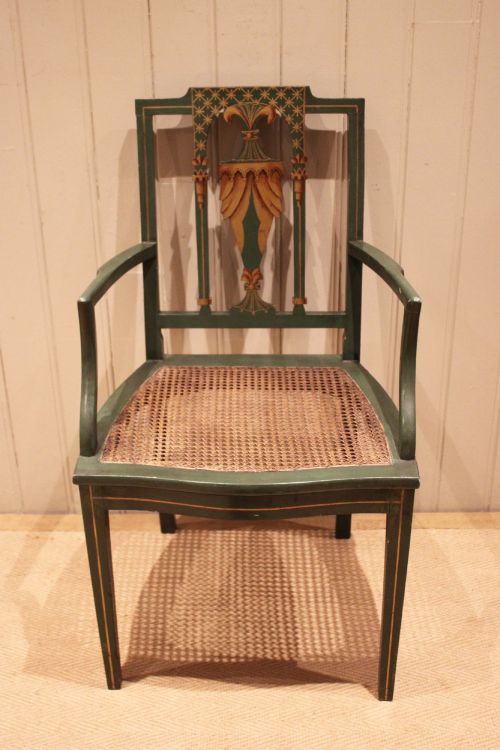
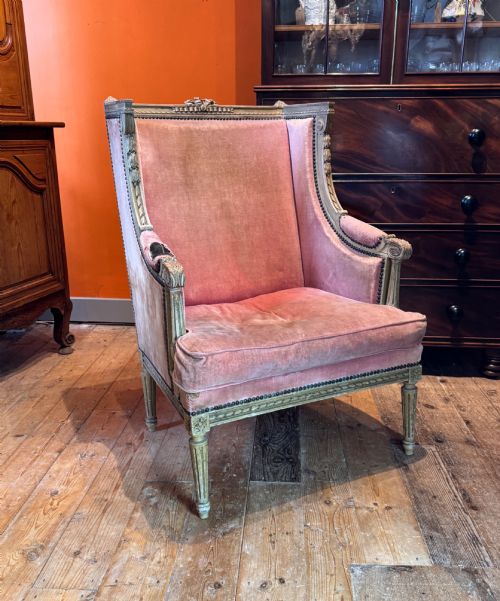
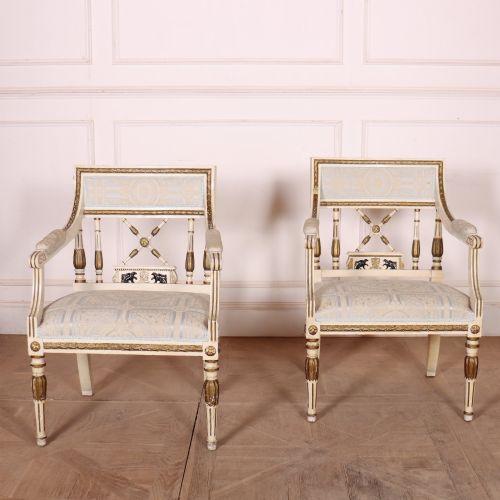
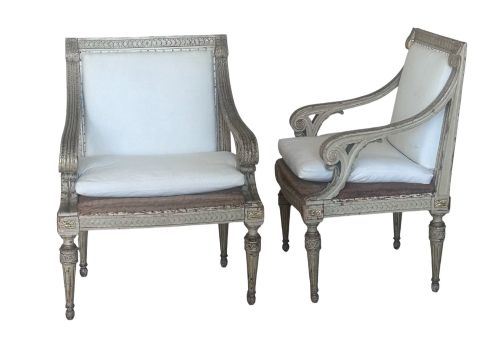
Painted neoclassical armchairs span the eighteenth and nineteenth centuries, taking inspiration from Louis XVI, George III, and Swedish Empire designs. These chairs present defined forms through painted wood frames, often appearing as matched pairs ready for a salon or drawing room.
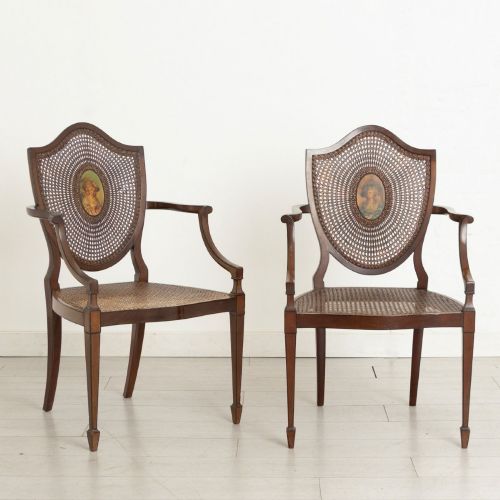
The materials and styles range from simple beech and painted finishes to more ornate giltwood accents and cane seating. Buyers encounter both original period pieces and later interpretations reflecting classic French and English tastes.
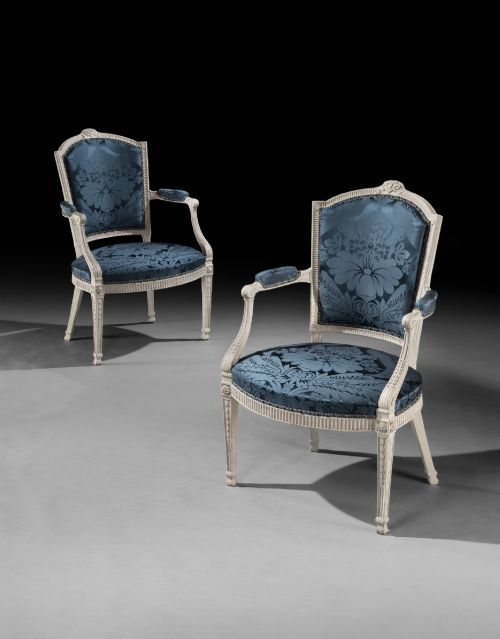
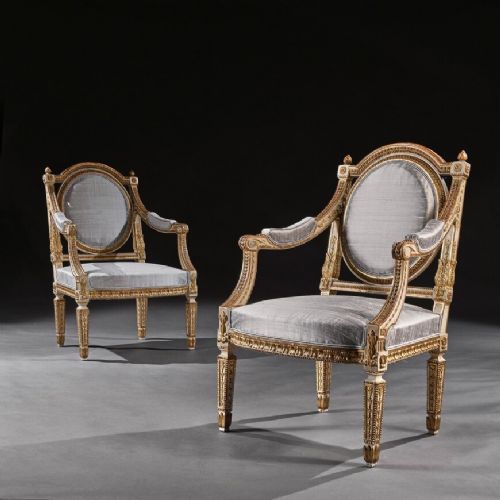
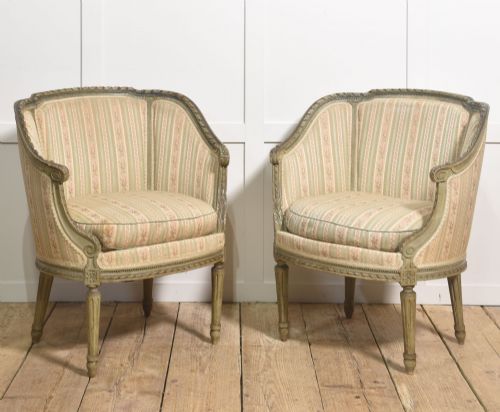
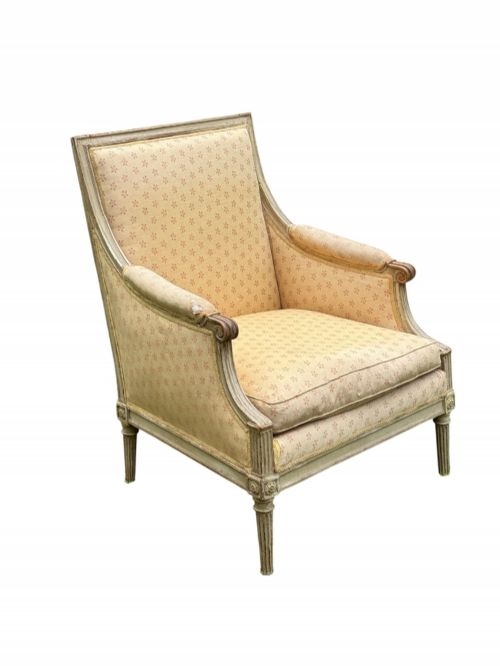
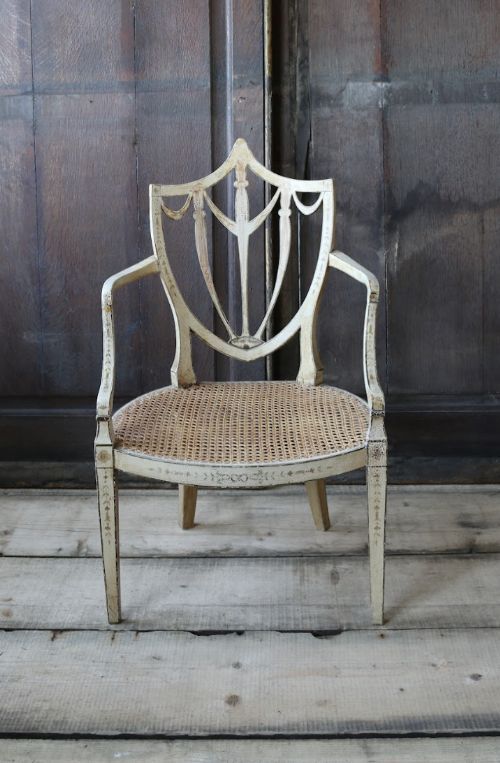
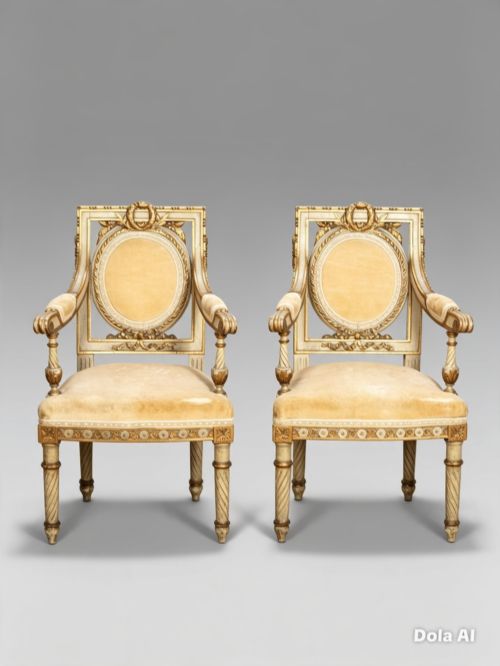
Armchairs in this group include shield-back variants, medallion chairs, and tub chairs alongside standard open armchairs. Each piece relies on the clean geometry and painted decoration typical of neoclassical design.
How they were made
Craftsmen built the frames using solid timbers such as beech and wood, shaping the structural components by hand before applying layers of paint or parcel gilt. Many examples utilise cane seats or textile upholstery to complete the design.
Surface decoration involved careful application of paint and gilding, sometimes featuring polychrome or floral motifs directly onto the wood frame. Makers relied on traditional joinery methods to ensure stability in carved open-arm structures.
Children's salon chairs offer miniature neoclassical elegance for tiny nobility.
What varies in quality
Quality rests in the crispness of the carved detail on the wood frame and the retention of original paint surfaces. Pieces showing well-preserved polychrome or parcel gilt decoration alongside firm joinery stand apart from heavier restorations.
The sophistication of the neoclassical silhouette dictates the tier of the piece, with refined proportions and balanced arm supports marking superior examples. The integrity of the underlying wood and the age of the paint finish govern overall character.
Henri Jacob·Gillows
The Painted Neoclassical Armchairs Glossary
- Neoclassical
- A style reviving classical architectural and decorative motifs, prominent in furniture design from the mid-eighteenth century onward. It favours straight lines, symmetry, and restrained ornamentation.
- Parcel Gilt
- A technique where parts of a painted or wood surface receive a thin layer of gold leaf for selective highlight. This method accents carved details on arm frames and back rails.
- Fauteuil
- An open-arm armchair with upholstered back and seat, typically featuring exposed wooden arms. The style originated in France and remains common in neoclassical seating.
- Cane
- Plant material woven into open patterns for chair seats and backs. It provides a light, flexible surface frequently paired with painted wooden frames.
- Medallion Chair
- An armchair featuring a circular or oval upholstered backrest resembling a large medallion. This form is characteristic of Louis XVI seating.
Painted Neoclassical Armchairs: Frequently Asked Questions
Are these chairs comfortable for daily use?
Most pieces feature upholstered seats or cane panels designed for sitting in parlours and drawing rooms. Their upright posture suits formal seating rather than lounging.
Adding appropriate textile cushions can improve comfort while maintaining the period appearance of the open wooden frame.
How should I care for original painted wood?
Dust the painted frame gently with a dry, soft cloth to prevent accumulation. Avoid moisture and chemical cleaning agents that might lift fragile historic paint layers.
Keep the chairs away from direct sunlight and steady heat sources to protect the wood and painted surfaces from drying out.
What is the difference between French and English styles?
French designs, particularly Louis XVI and Gustavian forms, often feature rounded medallion backs, carved show frames, and elaborate gilt or painted schemes. English pieces from the George III and Hepplewhite traditions tend toward shield backs and restrained rectilinear geometry.
Both national styles share neoclassical proportions but express them through distinct regional cabinetmaking traditions.