


Antique Sheep Landscape Picture
An antique sheep landscape picture brings the quiet rhythm of pastoral life indoors, framed in wood, glass, and gilt.
Antique Sheep Landscape Picture
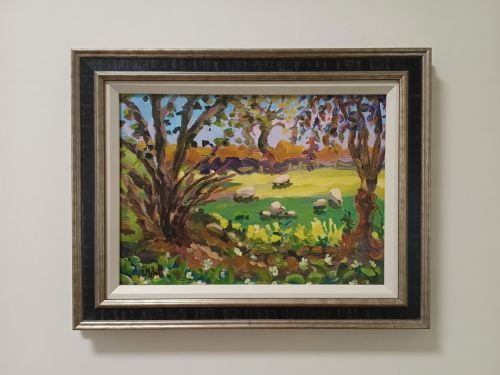
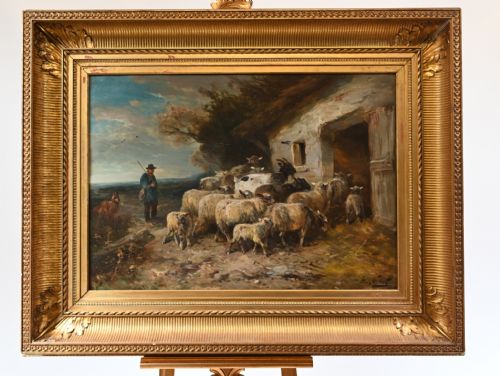
An antique sheep landscape picture captures flocks, shepherds, and rural scenery across the nineteenth and early twentieth centuries. These works record moorlands, coastal cliffs, and river valleys through the eyes of Victorian and Edwardian painters.
Oil paintings on canvas and delicate watercolours on paper form the backbone of this selection. Artists of the period focused on daily rural labour, setting herds against wide skies and rolling hills.
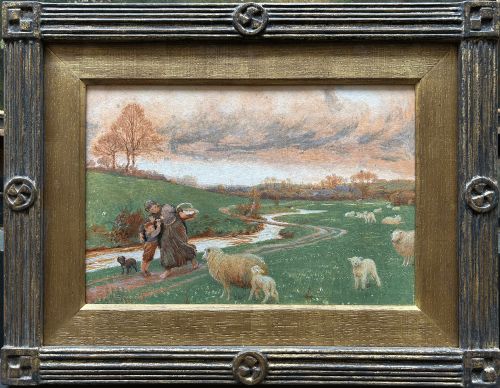
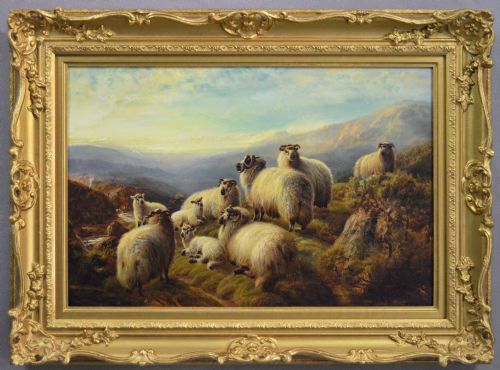
Pieces range from intimate watercolours to substantial framed oils executed by named British and continental artists. The most common encounters on this page include pastoral scenes depicting highland sheep resting or driven along rural lanes.
Materials and Technique
Painters relied primarily on oil on canvas and watercolour on paper to build these rural vistas. Canvases receive rich layers of pigment, whilst paper works capture light through translucent washes.
Finished works sit within traditional wooden frames, frequently enhanced by gesso and gold leaf or giltwood detailing. Protective glass covers the paper watercolours, preserving the delicate pigments from atmospheric wear.
Listings feature works from the nineteenth and early twentieth centuries, executed in oil on canvas and watercolour on paper.
Assessing Artistic Merit
Quality rests in the artist's ability to render light, atmosphere, and animal anatomy with convincing depth. Stronger pieces display confident brushwork in the depiction of fleece, sky, and terrain.
The integration of the frame contributes significantly to the integrity of the piece. Period frames finished in giltwood or gesso complement the scale and palette of the artwork within.
Robert Watson·Henry Schouten·Cornelius Pearson·Henry Charles Fox·Thomas Sidney Cooper·Eugene Verboeckhoven·Willem Anton Alexander Knip·Walter J Watson·Basil Bradley·A Winter Shaw·Henry Birtles·George Faulkner Wetherbee·Charles James Adams·George Turner·Charles Jones·Wycliffe Egginton
The Antique Sheep Landscape Picture Glossary
- Oil on canvas
- Pigment mixed with drying oil applied to a stretched woven fabric support. This medium allowed artists to build rich textures and deep colour tones.
- Watercolour
- A painting method where fine pigment is suspended in a water-based solution on paper. It creates luminous washes well suited to atmospheric skies and damp moorlands.
- Giltwood
- Wood carved and coated with a thin layer of gold leaf or metallic paint. It provides a traditional reflective border for nineteenth-century paintings.
- Gesso
- A plaster-like mixture applied to wooden frames before gilding. It provides a smooth surface for intricate mouldings.
- Pastoral
- A genre of art celebrating rural life and shepherd scenes. These compositions evoke an idealized tranquility of the countryside.
Antique Sheep Landscape Picture: Frequently Asked Questions
What periods do these paintings date from?
The works span the nineteenth century and the early decades of the twentieth century. Dates stretch from the Victorian era into the Edwardian period.
Most pieces reflect nineteenth-century realism and pastoral artistic traditions. Specific dates and active years for the artists range from the early 1800s through to the 1950s.
How should I hang a framed watercolour?
Watercolours on paper require protection from direct sunlight to prevent the pigments from fading. Hang them on interior walls away from moisture sources.
Ensure the glass is clean and the wooden frame securely supports the weight of the artwork. Professional framing with acid-free backing helps preserve the paper over time.
What is the difference between oil and watercolour sheep paintings?
Oil paintings use thick pigments on stretched canvas, offering robust texture and deep colour saturation. They often present a heavier presence on the wall.
Watercolours utilise thin washes on paper under glass, producing a lighter, more luminous atmosphere. Both mediums capture the textures of wool and moorland vegetation through different technical approaches.
Who are the artists behind these pastoral scenes?
The selection includes works by listed British and European painters such as Thomas Sidney Cooper, Henry Charles Fox, and Charles James Adams. Many held exhibitions during the Victorian and Edwardian eras.
Followers of prominent masters, such as Eugene Verboeckhoven, also contributed to this artistic tradition. Their signatures or attributions connect the works to established nineteenth-century schools.