


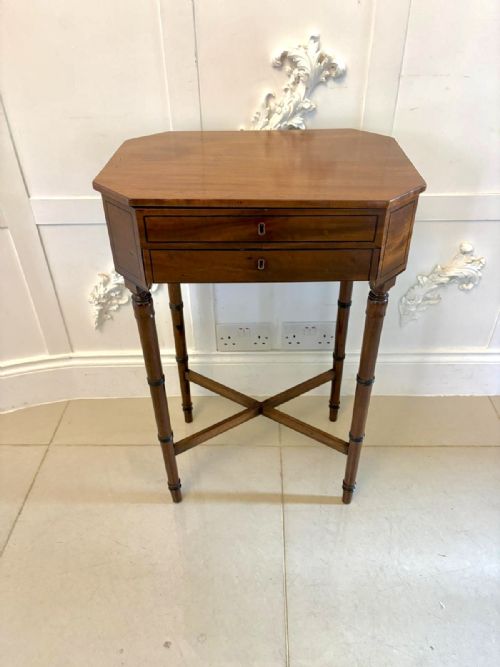
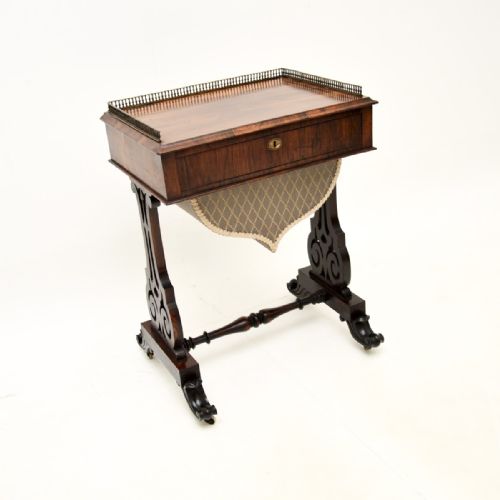
Antique Sewing Basket
An antique sewing basket brings refined 19th-century needlework storage into a modern room as a decorative occasional piece.
Antique Sewing Basket
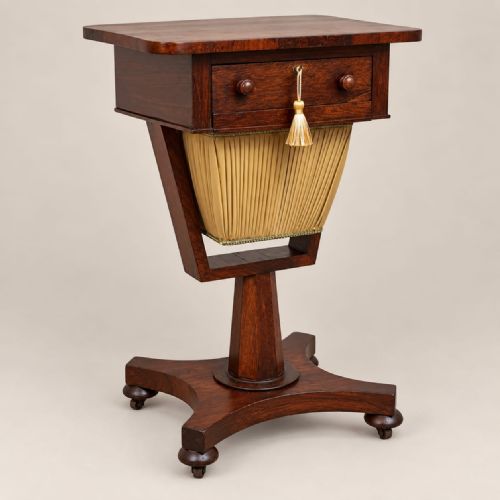
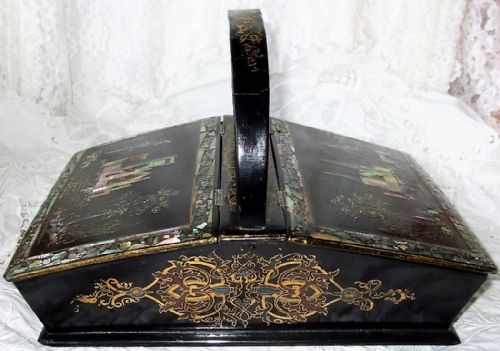
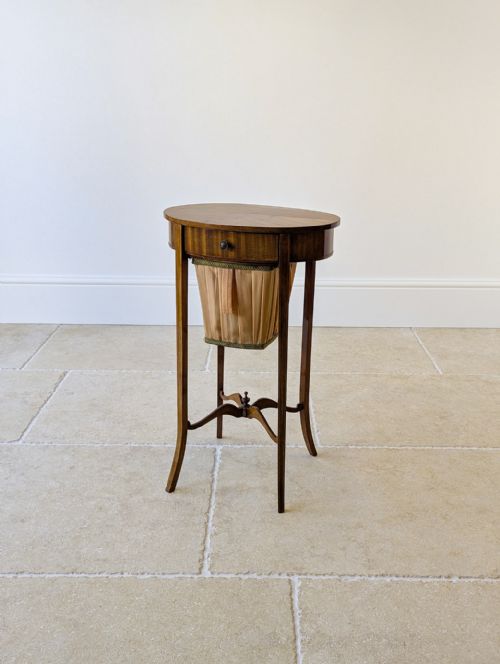
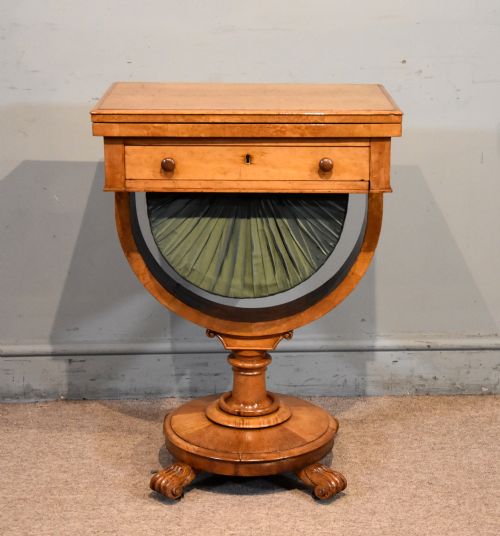
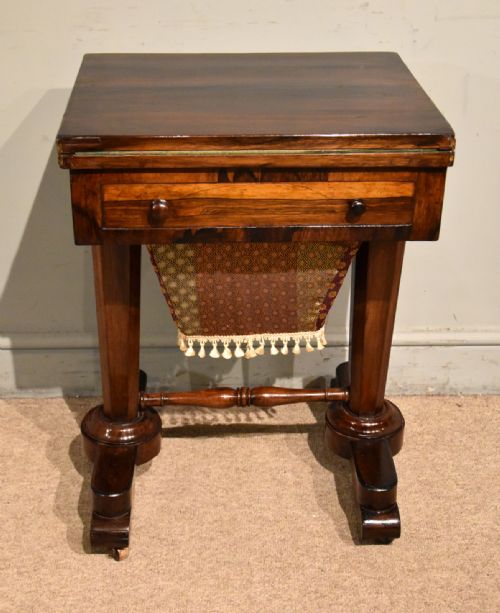
When you search for an antique sewing basket, you encounter a variety of sophisticated work tables, occasional stands, and lidded caskets designed for needlework. These pieces span the Georgian, Regency, William IV, Victorian, and Edwardian periods.
Materials range from rich timbers like rosewood, mahogany, and burr walnut to delicate fabric, silk, satinwood, and brass hardware. Certain examples combine storage with writing surfaces or games boards, reflecting the multifaceted social habits of the 19th century.
Materials and construction methods
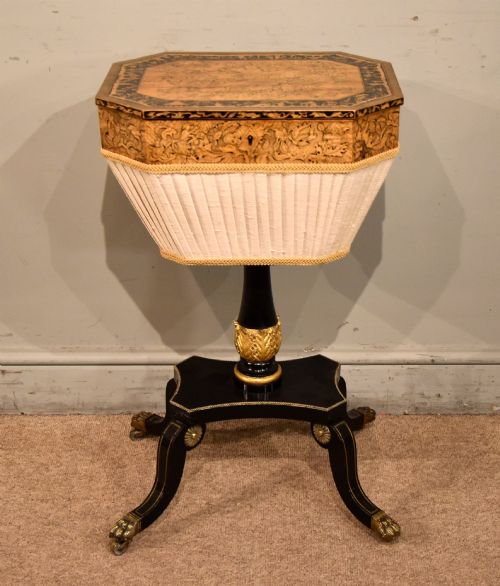
Cabinetmakers utilised dense hardwoods such as mahogany and rosewood for structural stability, often applying burr walnut veneers or satinwood inlays for decorative contrast. Papier-mâché and painted finishes appear on specific lidded boxes and caskets.
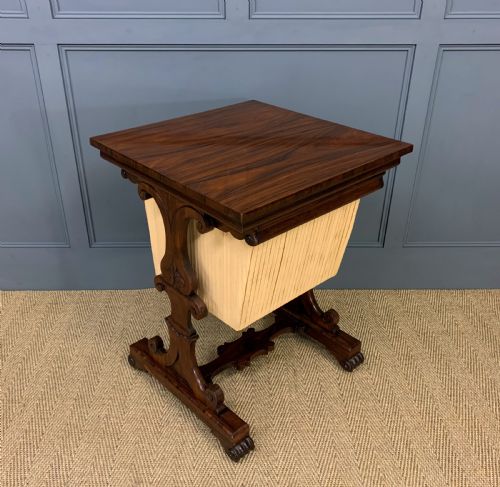
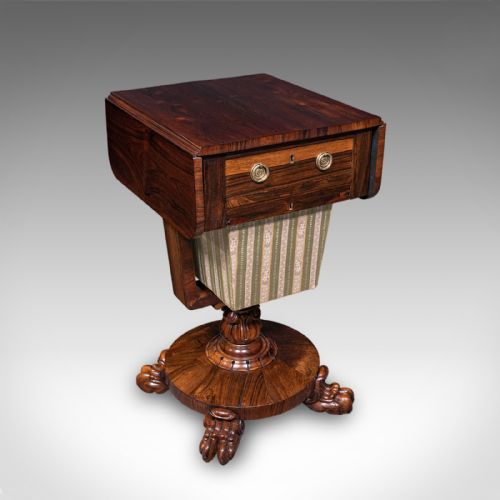
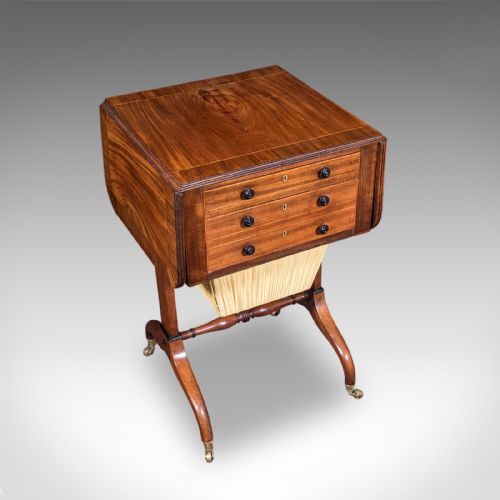
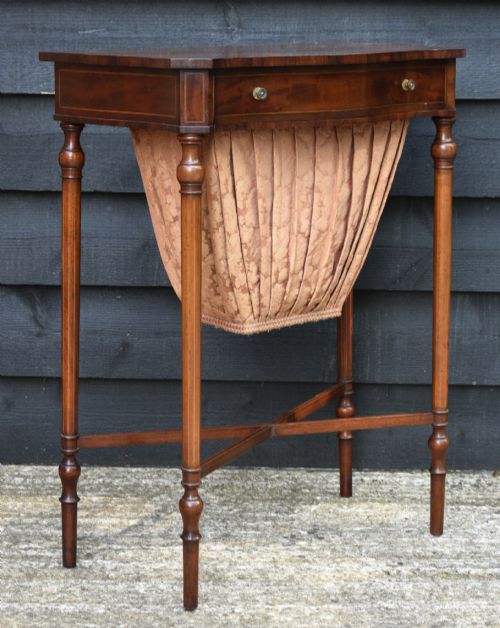
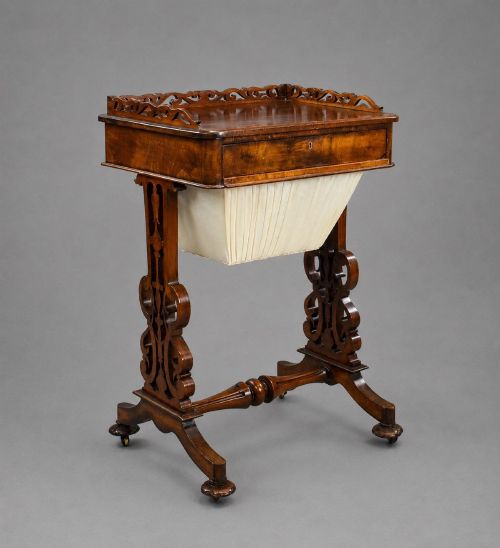
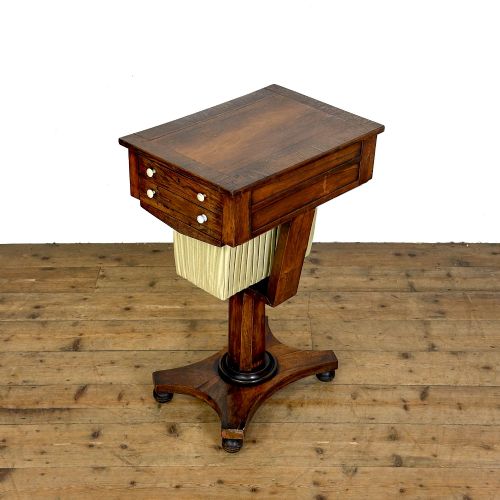
Interior compartments and hanging receptacles typically incorporate gathered silk, fabric, and fitted wooden trays to organise threads and needles. Drop leaves, turned pedestals, and lyre-ended supports demonstrate advanced joinery and turning techniques of the Regency and Victorian eras.
Listings feature pieces spanning from 1800 through the Edwardian era, incorporating mahogany, rosewood, burr walnut, and silk.
Indicators of quality and execution
Superior examples distinguish themselves through the choice of figured timber veneers, precise inlay work, and robust structural joinery in the pedestal or legs. The crispness of carved details, such as the reeding on Regency legs or the turnings on William IV columns, marks the distinction between standard workshop production and finer cabinetmaking.
Internal organisation also dictates worth, where intact silk baskets, original fitted trays, and working locks demonstrate careful preservation. Pieces that combine multiple functions, such as games tables with integrated sewing storage, show greater mechanical complexity and design ambition.
The Antique Sewing Basket Glossary
- Work table
- A freestanding domestic table equipped with drawers or a fabric bag for holding needlework and threads. These pieces served a functional role in the 19th-century parlour.
- Drop leaf
- A hinged flap on the side of a table that can be raised to extend the surface area or lowered when space is constrained.
- Papier-mâché
- A composite material made from paper pulp mixed with glue and oil, then pressed and hardened into moulds. It provides a smooth surface for painting and inlay.
- Burr walnut
- Timber sliced from the gnarled growths of a walnut tree, yielding a swirling and highly decorative grain pattern highly prized in Victorian furniture.
- Lyre-ended
- A form of furniture support shaped like an ancient Greek lyre, frequently found on the pedestals of Regency and William IV tables.
Antique Sewing Basket: Frequently Asked Questions
What is an antique sewing table?
An antique sewing table is a small piece of furniture designed primarily to hold needlework supplies, threads, and tools during the 19th and early 20th centuries.
They typically feature drawers, compartmentalised trays, or hanging fabric bags beneath the top surface for convenient access while working.
How were sewing baskets used historically?
These pieces were kept in parlours and drawing rooms where women engaged in embroidery, lacemaking, and sewing.
They kept needles, pins, and fabrics organised and portable within the home during domestic social hours.
Can I use an antique sewing table as a side table?
Yes, their compact proportions make them well suited as lamp tables or occasional side tables in contemporary living spaces.
Many designs include folding leaves or decorative lids that conceal the storage compartments when not in use.
How do I identify a Regency sewing table?
Regency sewing tables usually feature classical proportions, scroll or lyre-shaped supports, and dark tropical hardwoods like rosewood or figured mahogany.
Details such as brass inlay, penwork decoration, and slender turned legs help distinguish pieces from this specific period.