


Antique Serving Fork
An antique serving fork handles the grand joints, fish, and salads of the table with a breadth and balance lost to modern cutlery.
Antique Serving Fork
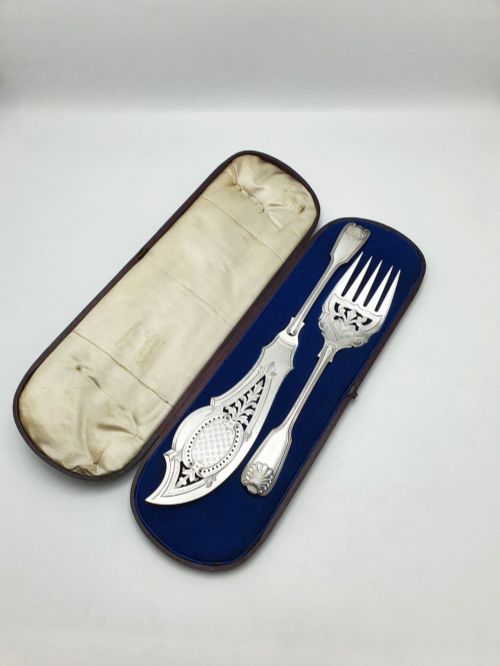
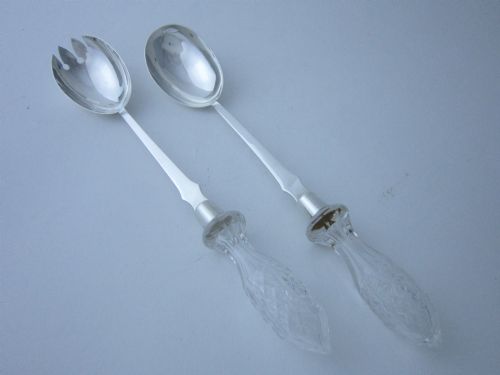
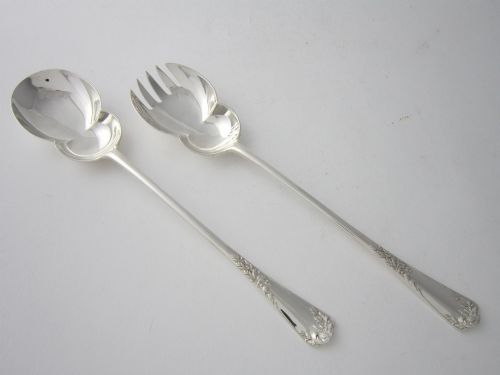
An antique serving fork is a specialised utensil designed for the dining table, appearing across this page in forms ranging from large meat carvers to delicate sardine, pickle, and fish servers. The pieces met most frequently date from the Victorian and Edwardian eras, alongside earlier Georgian specimens and late nineteenth-century Continental examples.
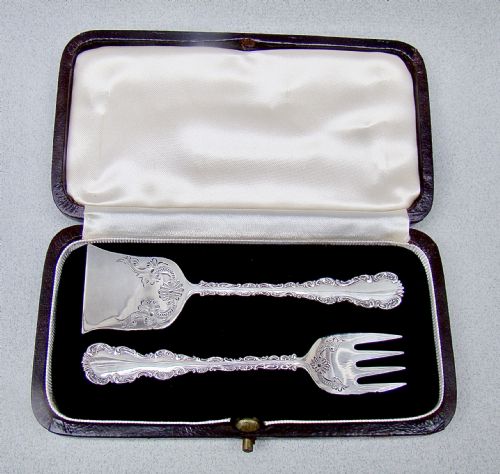
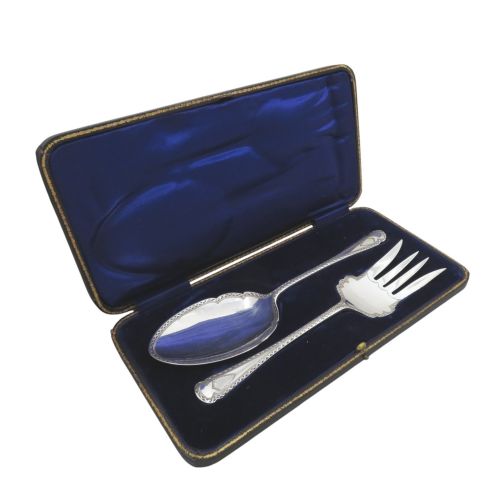
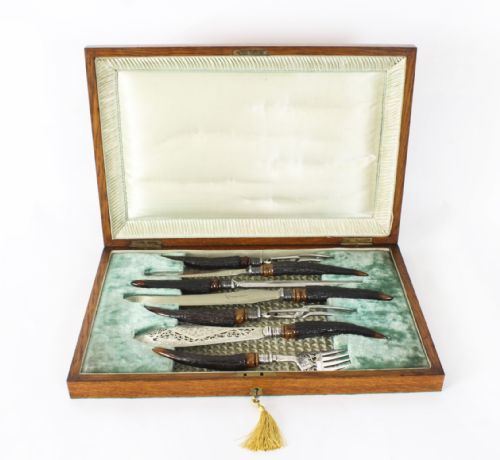
Makers fashioned these pieces for distinct domestic tasks, resulting in robust two-tined carving forks, wide pierced salad forks, and bread forks fitted with mother-of-pearl or antler handles. Many survive within fitted presentation boxes, often accompanied by matching spoons, knives, or secondary implements.
Originating predominantly from British workshops in Sheffield, London, and Birmingham, these implements also reflect international craftsmanship through American Art Nouveau designs and Russian enamel work. Buyers encounter both solid sterling silver and silver-plated copper foundations, frequently paired with organic elements such as horn, ivory, or glass.
How they were made
Silversmiths constructed the primary tines and shafts using either solid sterling silver or base metals coated in a heavy silver plate, hammering and casting the metal before applying detailed engraving or piercing. Handles required diverse materials, joining precious metals to natural substances like deer antler, cow horn, mother-of-pearl, and elephant ivory through pins and secure adhesives.
Specialised techniques such as cloisonné enamel work, chased floral motifs, and rattail bowl reinforcements define the decorative execution seen on these utensils. Workshops utilised traditional stamping, cutting, and hand-polishing methods to shape everything from robust carving sets to delicate cocktail and pickle forks.
Materials across these listings span sterling silver, silver plate, horn, mother-of-pearl, ivory, glass, velvet, and silk.
What varies in quality
The distinction between standard utility ware and superior examples lies in the weight of the metal and the crispness of any hand-engraved or pierced decoration. Heavier gauge sterling silver provides a substantial hand-feel that lighter plated or hollow-handled alternatives lack.
The preservation of natural handle materials such as unblemished horn, clean ivory, or intact mother-of-pearl significantly elevates an instrument's standing. Complete sets housed in their original velvet- and silk-lined presentation cases also command greater appreciation than loose, individual implements.
Henry Wilkinson·William Devenport·Georg Jensen·Walter & John Barnard·Alvin
The Antique Serving Fork Glossary
- Sterling silver
- A silver alloy containing 92.5 percent pure silver and 7.5 percent other metals, usually copper, chosen for durability in tableware. British pieces typically bear standard hallmarks indicating the assay office and date.
- Silver plate
- A manufacturing method where a thin layer of silver is bonded to a base metal core, such as copper or nickel silver, offering the appearance of solid silver at a lower production cost.
- Rattail
- A slender tongue of metal extending from the handle down the reverse side of a fork or spoon bowl or tine base, originally added to reinforce the joint.
- Cloisonné
- An ancient decorative technique where fine metal wires form raised barriers on a surface, creating compartments that are filled with coloured glass paste and fired.
- Mother-of-pearl
- The iridescent inner layer of certain mollusc shells, carved into thin plates and pinned to metal tangs to form decorative knife and fork handles.
Antique Serving Fork: Frequently Asked Questions
How do I clean an antique silver fork?
Clean silver implements gently with warm water, mild soap, and a soft cloth to preserve the underlying metal and any antique patina. Avoid abrasive pastes or harsh chemical dips that strip away original highlights and engraving.
Store the utensil in a dry, tarnish-resistant wrap or its original fitted box when not in use. Regular handling prevents aggressive tarnish buildup better than infrequent, harsh cleaning sessions.
Can I use an antique serving fork daily?
Many solid silver and heavy plated forks remain structurally sound for contemporary dining use. Care should be taken with hollow handles or delicate organic materials like horn and mother-of-pearl, which require hand washing.
Hand drying immediately after cleaning prevents water spots on the metal and protects natural handle joints from moisture damage. Modern dishwashers must be strictly avoided for all antique cutlery.
What is the difference between a salad and fish fork?
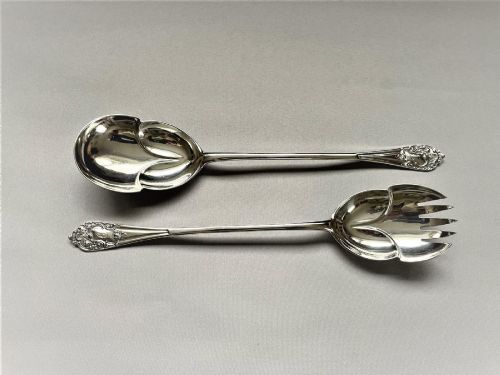
Salad forks typically feature two or three wide, flat tines designed to lift leafy greens and vegetables without bruising them. They often measure longer and pair with a matching deep spoon.
Fish serving forks possess a broader, asymmetrical blade with a notch or piercing, engineered to separate delicate flakes of fish from the bone. Their dimensions and tine configurations reflect the specific culinary requirements of Victorian and Edwardian dining.
How do I date an antique fork?
British silver pieces carry comprehensive hallmarks stamped directly into the metal, including a leopard head, anchor, or crown for the assay office, alongside a distinct letter code for the year. Stylistic cues such as Art Nouveau whiplash lines or heavy Victorian engraving offer further chronological context.
Unmarked silver plate and pieces with natural horn or ivory handles rely on maker marks, box lining styles, and construction techniques for attribution. Comparing the form to dated archival examples helps narrow the decade of manufacture.