




Antique Silver Fish Forks
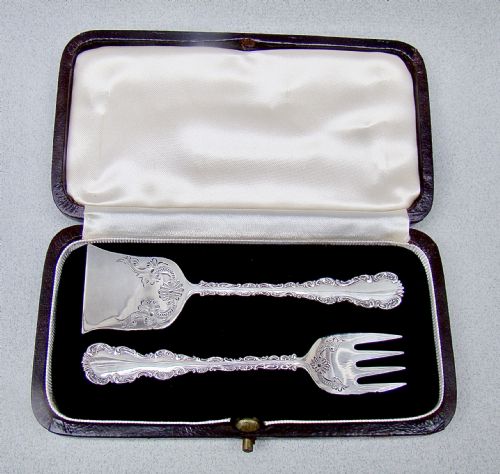
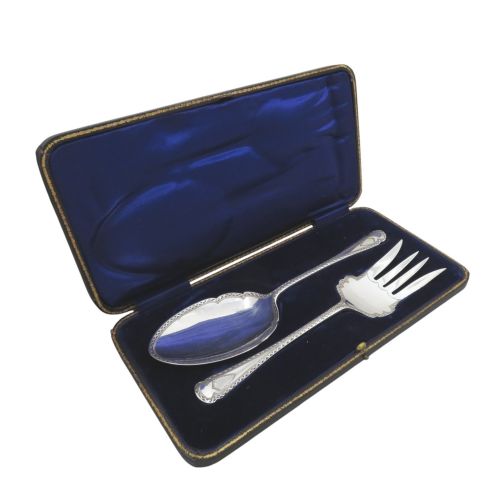
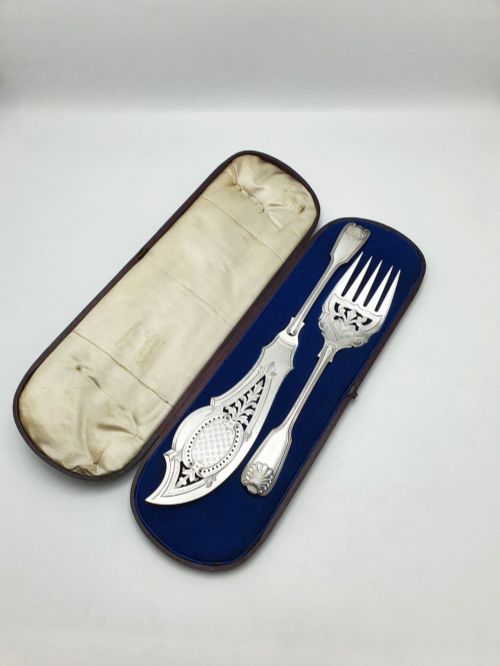
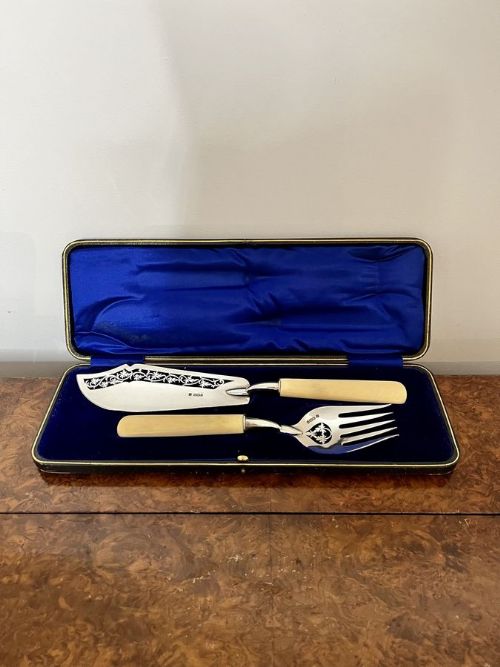
Antique silver fish forks are specialist dining implements crafted to handle delicate courses, most frequently encountered in cased sets from the Victorian and Edwardian periods.
Antique Silver Fish Forks
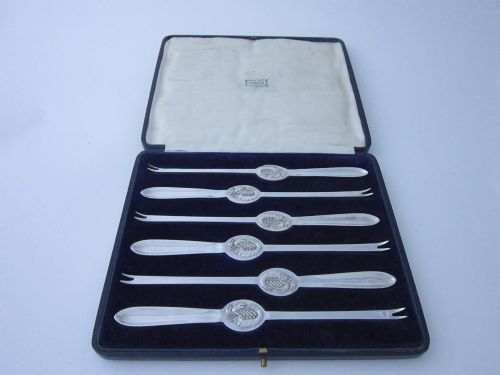
When you search for antique silver fish forks, you are looking at specialised cutlery designed specifically for consuming fish courses during formal Victorian and Edwardian dining. The pieces you are most likely to meet on this page include cased serving sets, individual place settings, and specialised seafood implements dating from the late nineteenth century up to the 1930s.
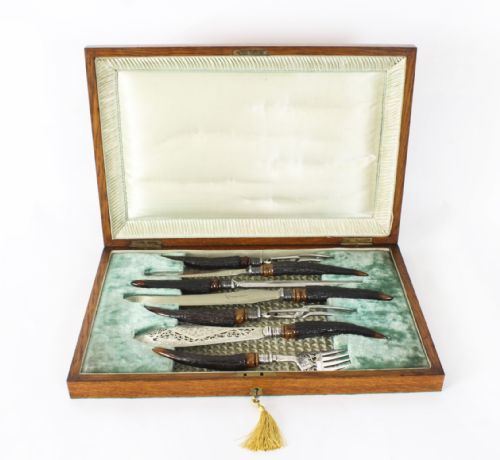
The form encompasses dedicated fish servers, lobster and seafood picks, sardine servers, and full canteens equipped with knives and forks for multiple persons. These items often appear alongside fitted presentation boxes lined with velvet or silk, reflecting their original domestic context in large households.
Originating predominantly from British workshops and silversmiths active during the 1880s, 1890s, and the Edwardian era, these implements display distinct regional hallmarks and stylistic shifts ranging from Victorian exuberance to cleaner Art Deco lines.
Materials and manufacture
Makers utilised sterling silver and silver plate for the tines and blades, often pairing metal working techniques with organic handles shaped from bone, mother of pearl, horn, or antler. Cased sets frequently incorporated fitted wooden boxes lined with silk or velvet to house the cutlery securely.
Engraved decoration appears widely across the metal surfaces, showing floral motifs, hunting scenes, or dog designs applied by hand before assembly. Ferrules and collars made of sterling silver frequently join the metal working parts to natural material handles.
Production methods combined traditional silversmithing with specialised cutlery manufacturing, particularly in hubs such as Sheffield where specialised servers and sets were assembled for domestic markets.
Materials documented across the inventory include sterling silver, silver plate, mother of pearl, bone, antler horn, velvet, and silk.
Distinctions in quality
Quality in antique silver fish forks separates items made from solid sterling silver with full hallmarking from those created with silver plate over a base metal. The weight of the metal and the crispness of hand-engraved details on the tines define the upper tier of production.
The choice and preservation of handle materials also drive distinctions, where intact mother of pearl, polished bone, or well-matched antler horns maintain structural integrity compared to replaced or damaged grips.
Complete original presentation cases lined with silk or velvet and retaining their fitted compartments represent a higher standard of preservation than loose items gathered together later.
Henry Wilkinson·Suckling Ltd·Waring & Gillows·Alvin
The Antique Silver Fish Forks Glossary
- Sterling silver
- A silver alloy containing 92.5 percent pure silver and 7.5 percent other metals, typically copper, used to meet strict standard requirements for British cutlery.
- Silver plate
- A manufacturing method where a thin layer of silver is bonded to a base metal core, allowing for decorative tableware at a lower cost than solid silver.
- Ferrules
- The metal rings or caps that join the handle of a fork or knife to its working tine or blade, often marked separately to denote silver content.
- Canteen
- A fitted wooden box or chest designed to store a matching set of cutlery securely, usually lined with fabric and divided into specific slots for each piece.
- Hallmark
- A series of official marks stamped onto precious metal items in Britain to indicate the maker, assay office, purity standard, and year of manufacture.
Antique Silver Fish Forks: Frequently Asked Questions
What are antique fish forks used for?
These forks were designed specifically for eating fish courses at formal Victorian and Edwardian dining tables, featuring wider tines or a specialised notch to separate flesh from bone without damaging delicate textures.
They often appear alongside matching fish knives as part of cased sets or larger canteens intended for multiple diners.
How do I know if they are sterling silver?
You can identify sterling silver by locating the official hallmarks stamped into the metal, which typically include a lion passant, an assay office mark, and a date letter.
Items without these specific marks are generally silver-plated over a base metal core, even if they bear maker names or registry numbers.
Why do some forks have bone or pearl handles?
Natural materials such as bone, mother of pearl, ivory, and antler were chosen because they did not react chemically with fish juices or leave a metallic taste in the mouth.
These organic grips also added textural contrast and visual variety to formal dining tables during the nineteenth and early twentieth centuries.
How should I store cased cutlery sets?
Cased sets should be kept in dry conditions away from direct sunlight and extreme temperature fluctuations to protect the wooden boxes and their delicate silk or velvet interiors.
Regular, gentle handling prevents the lining materials from degrading and keeps the fitted components securely in their designated slots.
What is the difference between Edwardian and Victorian fish forks?
Victorian fish forks generally display heavier engraving, more ornate floral or animal motifs, and substantial proportions reflecting the decorative tastes of the nineteenth century.
Edwardian pieces often shift towards lighter construction and slightly more restrained ornamentation, aligning with changing dining fashions leading up to the First World War.