
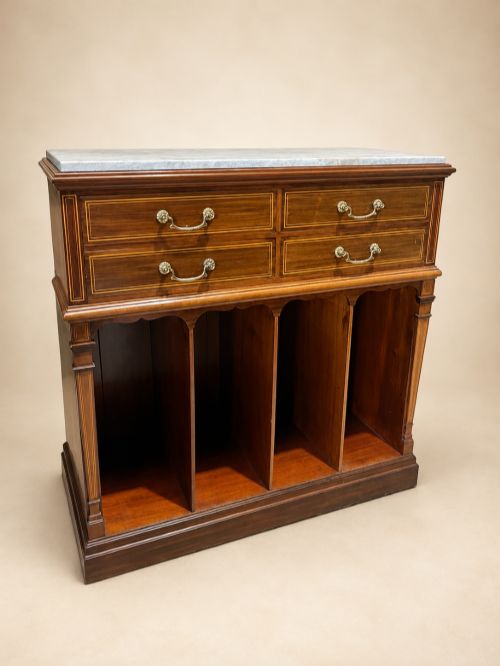
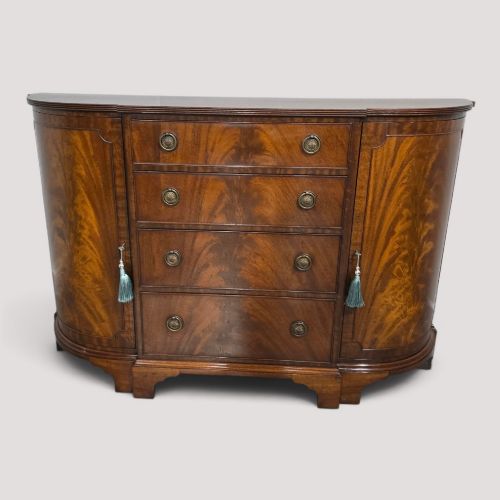
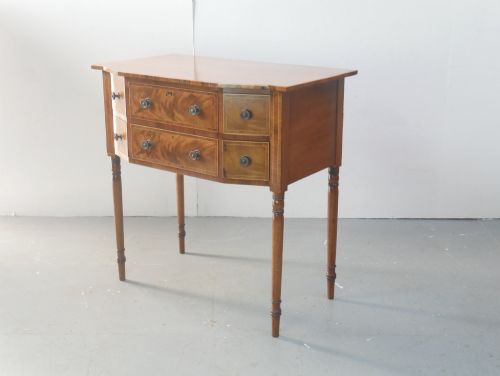
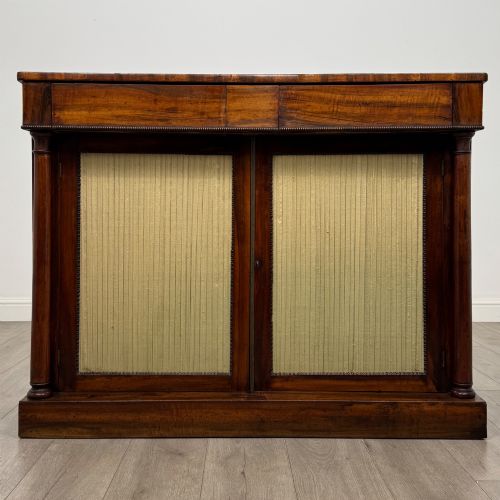
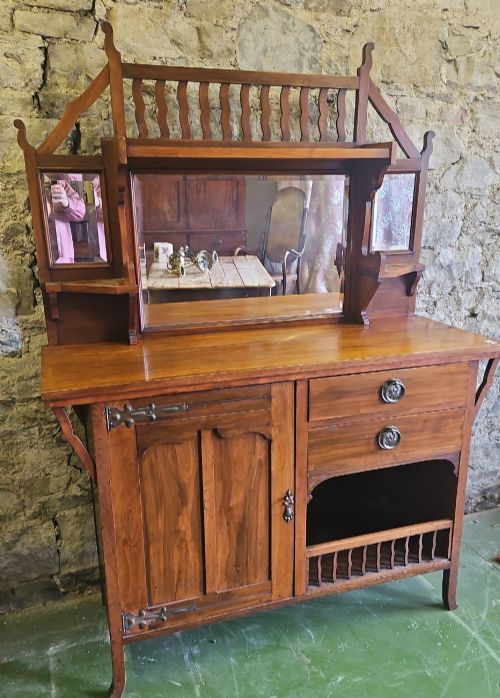

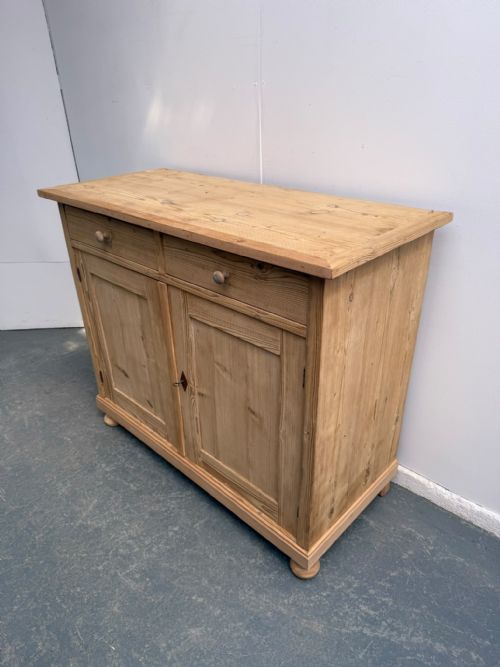
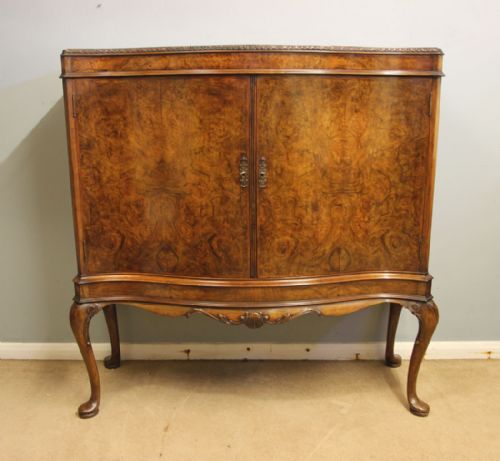
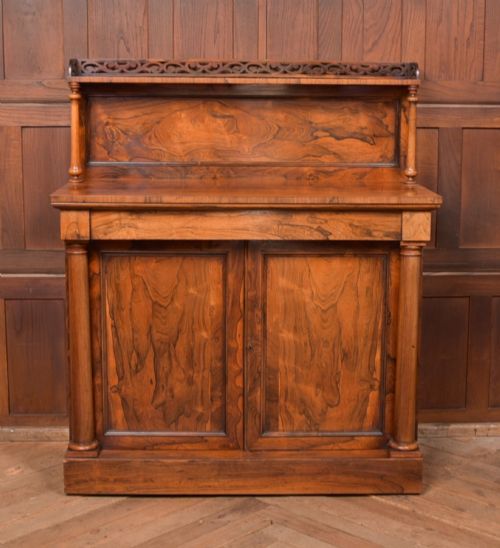


Antique Server Side Cabinet
An antique server side cabinet brings enduring utility to a room, offering surface space for service and concealed storage for diningware.
Antique Server Side Cabinet
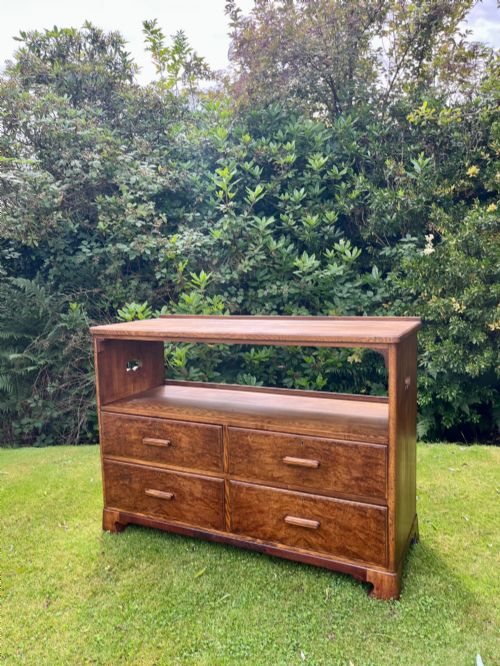
When you search for an antique server side cabinet, you encounter a variety of practical forms designed for dining and living spaces, ranging from compact cupboards to large sideboards. These pieces originate from periods spanning the eighteenth century through to the early twentieth century, encompassing Georgian, Regency, Victorian, and Edwardian eras.
Materials and Construction Techniques
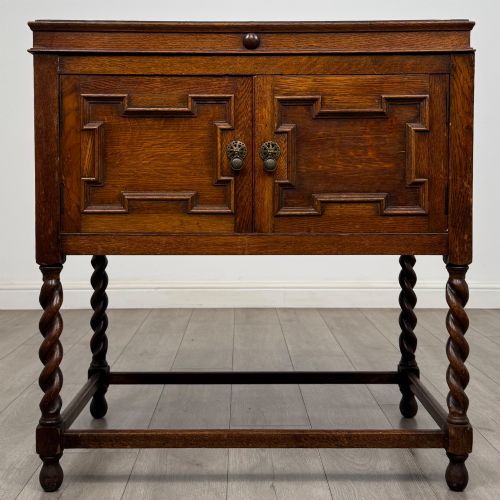
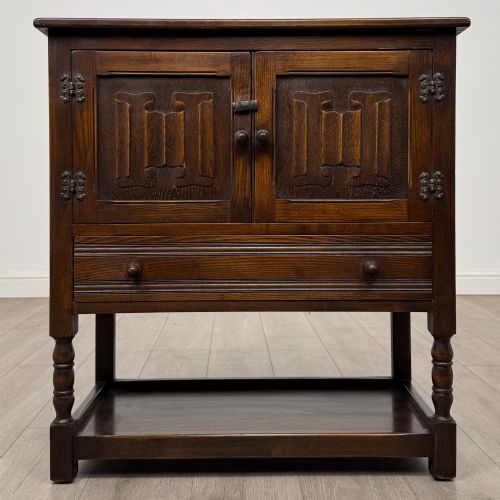
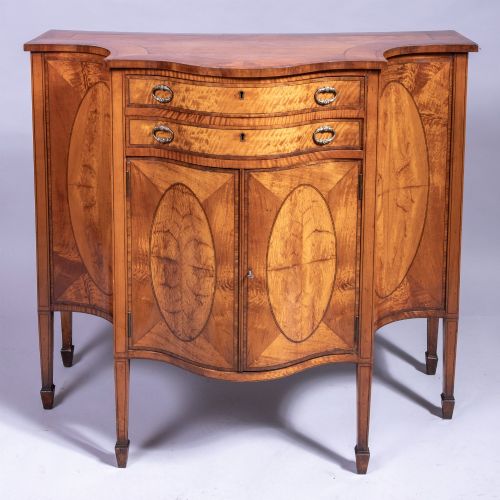
Cabinetmakers utilised robust timbers such as mahogany, oak, and walnut as the foundational structures for these servers, often employing solid boards alongside finely figured veneers. Crossbanding, inlay work in satinwood, and carved details were applied to enhance the visual depth of the primary woods.
Hardware and secondary elements incorporate brass fixtures, iron components, and glass panels, while finishes range from traditional wax polishes to original paint schemes. Joinery techniques varied from straightforward panel construction in earlier oak pieces to sophisticated curved fronts in later mahogany and satinwood examples.
Listings feature server cabinets in mahogany, oak, walnut, and satinwood, spanning the Georgian, Victorian, and Edwardian periods.
Distinctions in Quality and Execution
The calibre of an antique server side cabinet is determined by the selection of timber and the precision of its grain matching, particularly on veneered surfaces like burr walnut or mahogany. Superior pieces exhibit crisp carving, well-fitted drawers with appropriate secondary woods, and intact original hardware.
Proportion and stylistic cohesion further separate standard utility pieces from exceptional examples, such as those featuring deliberate Sheraton Revival inlays or disciplined Jacobean styling. The integration of functional elements, including internal shelving or specialised compartments, influences the overall integrity of the piece.
Whytock and Reid
The Antique Server Side Cabinet Glossary
- Crossbanding
- A narrow strip of veneer laid across the grain of the primary surface to form a contrasting border. This technique often frames the drawer fronts and tabletops of fine Georgian and Edwardian furniture.
- Chiffonier
- A low sideboard or cabinet featuring shelves or a raised back, developed during the nineteenth century. These pieces typically combine enclosed cupboard space with display surfaces.
- Cellarette
- A specialised cabinet or chest designed to hold bottles of wine and spirits securely. They frequently appear in Regency and Georgian dining rooms near the main serving tables.
- Court cupboard
- A heavy, often regional wooden cupboard featuring an upper recessed section supported by pillars. These sturdy pieces usually date from earlier centuries in solid oak.
Antique Server Side Cabinet: Frequently Asked Questions
How do I identify a Georgian server?
Georgian servers and sideboards generally display restrained classical proportions, rectilinear or bow fronts, and dense mahogany timbers without excessive ornamentation. Cabinetmakers of this era focused on timber selection and subtle stringing rather than heavy carving.
Inspect the internal construction and drawer linings, which typically utilise secondary woods like oak or pine, joined with hand-cut dovetails. The presence of original brass pulls and straightforward bracket feet further points to authenticity from this period.
What is the difference between a chiffonier and a sideboard?
A chiffonier is typically smaller than a sideboard and frequently incorporates a raised shelf or mirrored back above a low enclosed cupboard. These pieces were designed for smaller dining rooms or drawing rooms as versatile serving and display units.
Sideboards offer broader horizontal surfaces and more extensive storage capacity, often incorporating multiple drawers and flanking cupboards. They served as the primary administrative and serving station in traditional dining spaces.
How should I care for a walnut server?
Walnut furniture requires protection from direct sunlight and extreme humidity fluctuations to prevent the figured veneers from lifting or drying out. Regular dusting with a soft, dry cloth maintains the surface without the buildup of silicone-based polishes.
Applying a traditional beeswax periodically nourishes the timber and preserves the depth of the grain. Avoid placing hot dishes or liquids directly onto the polished wooden top without protective mats.
Are Edwardian cabinets different from Victorian ones?
Edwardian cabinets generally exhibit lighter proportions and brighter secondary timbers, frequently incorporating satinwood inlay and Sheraton Revival motifs. Cabinetmakers in this era favored painted finishes and neoclassical revival designs that brought a sense of airiness to domestic interiors.
Victorian pieces tend to be heavier and darker, utilising solid mahogany, walnut, or carved oak with more robust structural forms. The carving on Victorian examples is often deep and naturalistic, reflecting the industrial capabilities and stylistic preferences of the nineteenth century.