


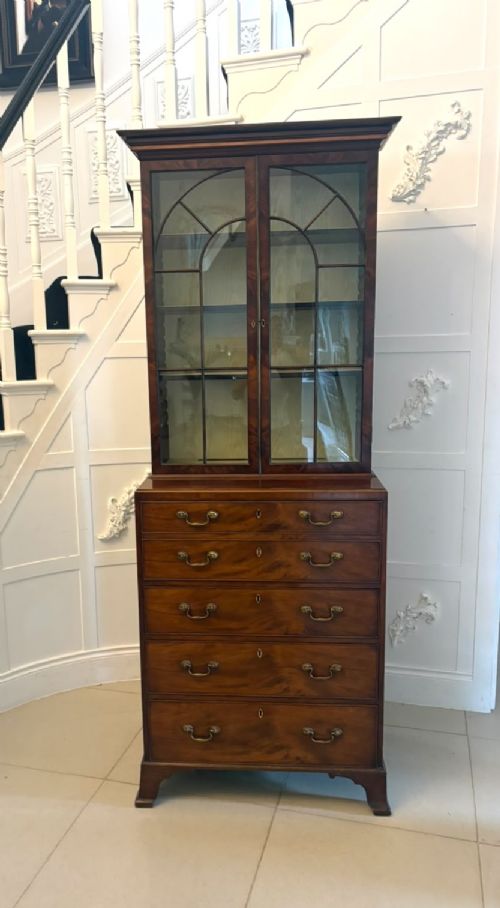

Antique Secretary Desk Display
An antique secretary desk display brings together glazed library storage and a fitted writing compartment, offering a practical combination for organising correspondence and showcasing books.
Antique Secretary Desk Display
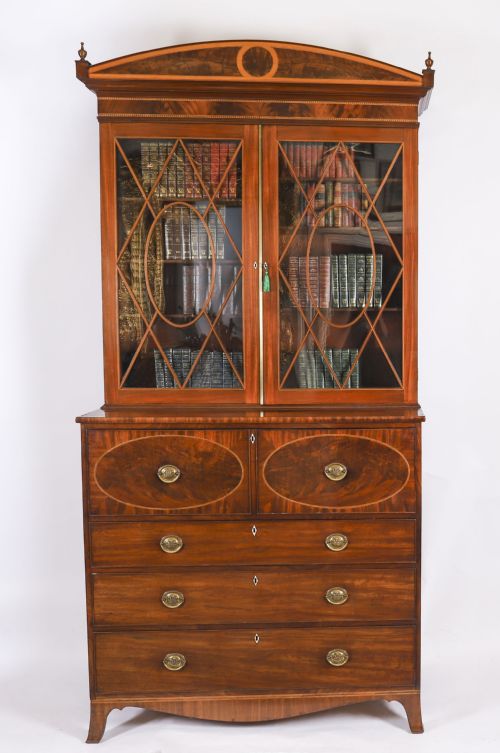
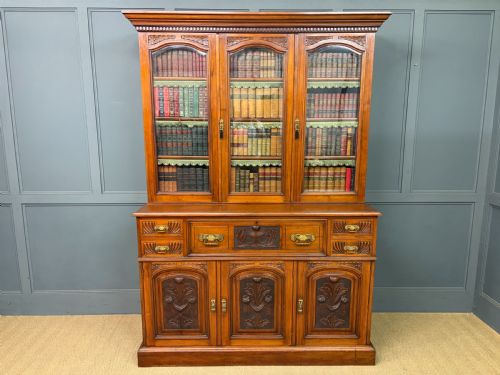
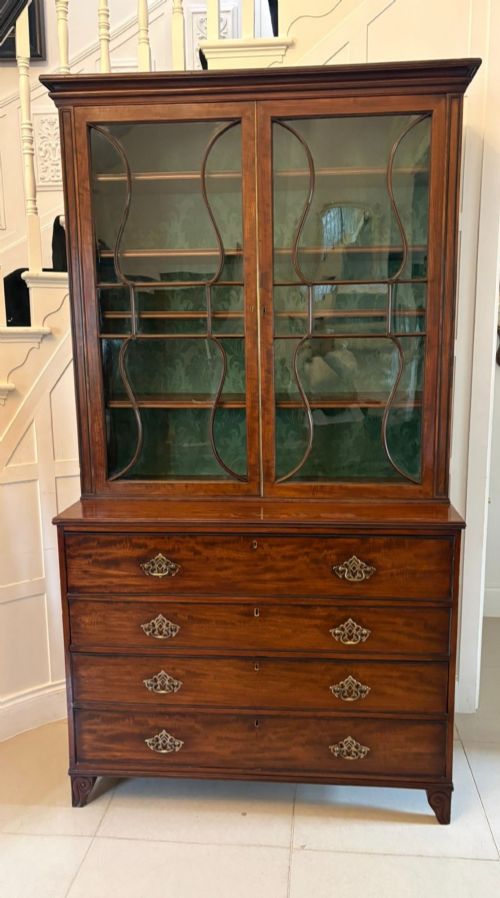
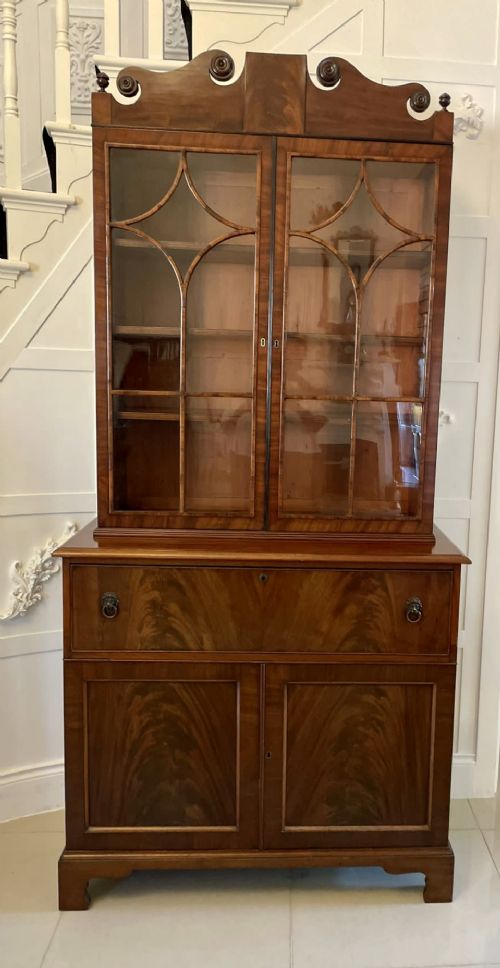
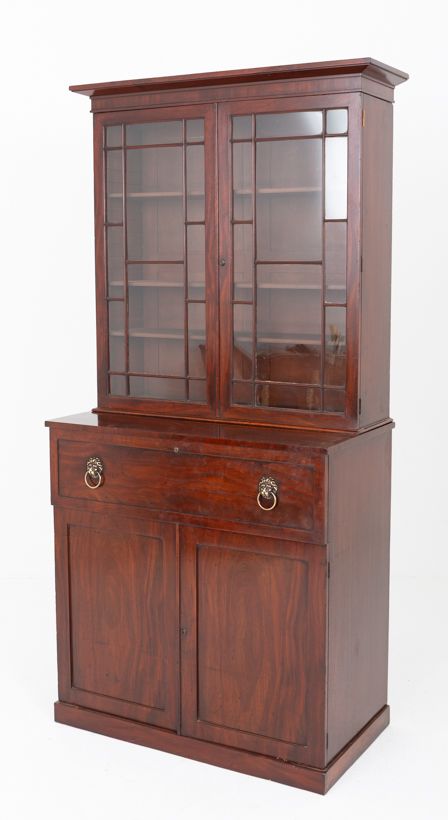
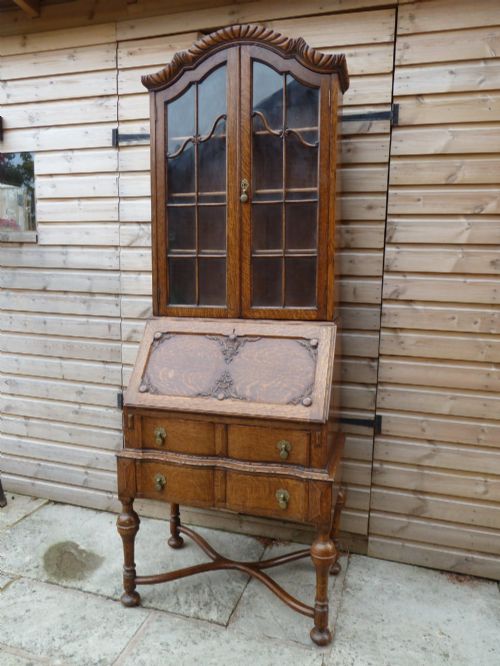
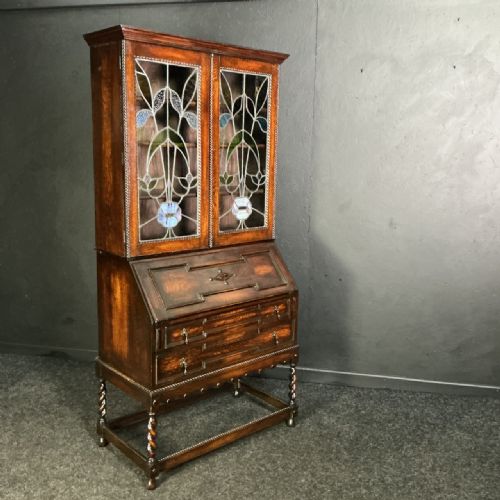
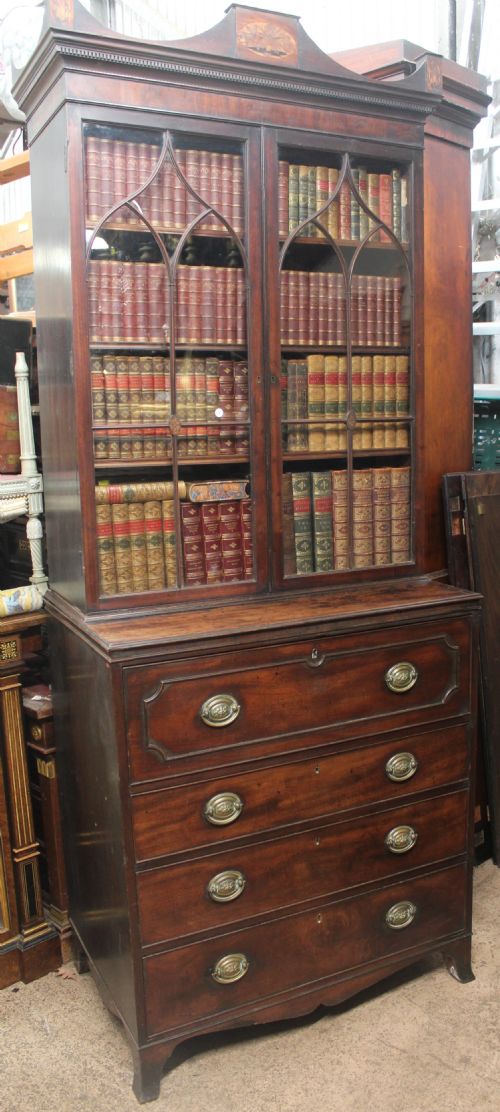
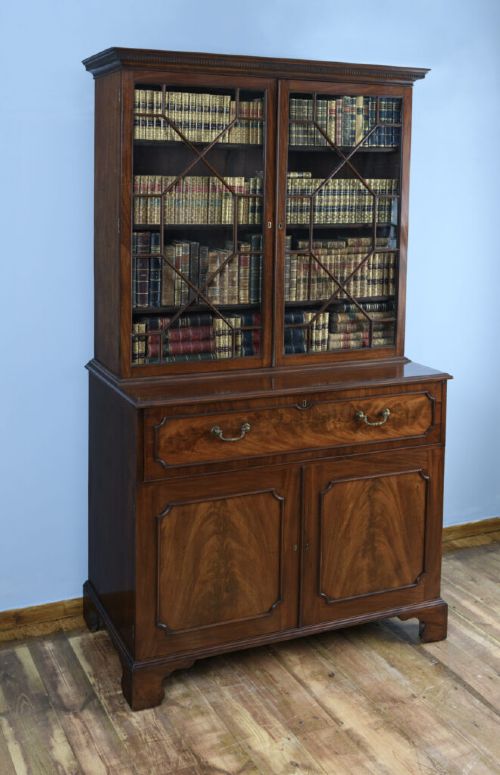
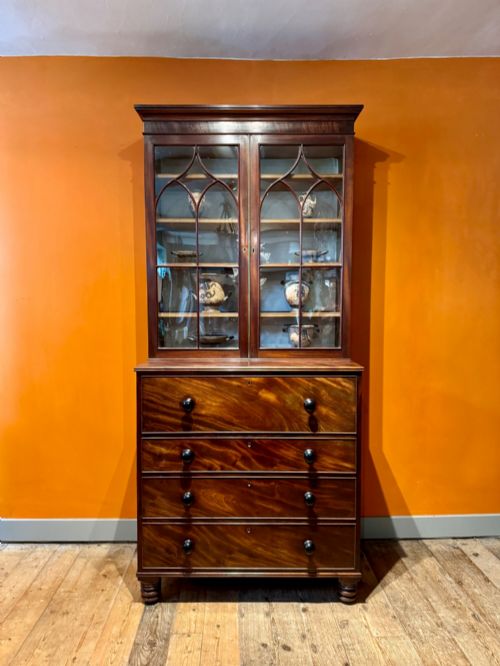
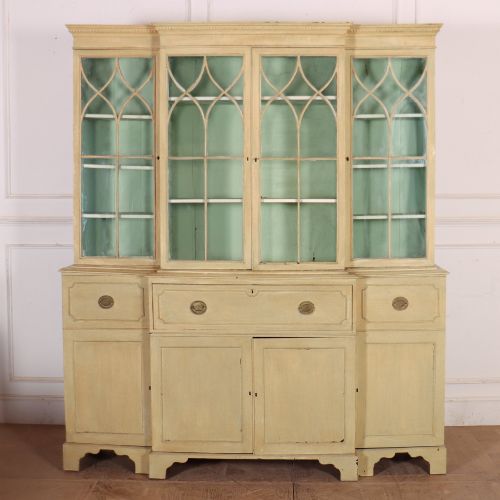
When you search for an antique secretary desk display, you encounter large dual-purpose furniture pieces frequently catalogued as secretaire bookcases, bureau bookcases, or writing desks. These pieces combine a glazed upper cabinet for display with a lower section featuring a drop-front or drawer-contained writing surface.
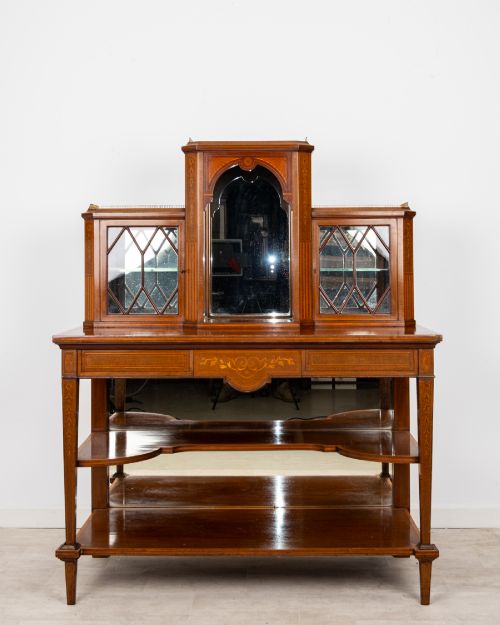
The versions most commonly met on this page span several centuries, originating in periods such as the Georgian era, the Regency period, and the Victorian age. Formats range from grand scale mahogany cabinets to more compact Edwardian writing desks and Arts and Crafts oak cabinets.
Materials and construction
Cabinet makers utilised a variety of timbers, relying heavily on mahogany, flame mahogany, satinwood, walnut, burr walnut, and oak. Marquetry, stringing, and elaborate inlay work ornament the surfaces of pieces from specific periods.
Upper sections feature glazed doors with wooden astragals, protecting books while permitting display. Lower sections incorporate fitted interiors with small drawers and pigeonholes behind drop-down writing desks or cylinder fronts.
Materials recorded across the inventory include brass, glass, mahogany, flame mahogany, satinwood, walnut, burr walnut, and oak.
Distinguishing quality
The standard of timber selection largely dictates the distinction between standard and superior examples, particularly where figured veneers, flame mahogany, or burr walnut are employed. Cabinet makers who matched grain patterns across drawer fronts and cabinet doors achieved a more harmonious visual balance.
The complexity of the fitted interior within the writing compartment also marks out finer pieces. Elaborate pigeonholes, concealed compartments, and well-executed marquetry inlay demonstrate superior craftsmanship compared to simpler utilitarian carcases.
Gillows·Morris & Co·George W Jack
The Antique Secretary Desk Display Glossary
- Secretaire bookcase
- A tall piece of furniture combining a bookcase top with a lower section containing a pull-down writing drawer or flap. This design conceals a fitted interior of small drawers and pigeonholes.
- Astragal
- A small moulding profile used in cabinet making to divide glass panes within doors. These wooden strips form geometric patterns across the glazed upper sections.
- Marquetry
- Decorative veneer work created by fitting together pieces of various coloured woods to form pictorial or geometric designs. This technique decorates the exterior surfaces of select cabinets.
- Flame mahogany
- A distinctive wood grain figure displaying a flickering flame-like pattern achieved by cutting across the branch junction. Cabinet makers utilised this veneer on principal display surfaces.
- Bureau bookcase
- An alternative term for a piece featuring a sloping desk flap above or below storage compartments. It serves the dual purpose of a writing desk and a book cabinet.
Antique Secretary Desk Display: Frequently Asked Questions
What is a secretary desk display?
A secretary desk display is a hybrid furniture piece that combines a bookcase with glass doors and a dedicated writing desk. The lower section typically includes a drop-front or pull-out drawer that reveals a fitted interior.
These pieces were designed for home management, allowing owners to write letters and store correspondence while keeping bound volumes visible and protected behind glass.
How do I date an antique secretary desk?
Dating relies on observing the primary timber, secondary woods, hardware, and stylistic details such as bracket feet or inlaid motifs. Georgian and Regency examples often display lighter satinwood or rich flame mahogany, while Victorian pieces lean towards heavier carved walnut or dark mahogany.
Examining the construction of the drawers and the glazing bars on the upper cabinet doors provides further clues regarding the period of manufacture.
Where should I place a bureau bookcase?
These tall cabinets require adequate wall space and clearance for doors to open and for the writing flap to fold down. Placing them in a study, library, or drawing room allows the glazed upper section to function as a display case for books and collections.
Keeping them away from direct sunlight and heat sources protects the polished timber surfaces and delicate wood veneers from fading and warping.