

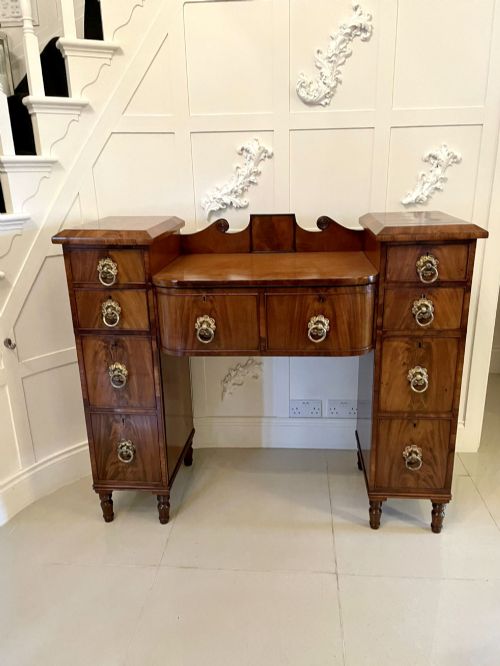
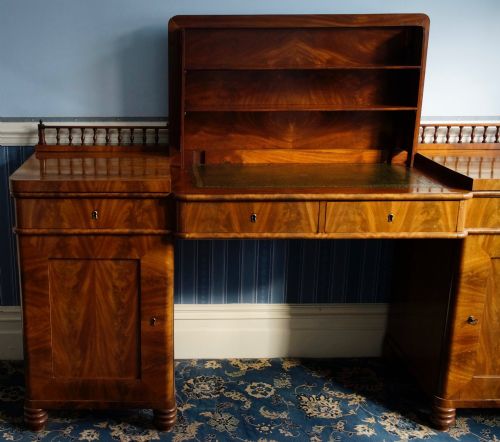
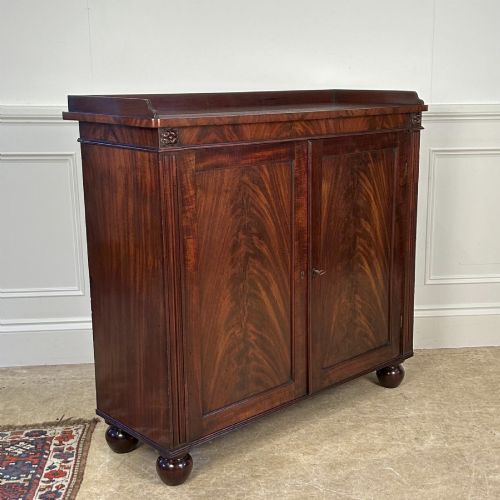
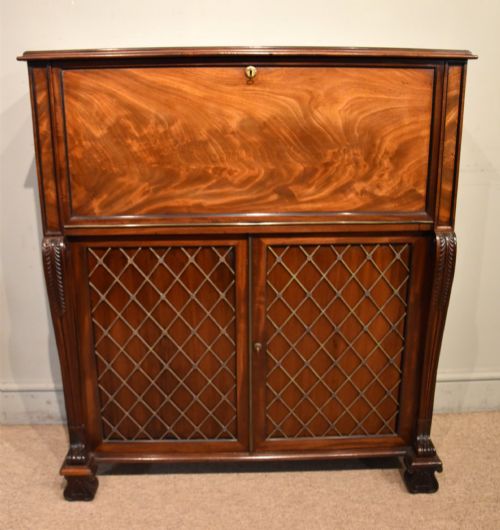


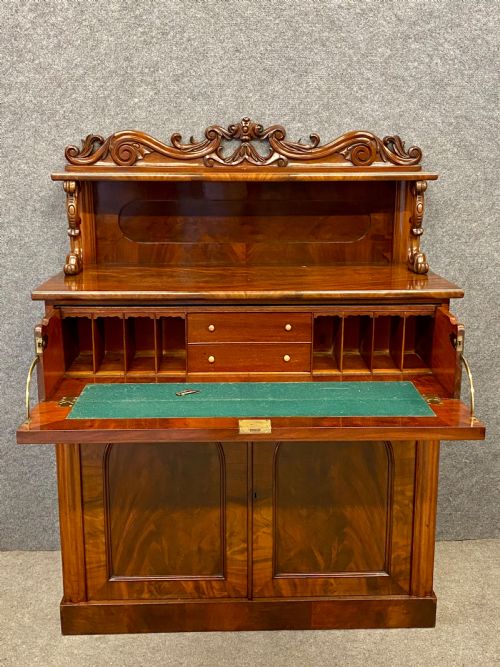


Antique Secretaire Sideboard
An antique secretaire sideboard marries the broad storage of a cabinet with a fitted writing drawer, offering a discreet desk space within a formal entertaining room.
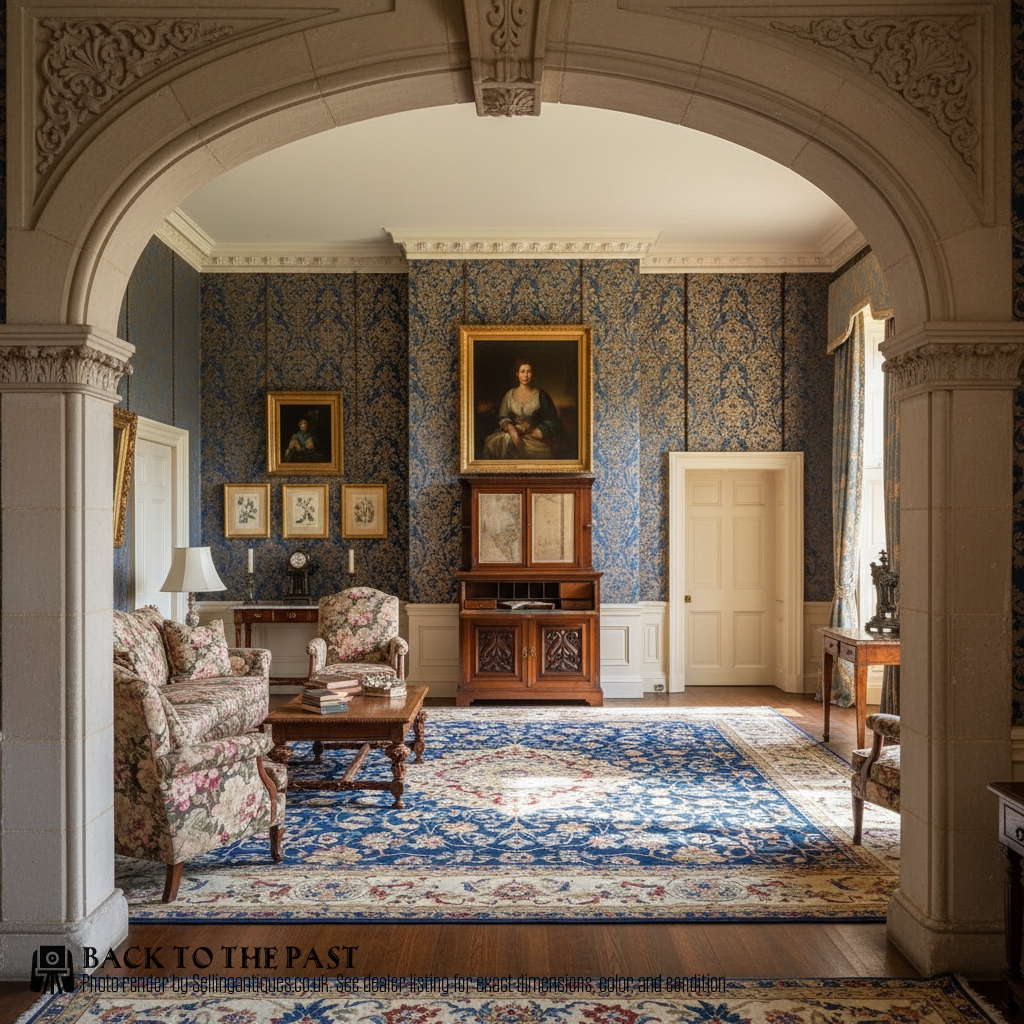
Antique Secretaire Sideboard
An antique secretaire sideboard combines a serving or storage base with a pull-down writing drawer that conceals small compartments and pigeonholes. Pieces span the Georgian, Regency, and Victorian periods, appearing in forms such as chiffoniers, low press cupboards, and credenzas.
The version most frequently encountered on this page is the nineteenth-century mahogany or rosewood secretaire chiffonier. These hybrid pieces often feature glazed or panelled doors below the writing drawer, uniting display and writing functions in a compact footprint.
Makers and designers from these eras, notably Gillows, produced variations ranging from dwarf cabinets to larger low press cupboards. The overarching design prioritises domestic utility without sacrificing formal reception-room elegance.
Distinctions in quality
The refinement of the interior stationery fittings dictates the standard of a secretaire sideboard. Superior examples contain finely dovetailed small drawers, pigeonholes edged in contrasting timbers, and leather writing surfaces with blind tooling, whereas simpler pieces offer plain open compartments.
Timber selection and veneer matching across wide drawer fronts and cupboard doors separate workshop standards. Master cabinet makers aligned grain patterns meticulously, while lesser workshops utilised random cuts of mahogany or rosewood.
Antique Secretaire Sideboard Retail Price Guide 2026
Typical asking prices for secretaire sideboard among the pieces listed under this phrase on Sellingantiques today, from the lower quarter to the upper quarter. They describe what is for sale here now, not the wider market.
Object types recorded across the inventory include chiffoniers, credenzas, low press cupboards, and dedicated secretaire desks.
Gillows·Gillington of Dublin
The Antique Secretaire Sideboard Glossary
- Secretaire
- A desk or writing drawer featuring a drop-front mechanism that conceals a fitted interior of small drawers and pigeonholes. It allows a piece of furniture to serve dual purposes as storage and a desk.
- Chiffonier
- A low cabinet, typically smaller than a sideboard, equipped with shelves or enclosed storage beneath a surface. In nineteenth-century variants, a secretaire drawer was frequently integrated into the upper section.
- Credenza
- A sideboard or buffet cabinet originally designed for dining rooms, often featuring low enclosed cupboards. Victorian examples on this page incorporate ormolu mounts and burr walnut veneers.
- Press cupboard
- A tall or low enclosed piece of furniture built primarily for storing linens or garments. Examples listed include low configurations fitted with writing drawers.
- Ormolu
- Gilded bronze applied as decorative mounts to furniture surfaces. It appears on mid-nineteenth-century pieces to accent timber panels.
Antique Secretaire Sideboard: Frequently Asked Questions
What is an antique secretaire sideboard?
An antique secretaire sideboard is a hybrid furniture form that merges the enclosed storage of a sideboard or chiffonier with a pull-down writing drawer.
These pieces emerged strongly during the Georgian and Regency periods, remaining popular through the Victorian era as practical solutions for home correspondence and dining room storage.
How do I use a secretaire drawer?
The secretaire drawer operates with a drop-front held level by quadrant brass hinges or side arms, revealing an internal arrangement of small drawers and pigeonholes.
When closed, the drawer locks securely, concealing the writing materials and maintaining the clean exterior appearance of a standard sideboard.
How do I tell Regency from Victorian pieces?
Regency pieces often display clean classical lines, rosewood or mahogany veneers, and restrained brass inlay or gilt mounts reflecting early nineteenth-century neoclassical taste.
Victorian examples tend to employ heavier proportions, burr walnut veneers, ormolu mounts, and more ornate inlay work characteristic of later nineteenth-century manufacturing.
Were these pieces made for dining rooms?
Many were manufactured for dining rooms or libraries, functioning simultaneously as serving surfaces, storage cupboards, and impromptu writing desks.
Smaller dwarf versions and chiffoniers suited parlour rooms where floor space was restricted but multi-functional furniture remained desirable.