
Antique Screen Panels
These antique screen panels bring architectural division and decorative warmth to an interior, spanning freestanding room dividers and hearth guards.
Antique Screen Panels
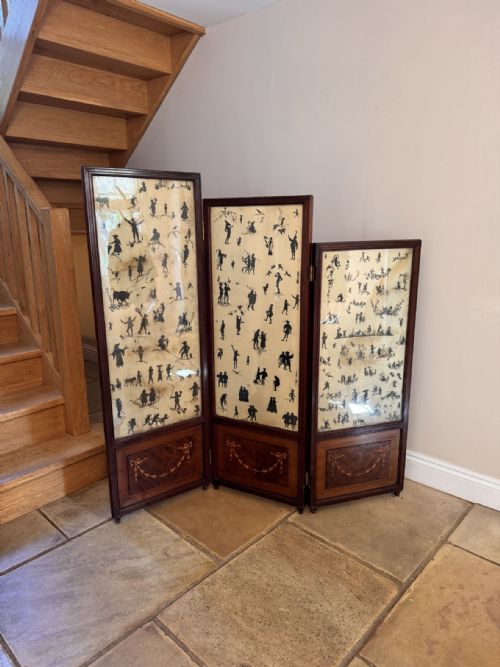
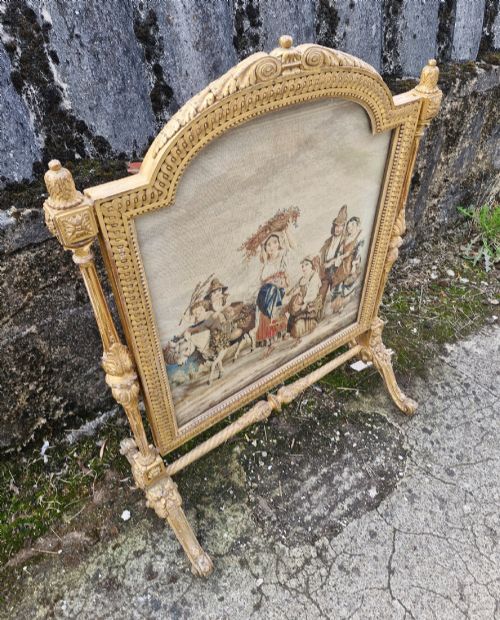
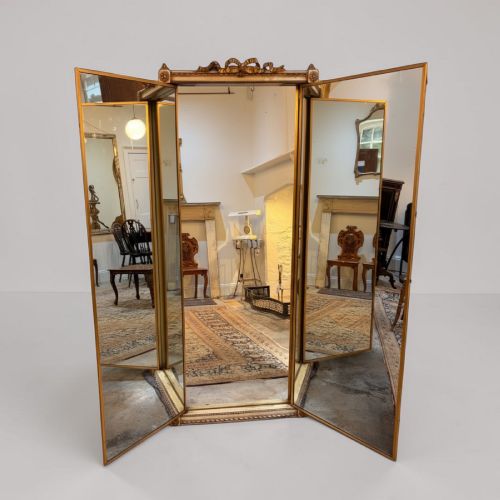
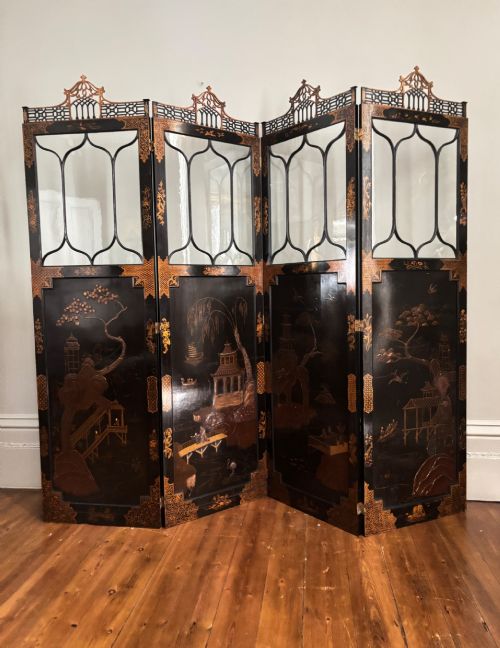
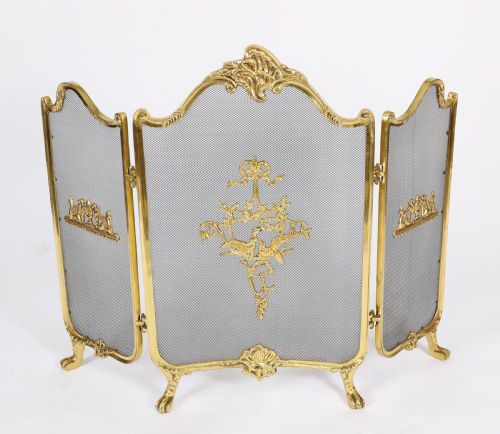
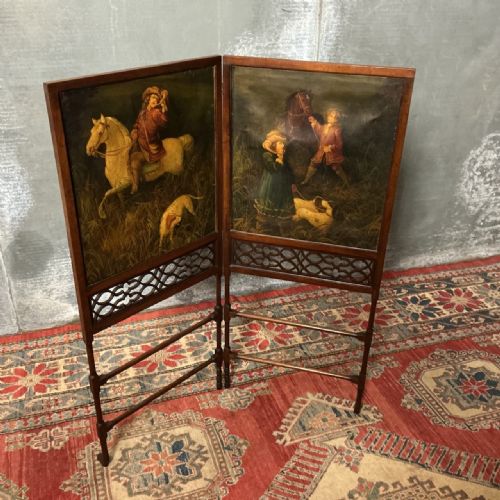
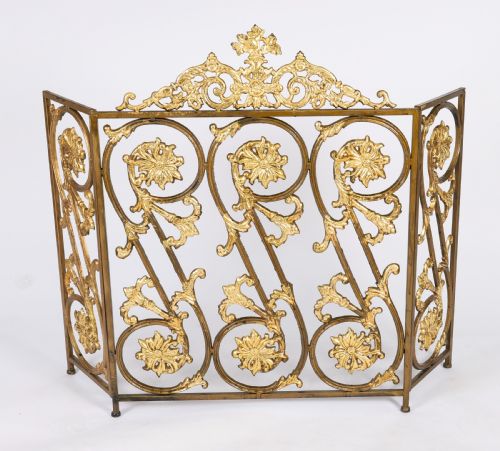
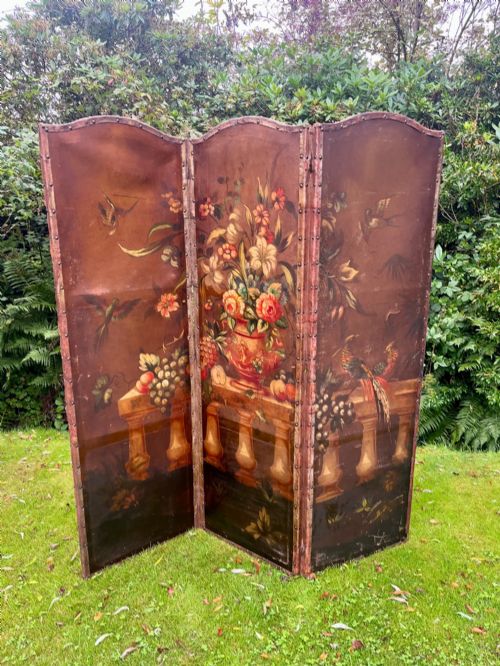
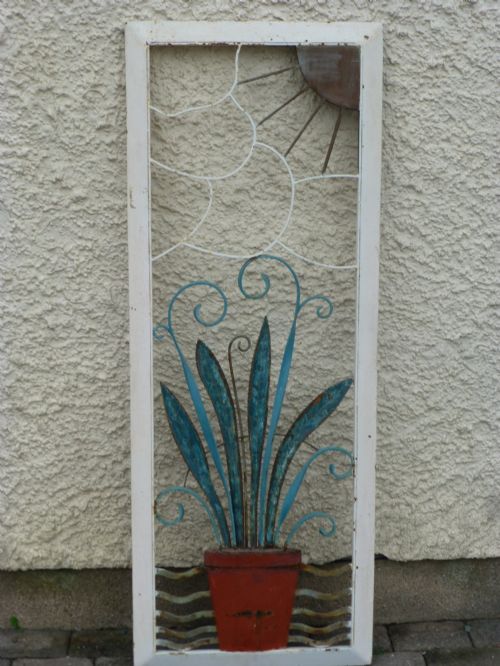
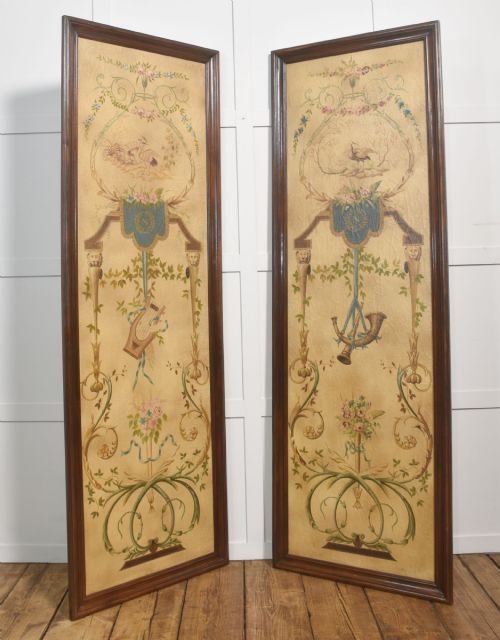
When you search for antique screen panels, you encounter a diverse group of objects designed to divide interior spaces or protect rooms from fireplace heat. The most common forms on this page include multi-fold folding screens, heavy wood room dividers, and smaller brass or iron fire screens.
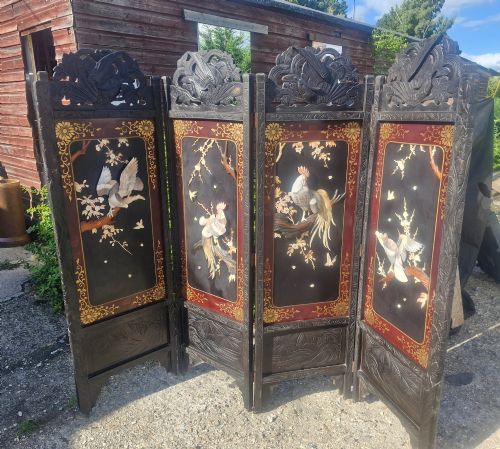
The materials and aesthetic influences span multiple decades and regions, ranging from European revival styles in walnut and mahogany to Asian export lacquer and carved wood. Pieces originate from domestic Victorian parlours, Edwardian dressing rooms, and international workshops, showing considerable variety in scale.
Materials and Technique
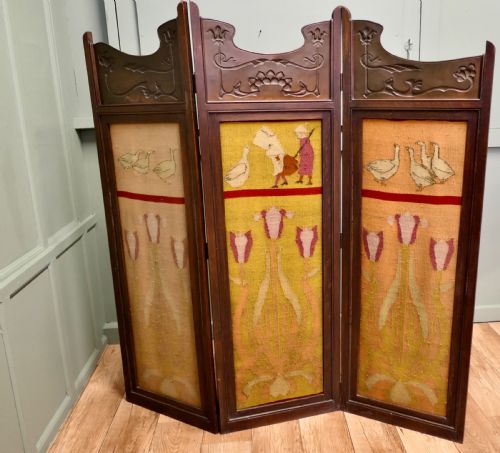
Wood forms the primary structural foundation for many panels, utilising timber such as mahogany, rosewood, walnut, and oak alongside applied brass hinges and iron hardware. Frames frequently house secondary inserts, including hand-painted canvas, needlework wool, embroidered silk, bevelled glass, and tooled leather.
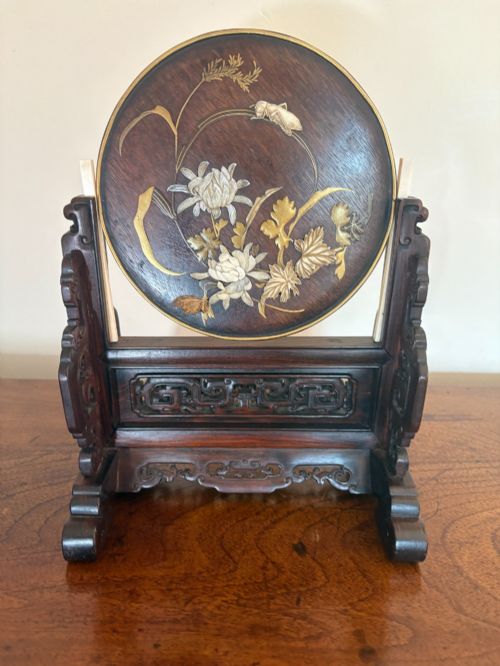
Asian and continental pieces employ specialist decorative techniques like deep-carved bone, polychrome lacquer, oil paint, and gilt bronze. Metal fire screens rely on cast brass, wrought iron, and copper construction to support glass plates or protective wire mesh.
Listed items incorporate periods from the 18th Century through the early 20th Century, including Victorian and Edwardian examples.
Craftsmanship and Proportion
The distinction between standard and superior pieces rests on the execution of the decorative surface and the integrity of the frame construction. Hand-painted artistry, intricate needlework, and deep-carved bone or lacquer demand precise technical skill that elevates a panel above simpler printed or plain versions.
Proportion and stability determine long-term utility, particularly in multi-fold dividers where heavy hinges and seasoned timber prevent warping. Superior examples maintain balanced weight distribution and crisp joinery across every folding section.
Raymond Subes
The Antique Screen Panels Glossary
- Pole screen
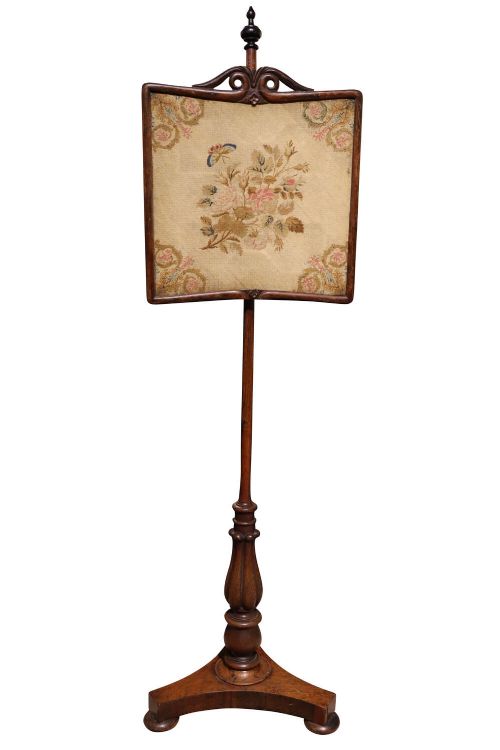
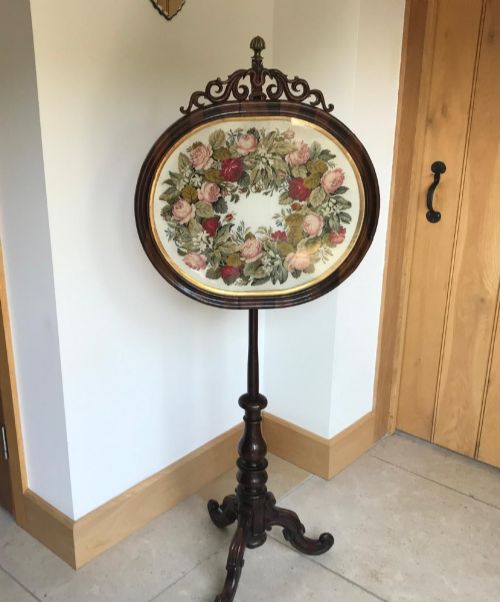
- A vertical stand supporting an adjustable flat panel designed to shield a person's face from hearth flames. These typically feature needlework or painted screens mounted on slender wooden pedestals.
- Fire screen
- A protective barrier placed before an active fireplace to block stray embers. They range from folding metal mesh guards to decorative glass and fabric panels.
- Coromandel
- A dense, dark timber often utilised for Chinese export screens, frequently carved through a layered lacquer surface. The technique reveals contrasting coloured grounds beneath.
- Triptych
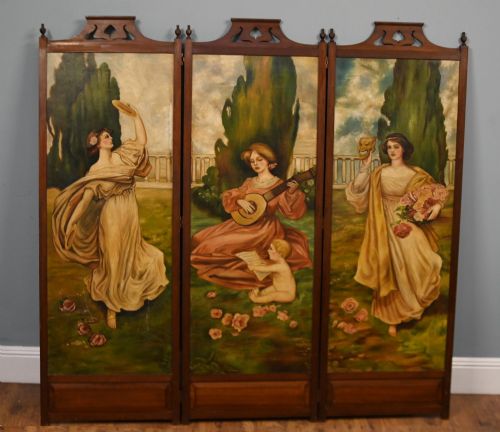
- A three-panel composition, often hinged together to form a folding screen or mirror frame. This format appears frequently in continental decorative art.
- Berlin work
- A style of counted-thread embroidery popular during the nineteenth century using brightly coloured wool. It frequently decorates the central panels of Victorian fire screens.
- Mashrabiya
- An architectural element featuring turned wooden lattices arranged in geometric patterns. These panels provide privacy and ventilation in traditional room dividers.
Antique Screen Panels: Frequently Asked Questions
What is the difference between a fire screen and a room divider?
Fire screens are built on a smaller scale to stand directly before a fireplace, using heat-resistant materials like brass, iron, and glass. They protect inhabitants from radiant heat and sparks rather than partitioning a room.
Room dividers consist of multiple taller panels designed to segment floor space. They utilise wood, canvas, and leather to block lines of sight across larger interiors.
How do I identify a Victorian screen?
Victorian examples frequently employ dark native or imported timbers like rosewood and walnut, combined with heavy needlepoint, Berlin work, or brass framing. Construction focuses heavily on domestic comfort, producing numerous pole screens and hearth guards.
Stylistic markers include ornate carving, floral embroidery, and the use of gilding. These elements reflect nineteenth-century preferences for heavily decorated domestic interiors.
How do I care for antique painted leather panels?
Painted leather requires stable humidity levels to prevent the surface from drying, cracking, or flaking away from the backing material. Avoid placing these pieces in direct sunlight or near active heat sources.
Dust the surface gently with a soft, dry cloth rather than using liquid cleaning products. Professional conservation is recommended for any structural repairs to the leather.