






Antique Satinwood Tray
An antique satinwood tray brings a luminous golden sheen to a room, offering a refined surface for serving or display.
Antique Satinwood Tray
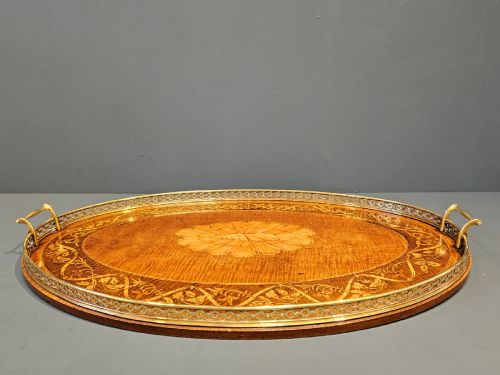
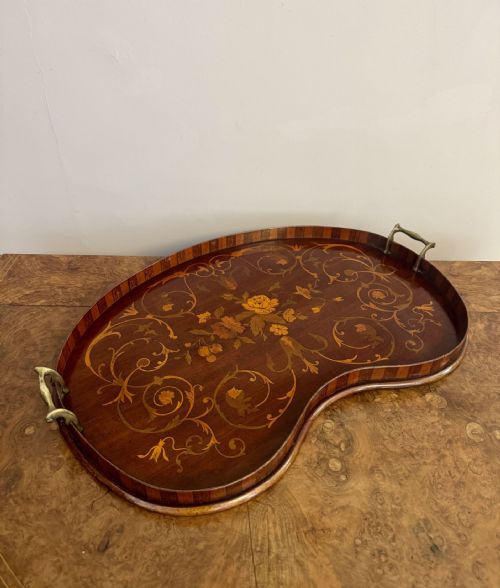
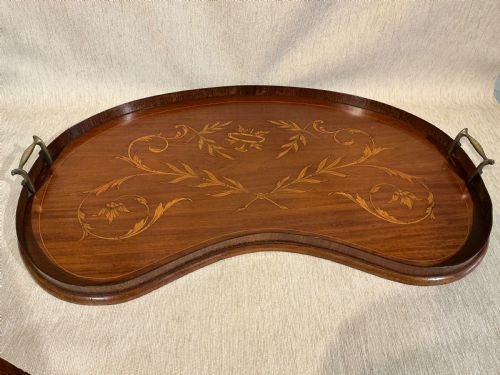
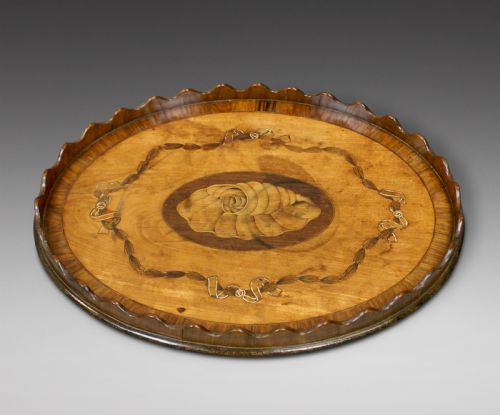
An antique satinwood tray is a refined serving or display piece defined by its bright, shimmering timber and often enhanced with contrasting inlay. These items appear across several periods, most commonly in Edwardian and Victorian forms, alongside occasional Georgian examples.
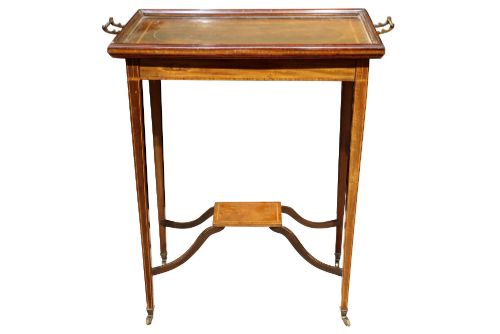
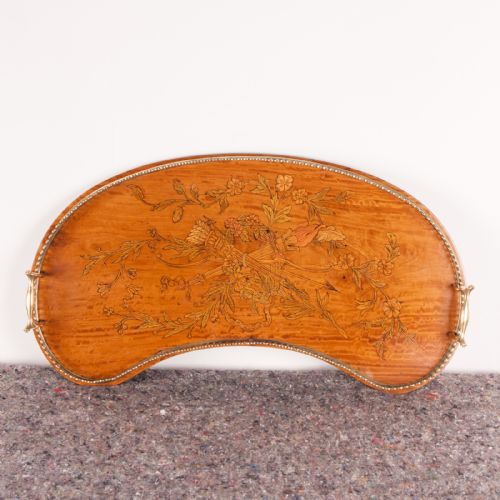
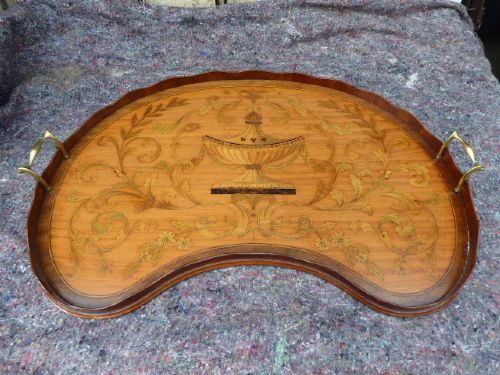
The pieces on this page span several distinct shapes, including traditional oval trays, kidney-shaped designs, and circular drinks platters. Many incorporate brass handles or galleries, while others sit upon dedicated occasional stands to function as small tables.
Makers and workshops utilised satinwood for its exceptional figure, frequently combining it with mahogany to create dramatic borders and contrasting panels. The surviving examples reflect a tradition of fine cabinet-making aimed at elegant domestic interiors.
What varies in quality
Quality in an antique satinwood tray rests upon the choice of timber and the precision of the marquetry. Superior examples display a deeply chatoyant, highly figured satinwood grain paired with meticulously hand-cut inlay rather than printed decoration.
Construction details distinguish finer workshops, such as Edwards and Roberts or Gillows, from standard commercial output. The weight and crispness of the brass mounts, the tightness of the mitred corners, and the finesse of any hand-painted detailing mark the upper tier of the craft.
Materials recorded across the inventory include satinwood, mahogany, coromandel, brass, glass, and hand-painted detailing.
Edwards and Roberts·Waring and Gillow·Rupert Favell·Gillows
The Antique Satinwood Tray Glossary
- Satinwood
- A lustrous hardwood prized for its pale yellow to golden colour and shimmering grain. It forms the primary visual surface for high-style English cabinet-making.
- Marquetry
- The art of applying decorative veneer pieces to a structure to form intricate pictures or patterns. It often incorporates darker woods like mahogany to create contrast against the satinwood ground.
- Gallery
- A raised pierced brass or wooden border fitted around the edge of a tray. This feature prevents items from sliding off during transport.
- Étagère
- A set of open shelves or a tiered stand used for displaying small objects. Several pieces combine this form with a removable tray top.
- Sheraton Revival
- A late nineteenth and early twentieth century design movement inspired by the neoclassical furniture of George III. It relies on light proportions, satinwood, and delicate inlay.
Antique Satinwood Tray: Frequently Asked Questions
How were antique satinwood trays used?
These trays served primarily for carrying afternoon tea, wine, or spirits within formal domestic settings. Wealthy households utilised them for entertaining guests in drawing rooms.
Over time, many of these trays transitioned into static display pieces or were mounted onto folding stands to function as small side tables.
How do I distinguish Edwardian pieces from Victorian ones?
Victorian examples often favour rich, dark contrasts and heavy oval proportions with substantial marquetry. Edwardian pieces, influenced by the Sheraton Revival, tend to display lighter framing and refined neoclassical details.
Examining the underlying secondary wood and the style of the brass mounts helps clarify the period of manufacture.
Can I use an antique satinwood tray for serving food?
Most collectors avoid using antique satinwood trays for active service to protect the delicate veneer and historical finish. Modern moisture and heat can damage the antique polish and lift the fine inlay.
Instead, owners typically display them flat on tables or mount them safely on stands to admire the grain.