


Antique Sailboat Watercolour
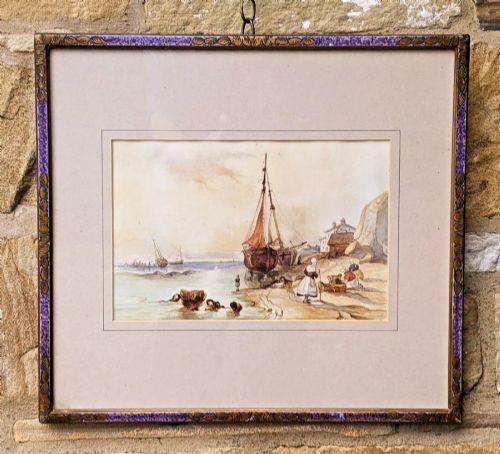
An antique sailboat watercolour brings the movement of coastal tides and nineteenth-century vessels directly onto the wall inside a simple wooden frame.
Antique Sailboat Watercolour
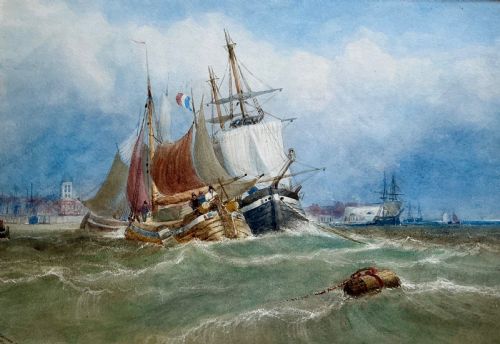
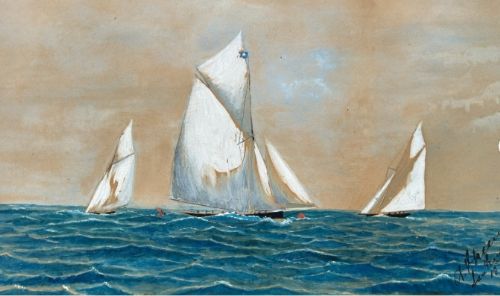
When you search for an antique sailboat watercolour, you encounter maritime scenes depicting fishing boats, racing yachts, and coastal harbours across paper supports. These works range from nineteenth-century visions of British shores to continental depictions of Venice and the French Riviera.
The selections span Victorian maritime traditions, Edwardian marine art, and twentieth-century interpretations. Many examples present framed artwork featuring glazed protection over the delicate pigment layers.
Subjects frequently centre on specific locations such as Scarborough, Whitby, Venice, and West Country ports. The visual focus remains firmly upon nautical craft navigating open water, entering estuaries, or resting on the shore.
Materials and methods behind the brushwork
Artists executed these watercolours directly onto paper using water-soluble pigment and ink, sometimes incorporating gouache for added opacity in the highlights. Paper served as the primary canvas for capturing fluid atmospheric effects of sea and sky.
Completed paintings were typically placed behind protective glass and housed within wooden frames, frequently enhanced with gilt finishes. The combination of pigment on paper with simple framing preserved the delicate washes from moisture and atmospheric dust.
Materials documented in the collection include paper, watercolour pigment, ink, glass, wood, and gilt wood finishes.
Distinguishing characteristics of finer pieces
Quality rests upon the artist's ability to handle watercolour pigment with fluidity and precision, capturing the weight of vessels and the luminosity of light on water. Finer works display confident brushwork that defines rigging, hull construction, and atmospheric haze without excessive reworking.
The condition of the paper support and the preservation of the original pigments dictate the visual impact of the piece. Strong provenance, legible signatures, and identifiable historic locations elevate specific examples above anonymous workshop production.
Henry Barlow Carter·Paul Delvaux·Richard Harry Carter·F J Aldridge·Charles Harmony Harrison·Ernest F. Hill·John McDougal·Frank Wasley·Harry Wanless·Thomas Bush Hardy·Henry Scott Tuke·Henry Bright
The Antique Sailboat Watercolour Glossary
- Watercolour
- A painting method in which the paints are made of pigments suspended in a water-based solution. This medium allows for translucent washes of colour that mimic the movement of light upon the sea.
- Gouache
- An opaque watercolour paint mixed with a white pigment to create denser, heavier highlights. Artists utilise this material to catch bright sunlight on sails and cresting waves.
- Lugger
- A traditional two-masted fishing vessel rigged with lug sails. These boats appear frequently in nineteenth-century coastal art from Devon and Cornwall.
- Gilt Wood
- Wood treated with a thin layer of gold leaf or metallic gilt paint. This traditional framing material provides a warm border that enhances the colours within the marine scene.
- Marine Art
- Artistic representation of maritime subjects, including ships, coastal views, and naval engagements. This genre dominated British and European painting throughout the Victorian and Edwardian periods.
Antique Sailboat Watercolour: Frequently Asked Questions
How do I date an antique sailboat watercolour?
Dating relies primarily on artist signatures, framing styles, and the specific riggings of the vessels depicted within the composition. Nineteenth-century and Edwardian works often bear contemporary inscriptions or gallery labels on the reverse.
Paper quality and the chemical composition of the ink or watercolour pigment also offer chronological clues. Comparing the artistic style to documented maritime painters narrows the window of creation.
Are these watercolours always framed under glass?
Glass protection remains standard for works on paper to prevent airborne moisture, dust, and handling damage from degrading the water-soluble pigments. Original Edwardian and Victorian framings frequently stay intact around the artwork.
Replacing broken or missing glass requires matching historical specifications to protect the delicate surface. Maintaining this barrier ensures the paper support survives in stable condition.
Where were most of these marine scenes painted?
British coastal towns such as Whitby, Scarborough, and Mevagissey feature prominently across the nineteenth-century works in this selection. Artists also travelled to continental locations including Venice and the French Riviera.
Local fishing fleets and naval vessels provided steady subject matter for painters working along the English Channel and the North Sea. These settings reflect the maritime dominance of the eras in which the artists lived.
How should I care for a watercolour painting at home?
Keep the framed artwork away from direct sunlight and damp environments to prevent the watercolour pigments from fading and the paper from developing mould. Stable indoor temperatures protect both the paper support and the wooden frame.
Dust the exterior glass gently with a soft cloth rather than using liquid cleaning sprays near the frame edge. Professional conservation framing prevents long-term deterioration of the paper.