

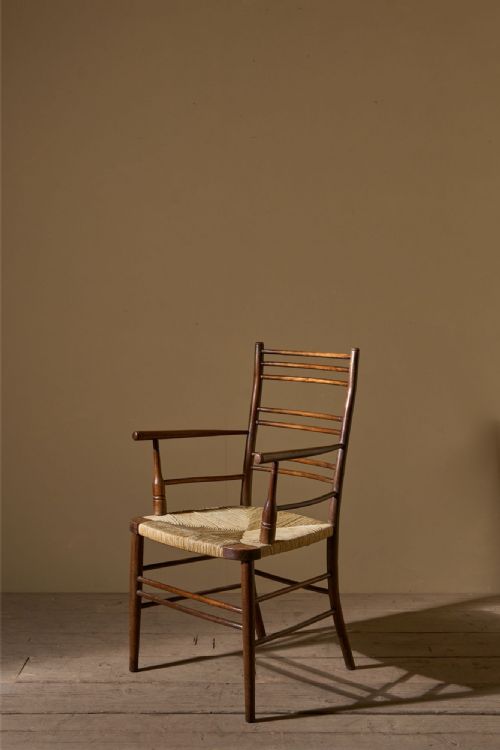
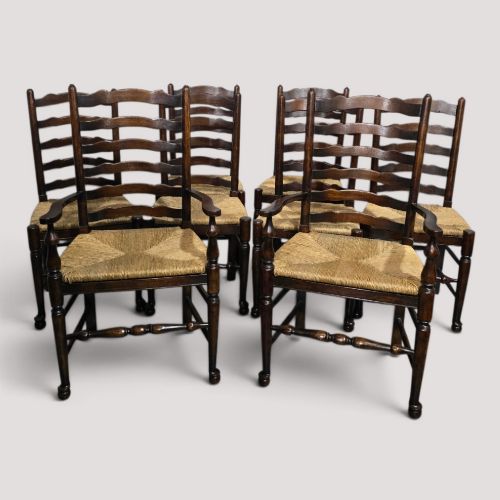
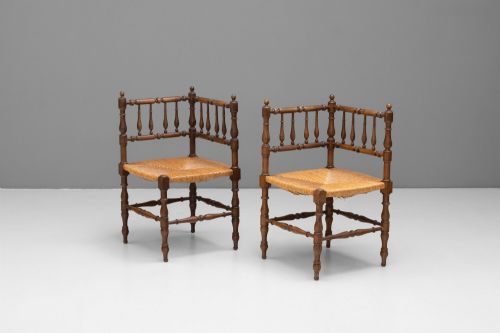
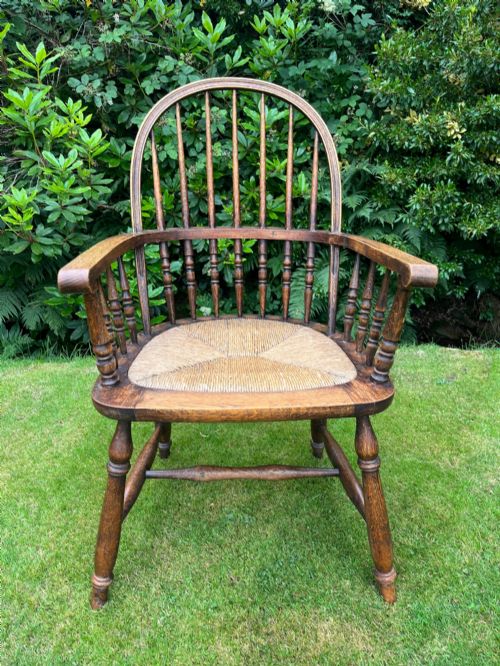
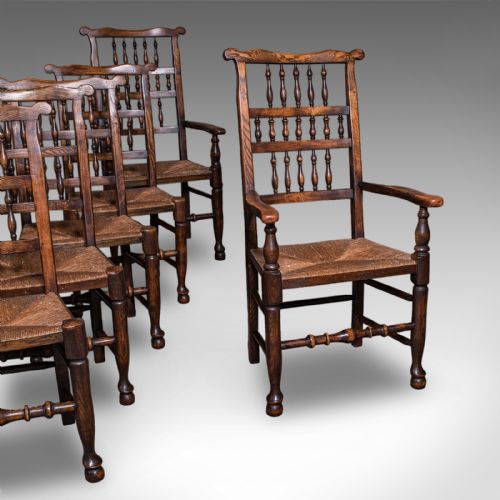
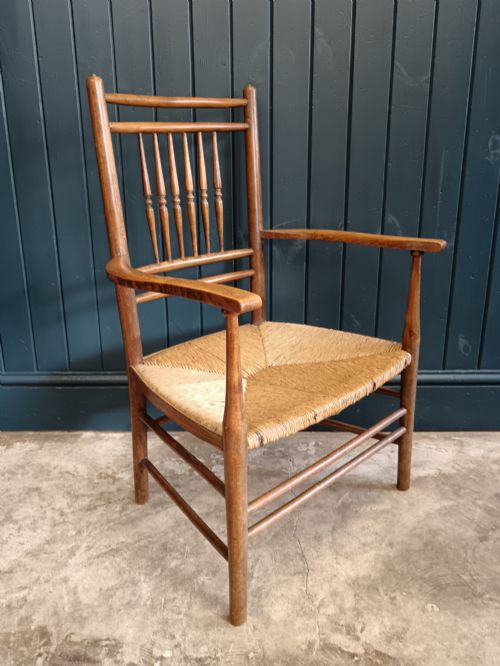

Antique Rush Seat Armchair
An antique rush seat armchair brings tactile country comfort and vernacular craftsmanship into a modern room through woven natural seating and sturdy turned frames.
What these pieces are
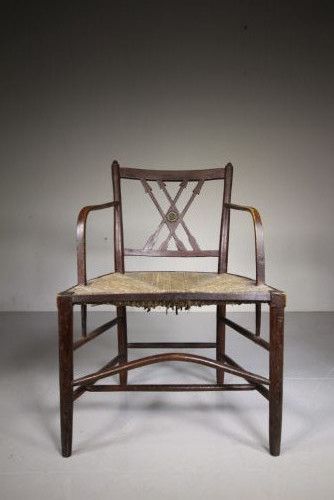
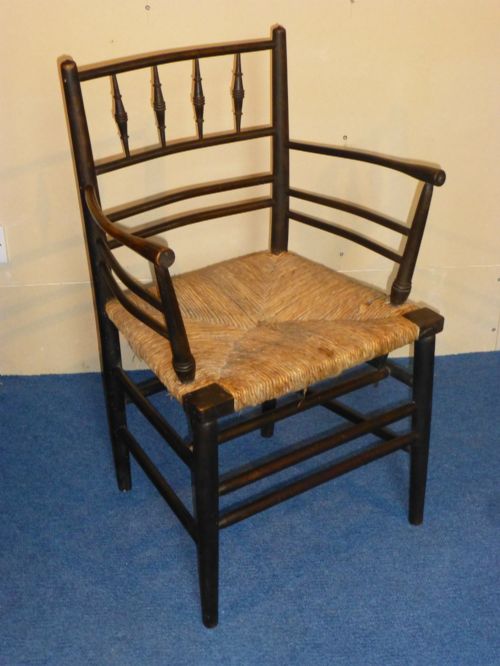
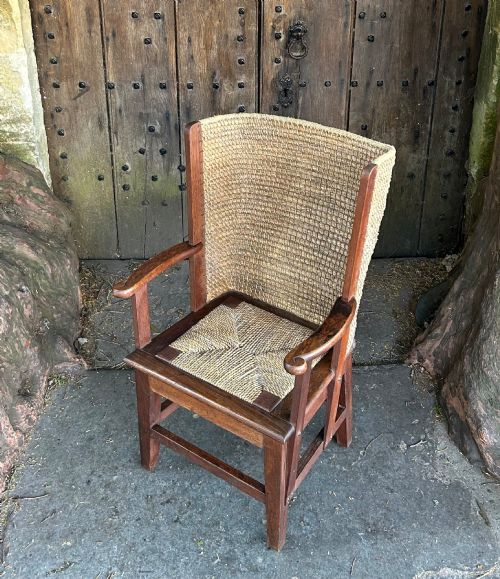
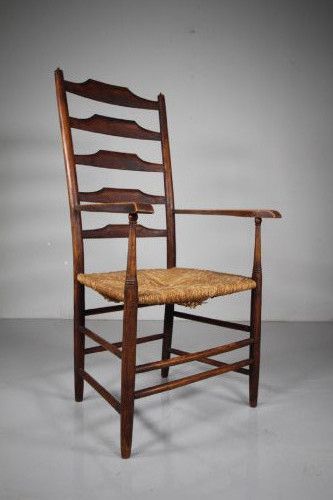
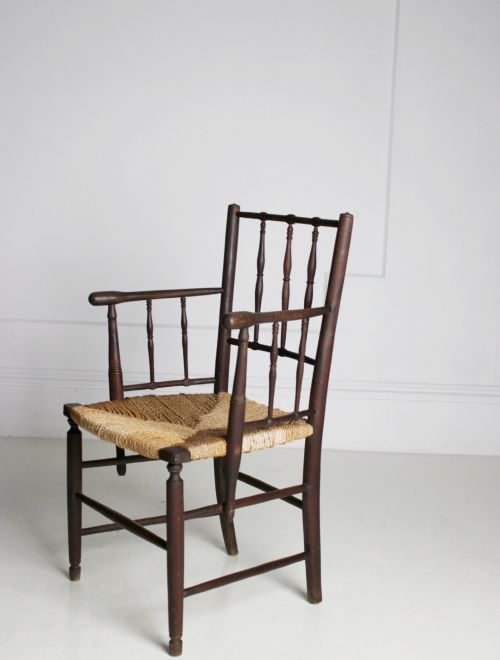
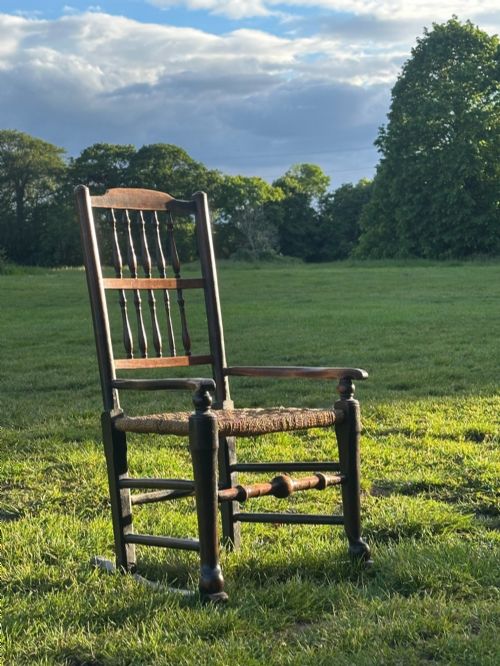
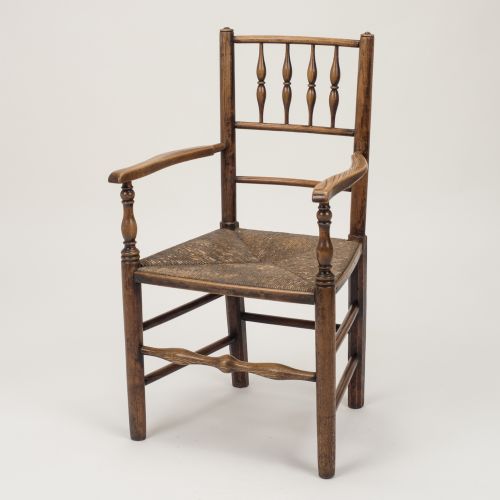
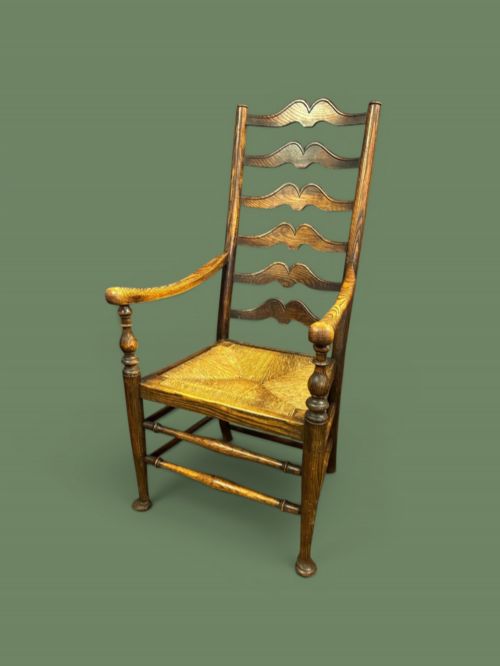
Buyers on this page most frequently encounter ladderback and spindle back forms, alongside regional variants and children's seating. The construction reflects domestic utility and vernacular design rather than formal court furniture.
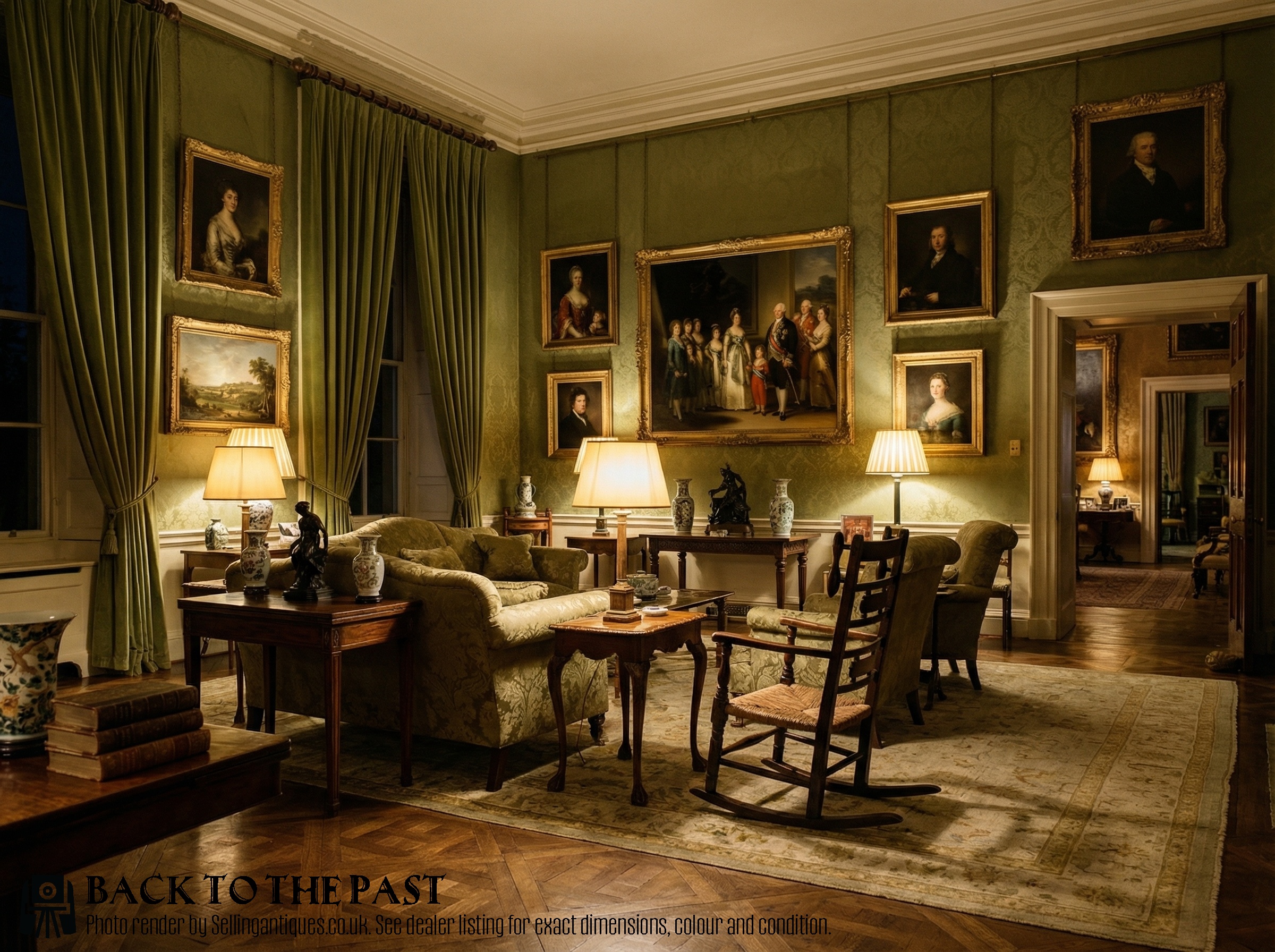
Examples span simple country carvers and fireside chairs to painted regional pieces and ladderback forms. The grouping includes standard armchairs, rocking chairs, and child-sized iterations created by local makers.
How they were made
Makers utilised locally available hardwoods such as ash, elm, beech, and oak to build the structural frames of each armchair. Turned components, spindle backs, and ladder rails were shaped using traditional greenwood working and lathe-turning techniques.
Seats were hand-woven using dried marsh rush twisted into cords and laced tightly around the seat rails to create a durable, supportive platform. Certain regional pieces received coats of paint or painted finishes after initial construction.
Retail Price Guide 2026
Typical UK retail prices for rush seat armchair, calculated from the Sellingantiques database of over a million retail prices indexed since 2003. This retail price guide relies exclusively on Sellingantiques data; no external sources or auction records are used, so the figures do not describe the wider market.
Listings feature periods from the Georgian era through the late 19th century and Arts and Crafts movement, utilising ash, elm, oak, beech, and painted wood.
What varies in quality
The distinction between standard domestic seating and superior craftsmanship rests in the weight and selection of the timber frame. Heavier, denser woods like oak and elm provide greater structural integrity than lighter secondary timbers.
Tighter, more uniform rush weaving indicates superior workshop standards, whereas loose or uneven lacing points towards hurried production or later restoration. The proportion and grace of the turned spindles and ladder rails determine aesthetic merit.
The Antique Rush Seat Armchair Glossary
- Rush
- Dried marsh plant material twisted into strong cords and hand-woven to form a flexible, durable seat pad. It requires periodic maintenance to prevent drying and breakage.
- Ladderback
- A chair back featuring horizontal arched slats resembling the rungs of a ladder. This form dominated regional country chair production.
- Vernacular
- Everyday furniture designed by regional makers for local utility rather than following strict London court fashions. It utilises native woods and traditional local methods.
- Carver
- A traditional term for an armchair, usually designed to match a set of smaller dining chairs. They were placed at the head of a dining table.
Frequently Asked Questions
What is an antique rush seat armchair?
An antique rush seat armchair is a traditional wooden chair featuring a hand-woven rush base and structural elements like ladderbacks or spindle backs. These chairs were produced primarily in regional workshops across the Georgian and Victorian eras.
They rely on native timbers such as elm, ash, and oak, embodying practical country craftsmanship and domestic utility.
How do I care for a rush seat?
Rush seats benefit from gentle treatment and consistent indoor humidity to prevent the natural fibres from becoming brittle. Avoid excessive moisture and keep them away from direct heat sources.
Applying a light, neutral paste wax to the wooden frame helps preserve the timber without harming the woven strands.
How are different periods told apart?
Georgian examples often display robust proportions and distinct regional turning styles in ash or painted wood. Victorian and Arts and Crafts pieces frequently incorporate lighter spindle backs or reflect the revival of vernacular crafts.
Comparing the profile of the ladder rails and the choice of wood helps indicate the likely era of manufacture.
Where were these chairs used?
These armchairs served in farmhouses, cottages, and country homes as fireside seating or dining chairs. Their durable construction suited daily domestic life.
Smaller iterations, including child-sized rocking chairs, catered to domestic family spaces.