

Antique Rummer Wine Glasses
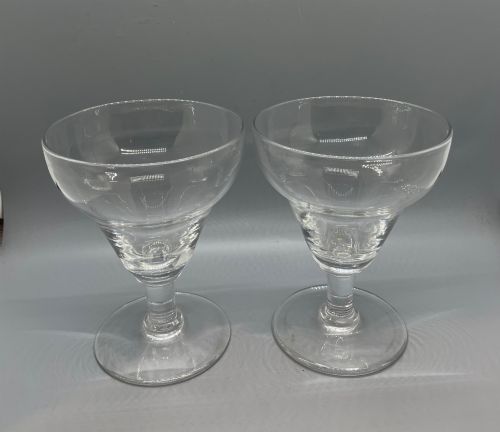
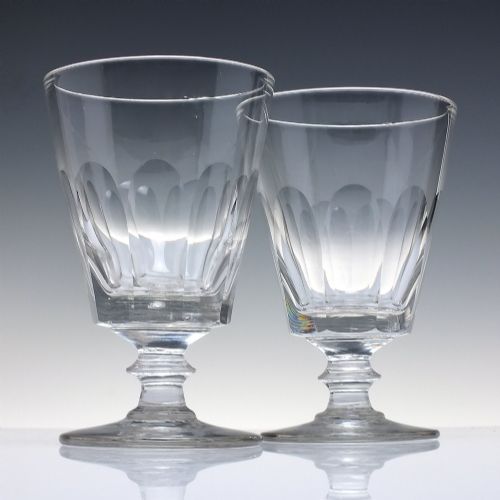
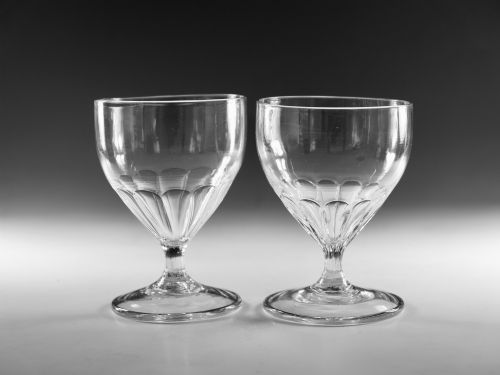
These antique rummer wine glasses are robust drinking vessels spanning the Georgian and Victorian eras, prized for heavy handles and wide bowls.
Antique Rummer Wine Glasses
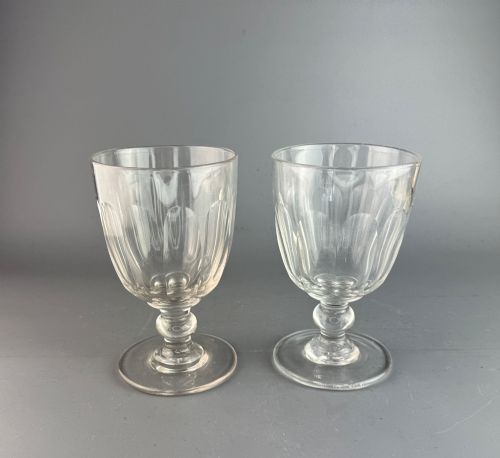
When searching for antique rummer wine glasses, collectors encounter sturdy drinking vessels designed for heavy everyday use or formal dining across the Georgian and Victorian periods. The inventory spans simple tavern glasses to elaborately cut crystal goblets and continental roemers.
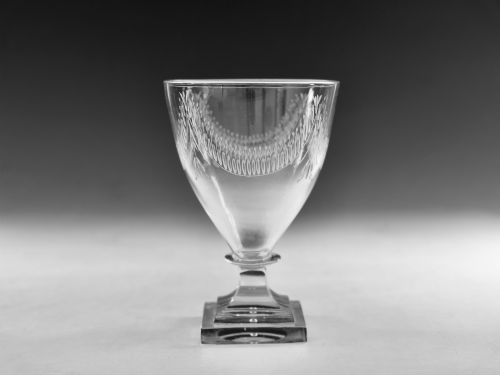
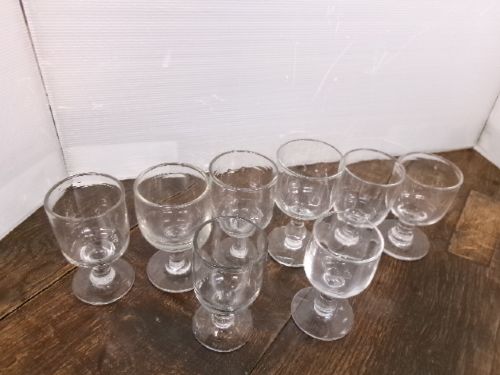
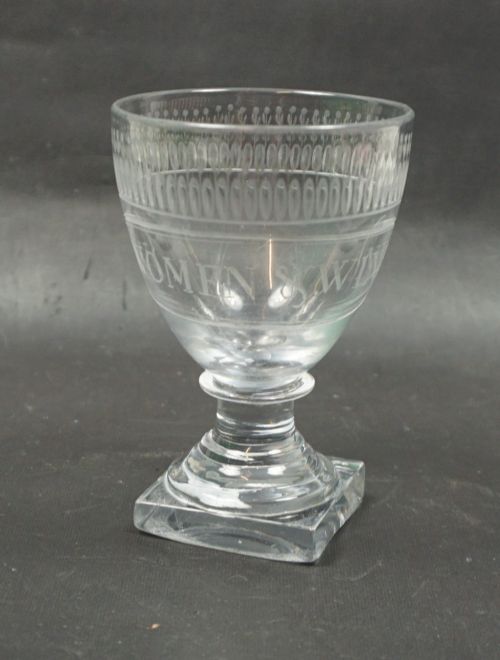
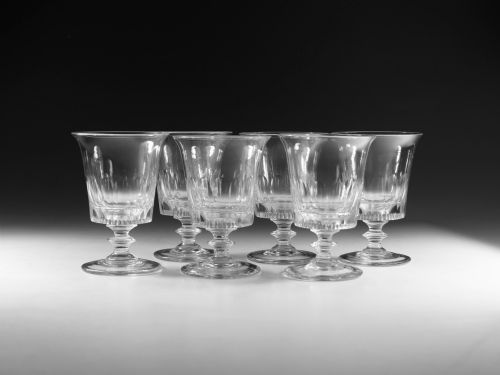
Most examples originate from English and continental workshops, showing forms such as ovoid bowls, pan tops, and square lemon squeezer bases. Pieces range from small single goblets to matched sets of six or eight.
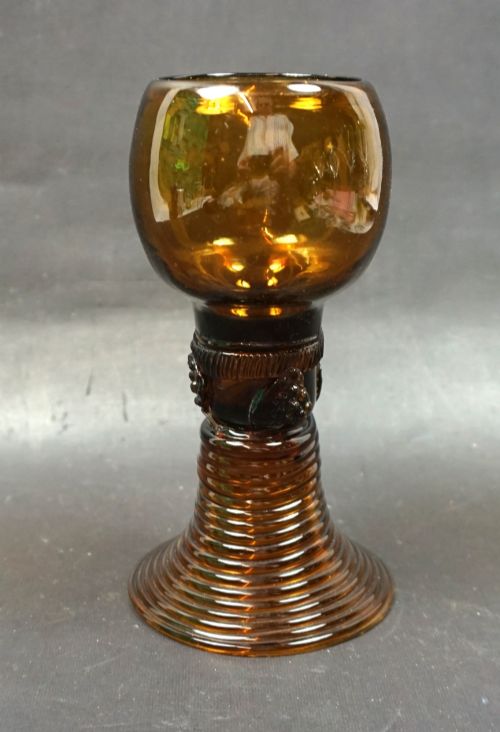
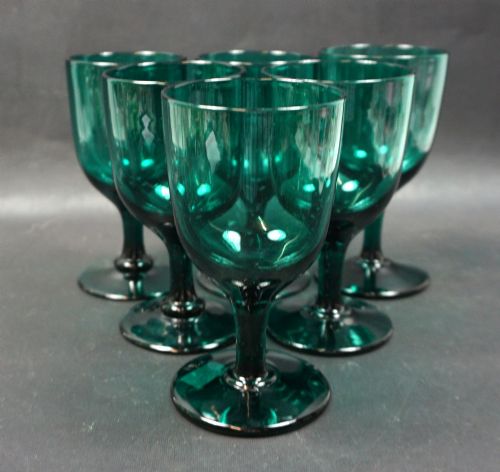
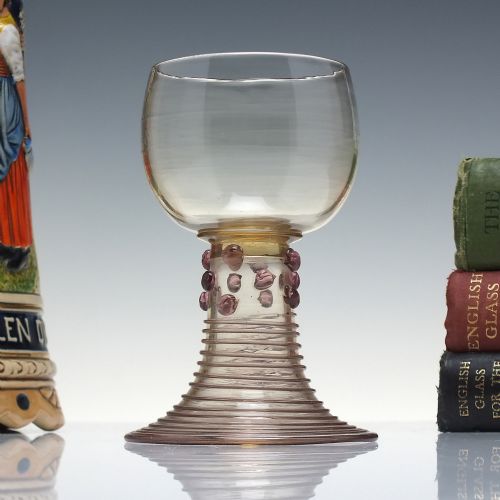
Continental roemers with coiled feet and coloured bowls appear alongside clear lead glass rummers, reflecting diverse European drinking traditions from the eighteenth and nineteenth centuries.
How they were made
Glassmakers utilised lead crystal, flint glass, and hand-blown clear or coloured glass, shaping vessels through traditional hot-glass techniques. Many pieces incorporate applied elements like coiled feet or hollow stems.
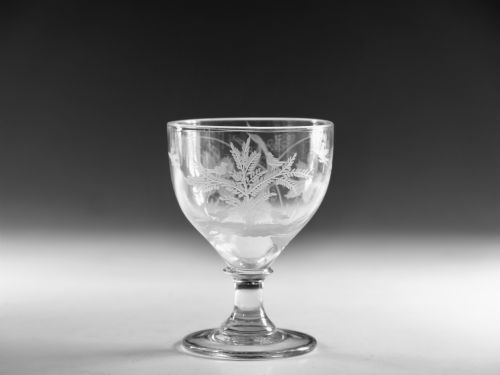
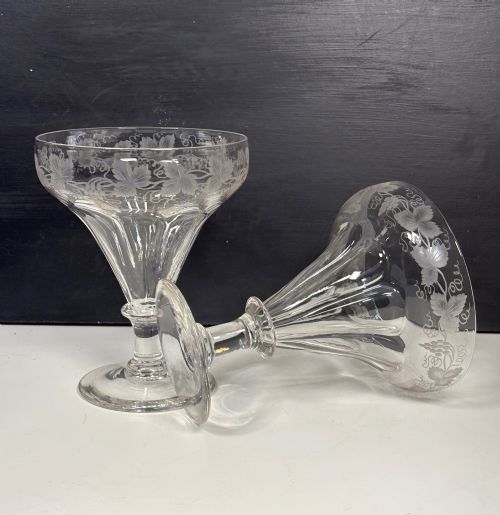
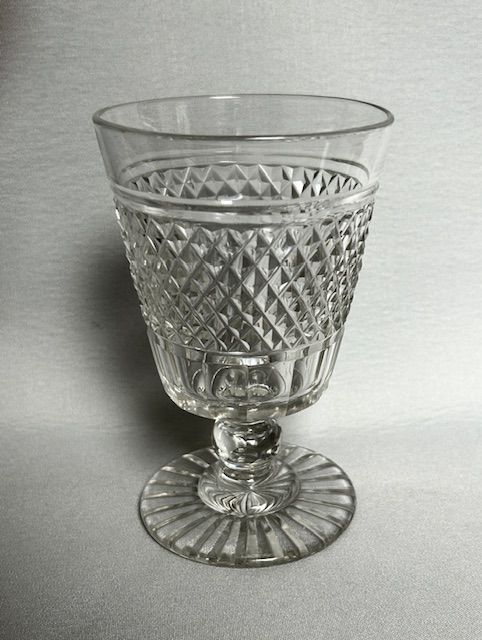
Decoration relied on wheel-engraving, hobnail cutting, gilding, and polychrome enamel work applied to amber, green, amethyst, and clear metal. Bases were frequently formed with square lemon squeezer feet or heavy baluster stems.
Materials documented here include lead crystal, flint glass, and hand-blown coloured glass in green, amber, amethyst, and turquoise.
What varies in quality
Quality rests upon the clarity of the metal, the crispness of wheel-engraved motifs, and the depth of surface cutting such as hobnail patterns. Heavy metal weight and balanced proportions distinguish finer examples from standard tavern glassware.
The precision of applied details, such as coiled feet or balanced baluster stems, dictates desirability among collectors. Preservation of original gilding and enamel work also influences the standing of continental roemers.
Frits Hechert
The Antique Rummer Wine Glasses Glossary
- Roemer
- A continental drinking glass, usually green or amber, featuring a cylindrical bowl atop a hollow cylindrical stem decorated with applied prunts. These forms trace back to German Baroque traditions.
- Lemon squeezer base
- A square, pressed glass foot with sloping panels that resembles the shape of a kitchen lemon squeezer. This heavy base provides stability for large Georgian rummers.
- Air twist
- A decorative stem containing elongated internal air bubbles drawn into spiral threads during manufacture. This technique appears in eighteenth-century drinking vessels.
- Ogee
- An S-shaped profile curving concave above and convex below, forming a distinctive cup shape on wine glasses and rummers. It offers comfortable handling for the drinker.
- Hobnail
- A faceted geometric glass-cutting pattern consisting of raised diamond shapes resembling the hobnails on rustic boots. It creates intense light reflection on heavy rummers.
Antique Rummer Wine Glasses: Frequently Asked Questions
What were rummer glasses used for?
These large vessels served for beer, cider, ale, and wine during eighteenth and nineteenth-century dining.
Their robust proportions suited communal toasts and robust daily consumption rather than delicate sipping.
How do I identify Georgian rummers?
Georgian examples often display heavy lead metal, ovoid bowls, and square lemon squeezer bases dating around eighteen hundred.
They frequently feature hand-engraved monograms or simple facet cutting rather than heavy Victorian ornamentation.
What is the difference between an English rummer and a German roemer?
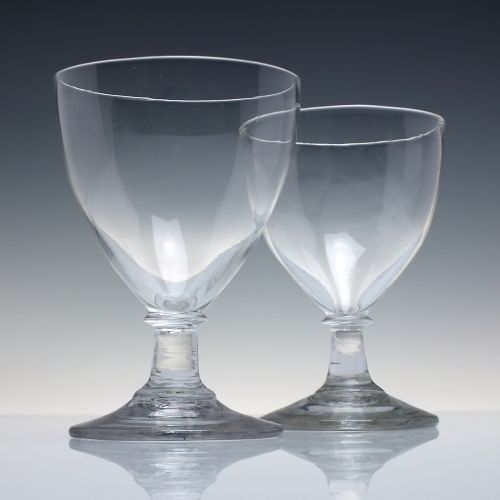
English rummers typically use clear lead crystal with bucket or ogee bowls and simple stems.
German roemers are usually green or amber glass featuring coiled prunts on hollow stems.