





Antique Rosewood Nest
An antique rosewood nest brings together graduated tables that slide neatly inside one another, offering practical surface space with effortless British and continental design.
Antique Rosewood Nest
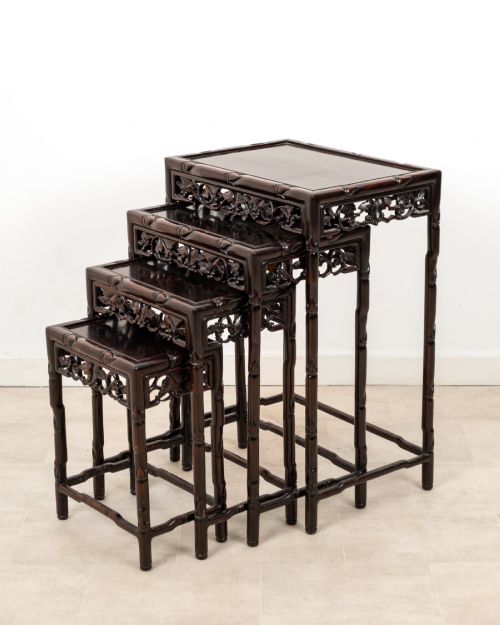
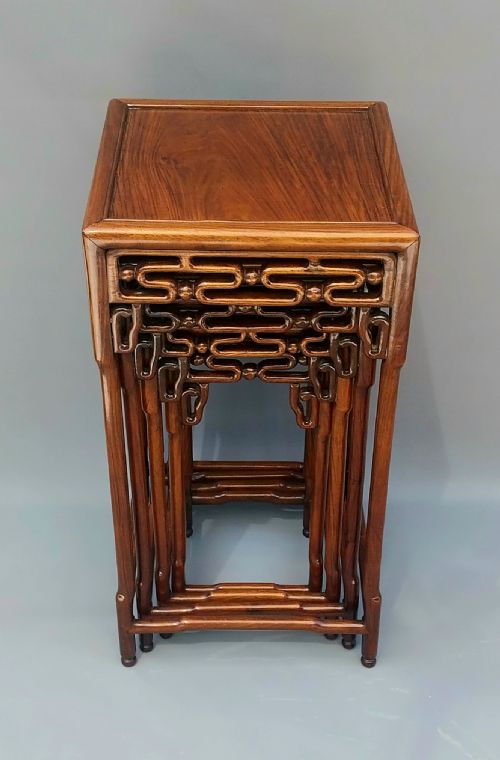
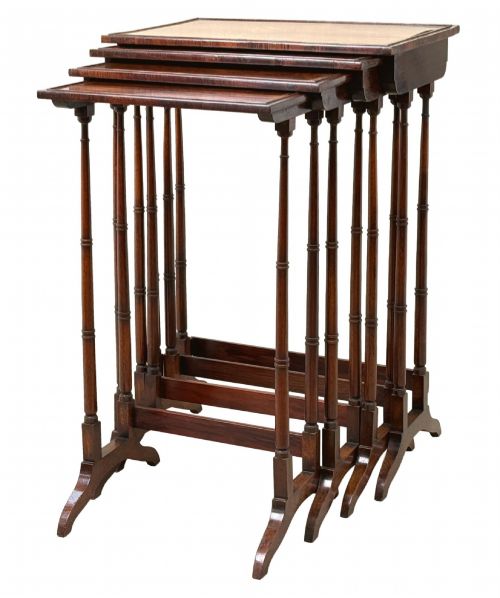
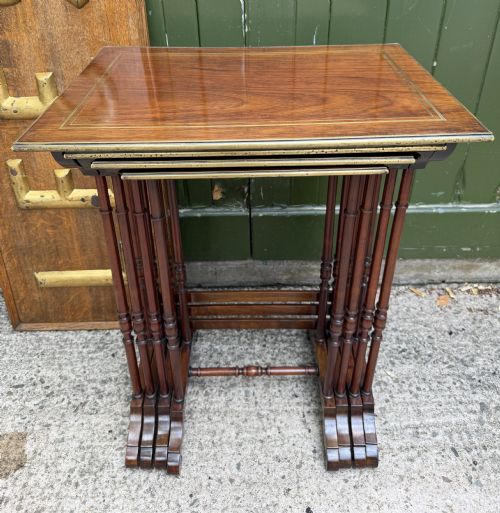
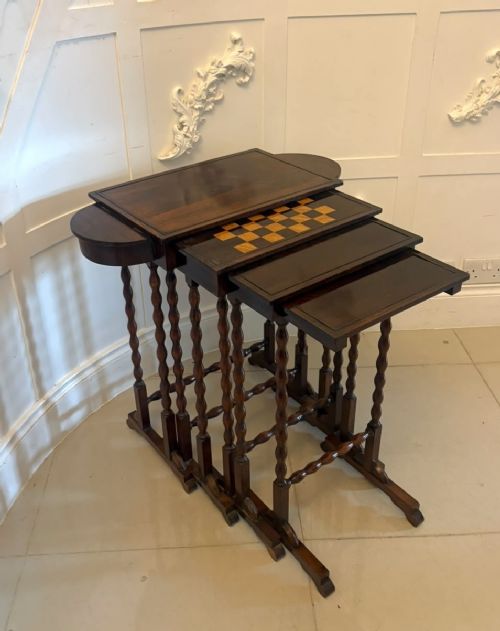
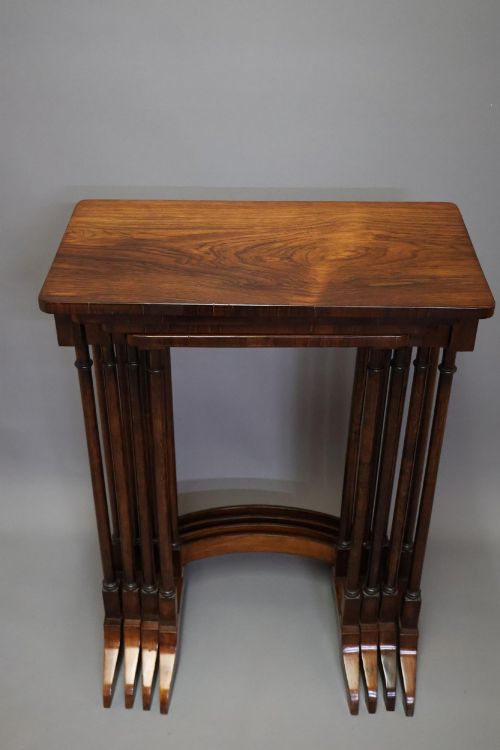
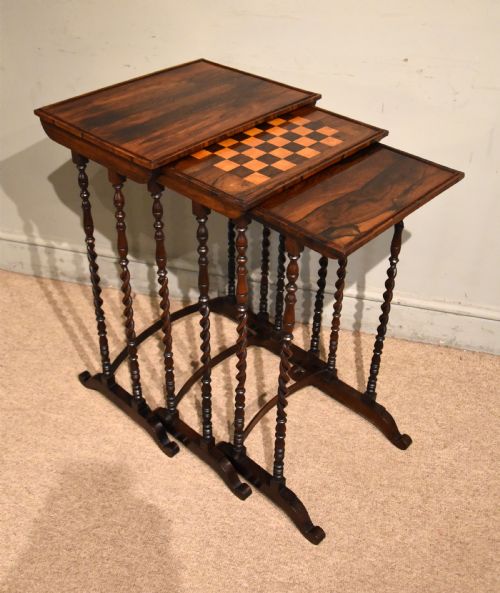
An antique rosewood nest provides a set of graduated tables designed to store compactly when not in use. These pieces appear most frequently in Regency quartetto formats and Chinese hardwood sets from the nineteenth century.
Buyers encounter British Regency examples alongside Chinese export pieces in hongmu and rosewood. The form serves as both occasional furniture and a clever space-saving solution.
Sets range from three to four tables, constructed to slide sequentially from largest to smallest. The tradition spans from early nineteenth-century workshops to twentieth-century revivals.
Materials and construction methods
Cabinetmakers utilised dense tropical hardwoods such as rosewood and hongmu, often enhanced with brass inlay, boxwood stringing, or burrwood panels. French styles incorporated delicate wood veneer and marquetry.
Distinctions in craftsmanship
Quality rests in the precision of the graduated fit and the integrity of the rosewood grain. Finer examples display harmonious figure matching across the tabletops and crisp, unblemished edge details.
Émile Gallé·Gillows·W&C Wilkinson London
The Antique Rosewood Nest Glossary
- Quartetto
- A matched set of four graduated occasional tables designed to nest together. This term appears frequently in Regency furniture descriptions.
- Hongmu
- A traditional Chinese term for dense hardwoods, encompassing various species including rosewood. Pieces in this material often feature carved decoration.
- Graduated
- Describing tables built in decreasing proportions so each smaller piece slides beneath the next. This allows the complete set to occupy the floor space of a single table.
- Boxwood
- A pale, dense wood utilised for contrasting stringing and inlay on tabletop borders. It provides a sharp visual line against dark rosewood.
- Veneer
- A thin layer of fine wood applied over a secondary timber base to create decorative surfaces. Skilled application ensures stability and prominent grain patterns.
Antique Rosewood Nest: Frequently Asked Questions
How are antique rosewood nests structured?
These pieces consist of three or four tables built in graduated sizes. Each smaller table slides neatly beneath the preceding one to save floor space.
Craftsmen designed the frames to maintain stability while keeping the overall profile slender and portable.
Where were these tables placed originally?
Owners positioned them in drawing rooms and parlours for serving tea, holding books, or playing games. They stood tucked away until guests arrived.
When needed, the individual tables scattered around the room to provide independent surfaces.
How do Regency and Chinese sets differ?
Regency quartetto tables often feature clean lines, brass inlay, and slender turned columns. British makers focused on architectural proportions and wood grain.
Chinese export sets from the same eras tend to incorporate carved motifs, pierced aprons, and dense hongmu or hardwood structures.
How do I care for rosewood surfaces?
Maintain the wood by keeping the tables away from direct heat sources and strong sunlight. This prevents the rosewood veneer from drying or fading.
Apply a light application of appropriate furniture wax periodically to preserve the natural lustre of the grain.