




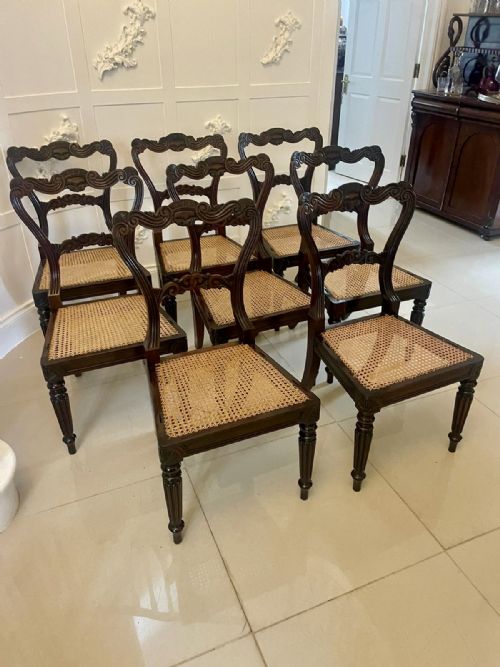
Antique Rosewood Dining Seats
These antique rosewood dining seats span the Regency, William IV and Victorian eras, bringing dense timber and polished grain to the dining room.
Antique Rosewood Dining Seats
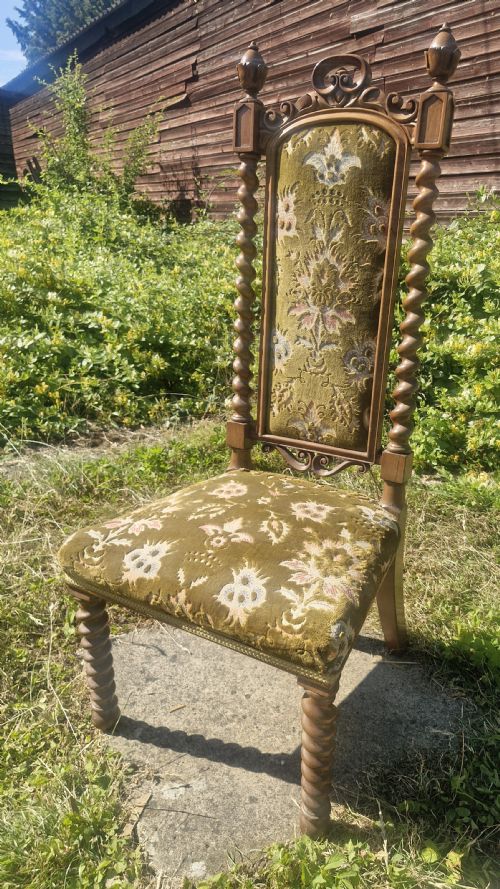
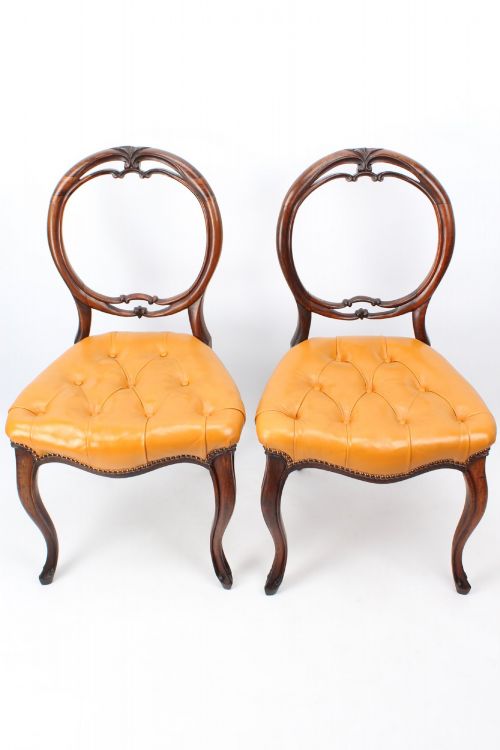
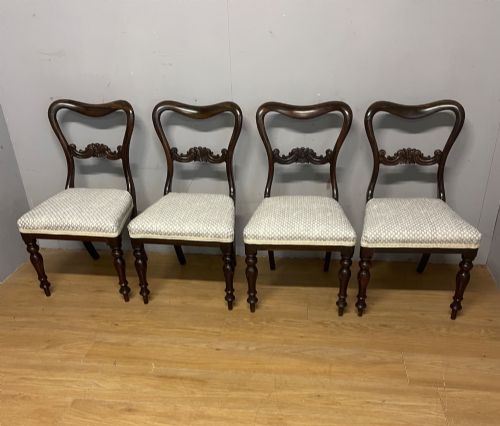
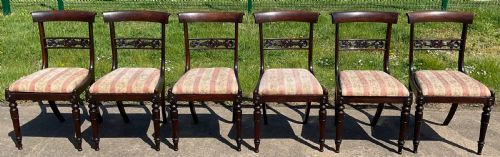
When you search for antique rosewood dining seats, you encounter sturdy timber furniture fashioned for dining rooms during the nineteenth century. These pieces appear primarily as dining chairs and side chairs, often grouped in sets ranging from pairs up to tens.
The selections on this page belong predominantly to the Regency and Victorian periods, alongside William IV and Edwardian examples. You meet formal balloon back shapes and brass inlaid designs alongside simpler side chairs and occasional benches.
How they were made
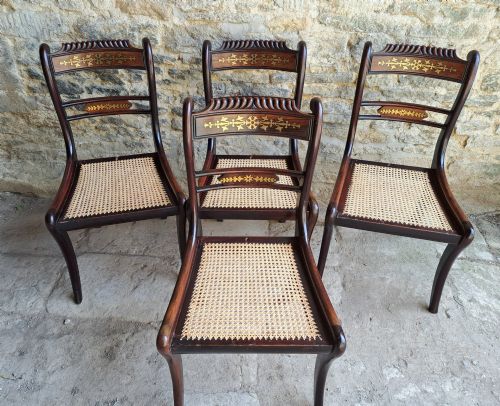
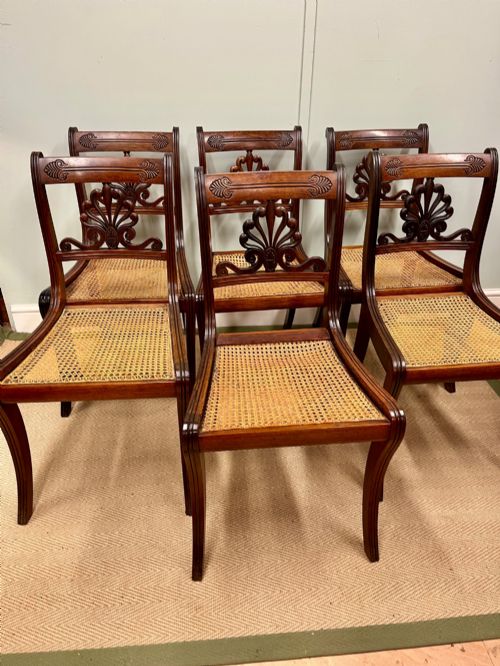
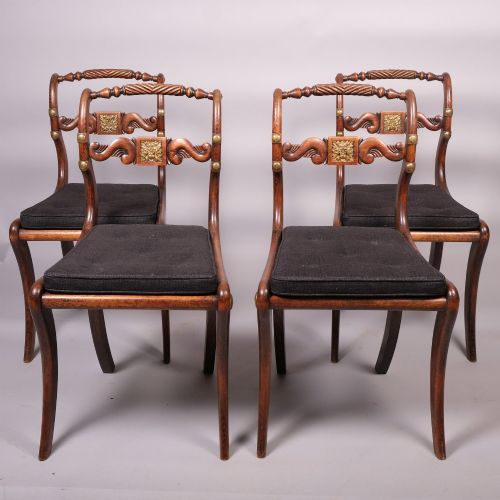
Cabinet makers utilised dense rosewood timber, sometimes applying simulated or faux rosewood finishes to alternative woods. Frames display carved details, turned components and inlaid brass ornamentation.
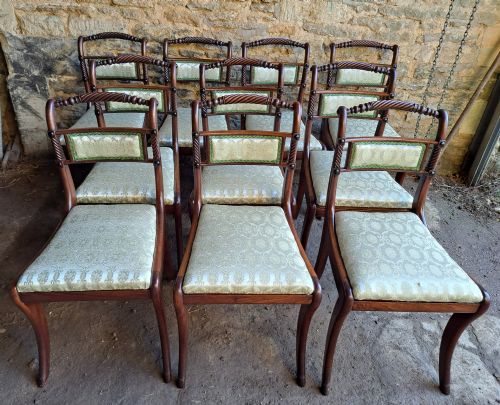
Seating areas integrate textile coverings such as fabric, velvet, needlepoint and cane. Upholstery methods range from simple drop-in pads to buttoned leather work.
One diminutive child's chair appears alongside full-sized dining suites, featuring a buttoned leather seat and a carved rosewood frame.
What varies in quality
The integrity of the timber frame and the precision of any brass inlay distinguish standard seating from finer examples. Carved crest rails and crisp joinery indicate higher workshop standards during production.
The completeness of a matched set heavily influences the character of the group. Sets that retain their original timber tone and cohesive upholstery offer a more unified appearance around a dining table.
The Antique Rosewood Dining Seats Glossary
- Balloon back
- A chair back shaped in an open curve resembling a rounded balloon, popular during the Victorian period. This profile provides lower back support while presenting a decorative silhouette.
- Faux rosewood
- A painted or stained finish applied to a lighter wood to imitate the dark grain and warm tones of genuine rosewood. Craftsmen utilised this technique to achieve a costly look affordably.
- Brass inlay
- Thin brass strips fitted flush into channels cut directly into the timber surface. Regency makers frequently applied this technique to accentuate the crest rail or splat.
- William IV period
- The transitional design era spanning the reign of William IV between late Regency and early Victorian styles. Furniture from this time often exhibits heavy proportions and bold carving.
Antique Rosewood Dining Seats: Frequently Asked Questions
How do I care for rosewood furniture?
Keep wooden seats away from direct heat sources and strong sunlight to prevent the dense rosewood from drying out or splitting.
Dust the frames gently with a dry cloth and protect the polished surfaces from moisture without applying heavy silicone polishes.
Were these chairs made in sets originally?
Cabinet makers produced many dining chairs in matched sets of four, six, eight or more to accommodate formal nineteenth-century dining tables. Larger sets remain particularly sought after for daily use.
Finding a complete set of ten or twelve matching chairs requires patience, as smaller groups or pairs survive more commonly.
What is the difference between Regency and Victorian styles?
Regency seats often display classical influences, clean lines, simulated rosewood finishes and brass inlay work. They reflect the early nineteenth-century taste for ancient Greek and Roman motifs.
Victorian designs turn toward curved balloon backs, richer carving and heavier proportions. These later pieces embrace ornamental details and varied upholstery fabrics.
Can I use antique dining seats every day?
Solid rosewood frames offer robust construction suitable for regular seating if the joints remain tight and secure. Periodic checks by a professional restorer help maintain their structural strength.
Modern users should inspect the upholstery webbing and padding to ensure comfort during extended dinner parties.