


Antique River Artwork
Antique river artwork captures flowing waterways and pastoral banks through historic paintings, watercolours, and prints created across the nineteenth and twentieth centuries.
Antique River Artwork
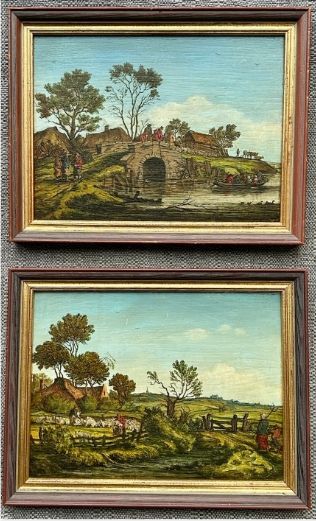
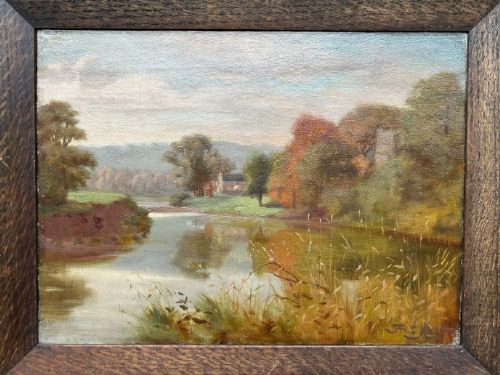
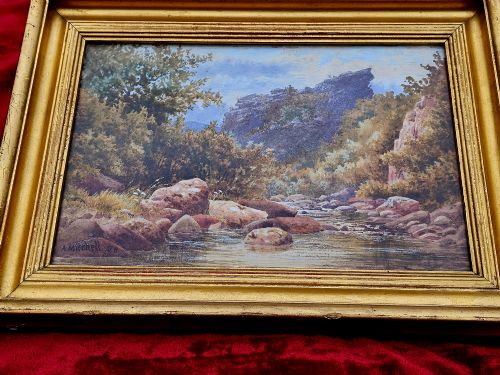
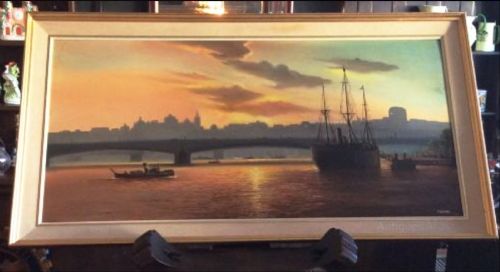
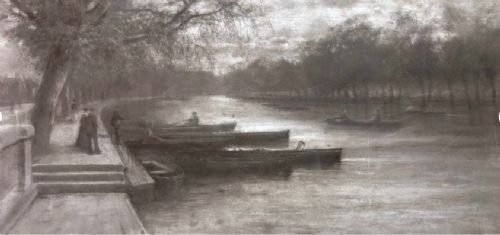
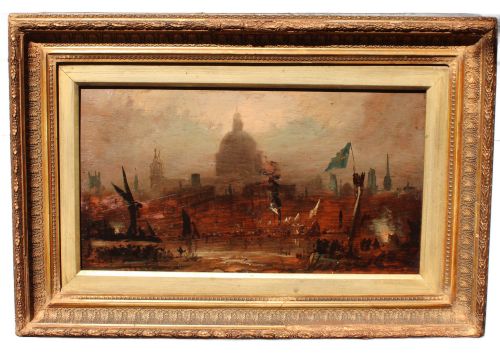
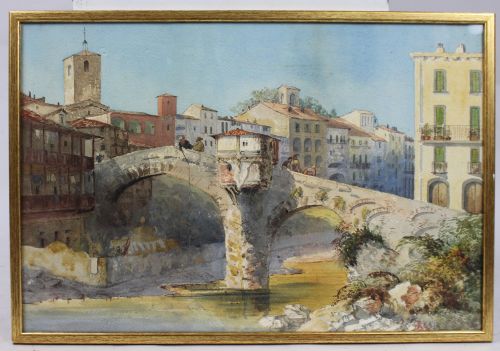
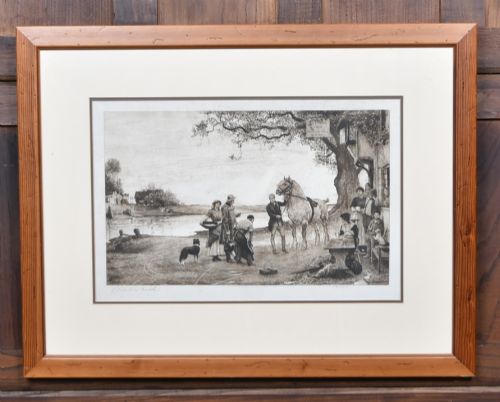
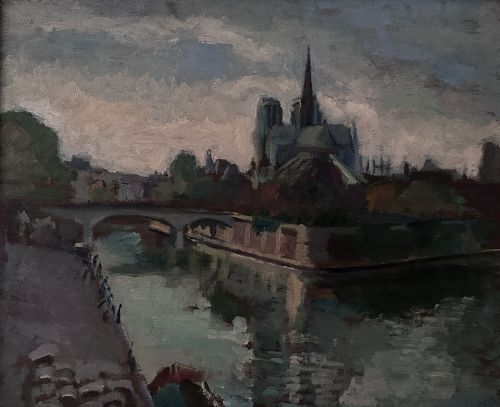
Antique river artwork encompasses oil paintings, watercolours, charcoal drawings, and etchings depicting waterways, bridges, and maritime scenes. These pieces capture rural streams, bustling city rivers like the Thames, and quiet canal banks across Britain and Europe.
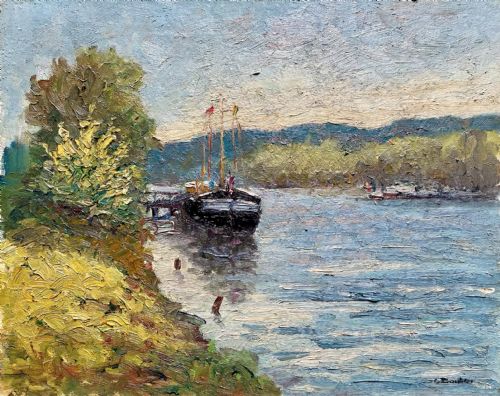
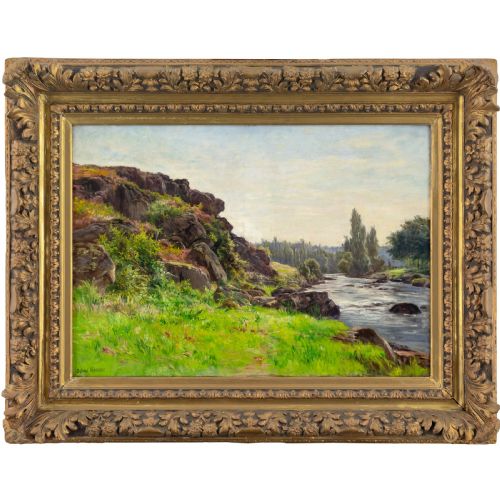
The selections available range from nineteenth-century Victorian watercolours to early twentieth-century Impressionist views. Buyers will frequently encounter framed landscapes executed by regional British artists and continental painters working in oils on canvas or wood panels.
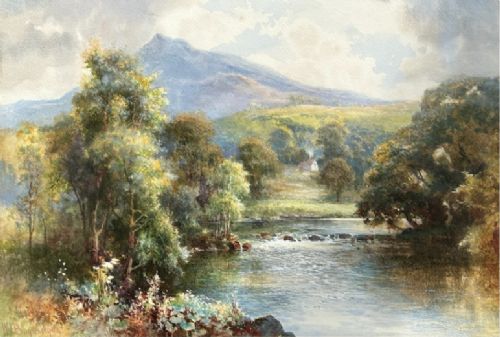
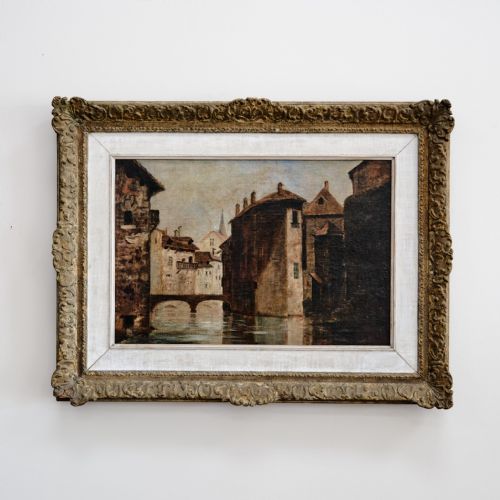
Subjects stretch from peaceful Welsh rivers and Scottish highlands to urban London bridges and continental canalscapes. Each piece preserves a distinct topographical or romantic interpretation of water in the landscape.
Materials and methods
Artists relied primarily on oil paint applied to canvas, wood panels, or board, alongside delicate watercolours and charcoal on paper. These traditional mediums were worked with brushes and pencils to build atmospheric depth across the water surface and surrounding skies.
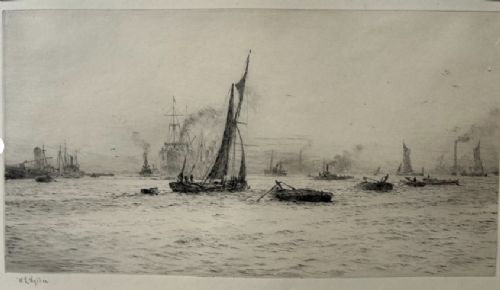
Supports often include gessoed wooden panels and heavy textured papers characteristic of the Victorian and Edwardian periods. Etchings and lithographs utilised inked metal plates and stones to produce detailed monochrome impressions of river architecture.
Quiet riverside conversations captured in paint remind us that ducks have been photobombing artistic masterpieces for centuries.
Assessing quality and execution
Quality rests in the artist's handling of light, reflection, and atmospheric perspective upon the water. Skilled painters capture the shifting moods of daylight and weather, while lesser works rely on formulaic foliage and static surfaces.
The strength of composition and precision of draughtsmanship distinguish accomplished studio pieces from simpler amateur sketches. Original framing, surface preservation, and strong provenance further elevate the standing of a historic river view.
Alfred Young Nutt·Frederick Marriott·William Joseph Boyes·Gabriel Mathieu·William Lionel Wyllie·Robert W Macbeth·Frank William Scarbrough·Robert Thorne Waite·Francis Moltino·David Roberts·Willem Bos·Henri Ottmann·George Oyston·TB Hardy·Sir Alfred East·Herbert Royle·E Brown·Robert Leslie Howey·Florence Adelina Hess·T C Hofland·Henry H Parker
The Antique River Artwork Glossary
- Watercolour
- A painting method where fine pigment is suspended in a water-based solution and applied to paper. It allows for translucent washes that suit luminous river skies and reflections.
- Etching
- A printmaking technique where lines are bitten into a metal plate with acid before being inked and pressed onto paper. This process creates fine, sharp linear details often seen in architectural river scenes.
- Canvas
- A heavy woven fabric stretched across a wooden frame to serve as a sturdy support for oil paint. It provides a textured ground that holds thick brushstrokes.
- Gesso
- A white paint mixture consisting of a binder mixed with chalk or gypsum, used to prepare wood panels or canvases before painting. It creates a smooth, durable surface for the application of oil colours.
- Panel
- A flat piece of wood used as a rigid alternative to canvas for oil paintings. Wooden panels were favoured for their stability and smooth working surfaces during the nineteenth century.
Antique River Artwork: Frequently Asked Questions
What subjects appear in antique river artwork?
These works depict rural streams, pastoral riverbanks, industrial ports, and famous city bridges. Scenes range from quiet Welsh waterways to bustling London and continental canalscapes.
Artists frequently focused on the interplay of light and water, capturing shipping traffic, fishermen, and tranquil morning or evening moods.
How do I care for antique watercolours?
Watercolours require careful protection from direct sunlight to prevent fading of the delicate pigments. They should be hung away from damp walls and sources of heat.
Glazing with UV-filtering glass helps preserve the paper and pigments for future generations to enjoy.
How do oil paintings differ from watercolours here?
Oil paintings utilise heavy pigments suspended in oil on canvas or wood panels, offering rich textures and deep colour saturation. They present a robust surface that often records thick brushstrokes.
Watercolours rely on transparent washes upon paper, producing lighter, more luminous atmospheric effects.
How can I identify the period of a piece?
Periods can be deduced from the artistic style, framing materials, clothing of any figures depicted, and inscriptions on the reverse. Victorian and Edwardian works often bear distinct signatures, gallery labels, or dated exhibition tags.
Changes in painting technique and subject preferences also point toward specific decades within the nineteenth and twentieth centuries.